SUMMARY
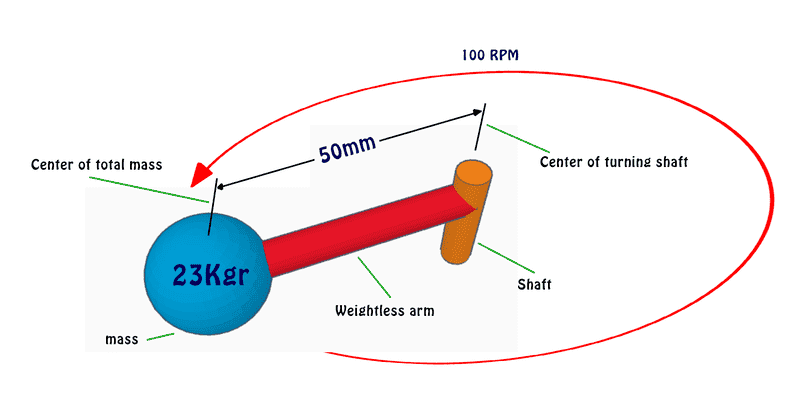
The power of a turning shaft can be calculated based on the mass and rotational speed, but in this case, with a stable speed of 100 rpm and a mass of 23 kg, the power output is effectively zero due to no change in kinetic or potential energy. The only exceptions are losses from friction or other dissipative forces, which cannot be estimated without additional data. The discussion highlights the concept of "Instantaneous Power" as relevant in specific applications, such as steam traction engines, where flywheels provide short bursts of power to overcome sudden loads.
PREREQUISITES
- Understanding of rotational dynamics
- Knowledge of power calculations in mechanical systems
- Familiarity with the concept of kinetic and potential energy
- Basic principles of friction and dissipative forces
NEXT STEPS
- Research the formula for calculating power in rotating systems
- Learn about the role of flywheels in mechanical applications
- Explore the effects of friction on power calculations
- Investigate the concept of "Instantaneous Power" in engineering
USEFUL FOR
Mechanical engineers, physics students, and anyone involved in the design or analysis of rotating machinery and power systems.