Discussion Overview
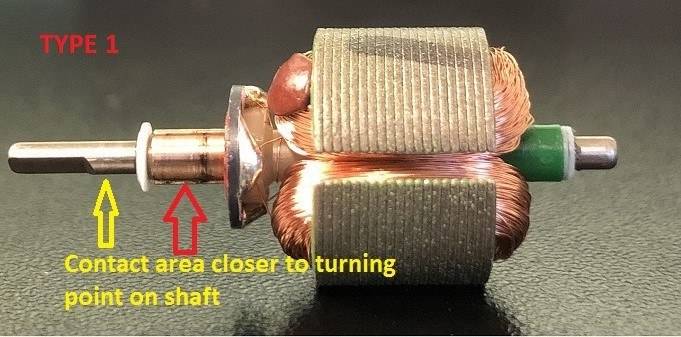
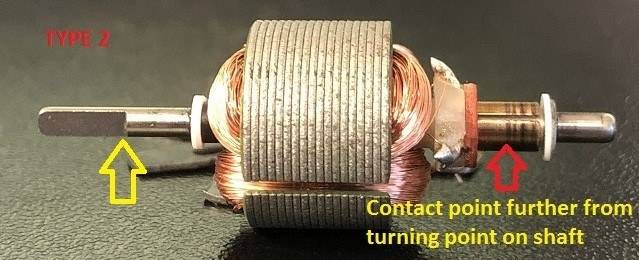
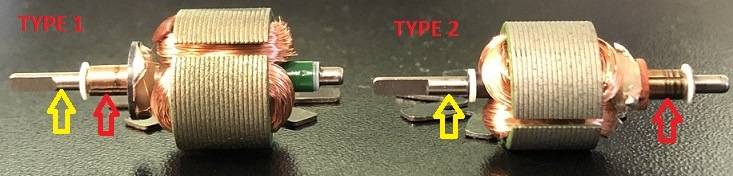
The discussion revolves around two different designs of DC motors, focusing on the efficiency and performance implications of the commutator's placement. Participants explore various factors influencing motor efficiency, including design choices and material characteristics, while considering practical applications in aftermarket automotive parts.
Discussion Character
- Exploratory
- Technical explanation
- Debate/contested
- Experimental/applied
Main Points Raised
- One participant questions whether the location of the commutator affects efficiency, suggesting that other factors may have a more significant impact.
- Another participant argues for placing the commutator away from the output shaft to reduce wear and dust accumulation, citing accessibility for maintenance.
- Some participants assert that the design decision regarding commutator placement does not inherently affect efficiency and emphasize that the motors are designed to be cost-effective rather than highly efficient.
- Concerns are raised about the performance differences between the two motor types, with one participant noting that Type 1 does not seem to produce sufficient speed or torque compared to Type 2.
- Discussion includes the importance of rotor diameter, magnet strength, and winding characteristics as critical factors influencing motor performance.
- Participants express uncertainty about the significance of wire insulation and lamination differences between the motors and OEM parts.
- Some participants suggest that both motor designs may be inherently "cheap" and not optimized for high performance, referencing the need for more advanced designs for specific applications like drones.
Areas of Agreement / Disagreement
Participants do not reach a consensus on the impact of commutator placement on efficiency. Multiple competing views remain regarding the significance of design differences and their implications for performance.
Contextual Notes
Limitations include the lack of detailed performance data for the motors, such as torque and RPM characteristics, which could provide a clearer comparison. The discussion also reflects varying assumptions about what constitutes "working well" in the context of motor performance.