Understanding TEM Calibration Patterns: NiOX vs SiGe Explained

  • Context: Graduate 
  • Thread starter Thread starter Rapier
  • Start date Start date
  • Tags Tags
    Calibration Tem
Click For Summary
SUMMARY

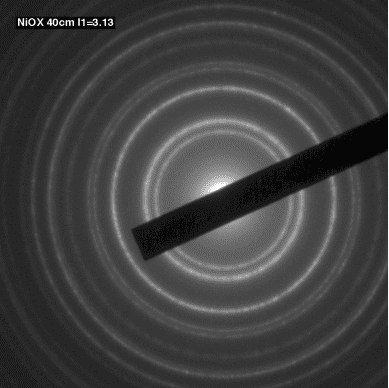
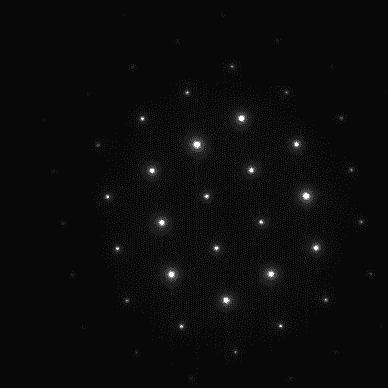
The discussion focuses on Transmission Electron Microscopy (TEM) calibration patterns, specifically comparing NiOX and SiGe materials. The concentric ring pattern observed in NiOX is attributed to the scanning beam interacting with microcrystalline or polycrystalline structures, while the spot pattern in SiGe indicates a single crystal orientation. The participants express frustration with the lack of explanatory detail in their manual regarding these phenomena. Key resources for further understanding include links to diffraction image generation concepts and electron diffraction documentation.

PREREQUISITES
  • Understanding of Transmission Electron Microscopy (TEM)
  • Familiarity with diffraction patterns in crystalline materials
  • Knowledge of microcrystalline and polycrystalline structures
  • Basic principles of electron beam interaction with materials
NEXT STEPS
  • Research "TEM diffraction patterns in microcrystalline materials"
  • Study "Single crystal vs. polycrystalline diffraction in TEM"
  • Explore "Electron beam interaction with crystalline structures"
  • Review "TEM calibration techniques and best practices"
USEFUL FOR

Researchers, materials scientists, and students in the field of electron microscopy, particularly those focusing on TEM analysis of crystalline materials.

Rapier
Messages
83
Reaction score
0
Ok, so we were doing TEM and at the end we were looking at calibration patterns and I'm preparing the presentation and I am writing the intro but I realized I'm not sure why the calibration pattern looks like concentric circles.

I believe it is because we are scanning the beam across the sample at different angles and this is causing the concentric ring pattern.

This is NiOX
Cal1.png
.

In this second one I'm not quite sure why we don't get concentric rings but just spots. I know that those spots are the locations of the molecules in our crystalline matrix, but I don't get why it's circles in the first and dots in the second. The manual that we used is rather unhelpful in explaining why. In a lot of cases the manual walked us through the steps but didn't really explain why we were doing what we were doing.

Please help!

This is SiGe
Cal2.png
.

The presentation is mostly done but I'm just tweaking and want to get the intro for this section done and I'm short on time. Thanks! :)
 
Physics news on Phys.org
Rapier said:
Ok, so we were doing TEM and at the end we were looking at calibration patterns and I'm preparing the presentation and I am writing the intro but I realized I'm not sure why the calibration pattern looks like concentric circles.

I believe it is because we are scanning the beam across the sample at different angles and this is causing the concentric ring pattern.

This is NiOX View attachment 76194.

In this second one I'm not quite sure why we don't get concentric rings but just spots. I know that those spots are the locations of the molecules in our crystalline matrix, but I don't get why it's circles in the first and dots in the second. The manual that we used is rather unhelpful in explaining why. In a lot of cases the manual walked us through the steps but didn't really explain why we were doing what we were doing.

Please help!

This is SiGe View attachment 76195.

The presentation is mostly done but I'm just tweaking and want to get the intro for this section done and I'm short on time. Thanks! :)

"If the material is microcrystalline (or polycrystalline with different crystal orientations) or amorphous the diffraction pattern consists of a series of concentric rings rather than spots/discs." I believe the spot pattern comes from a single crystal orientation.

Here is a reasonable discussion - http://www.ammrf.org.au/myscope/tem/background/concepts/imagegeneration/diffractionimages.php

And - http://faraday.physics.utoronto.ca/IYearLab/elecdiff.pdf
 
  • Like
Likes   Reactions: Rapier
Ah! Thank you! I spent about 45 minutes searching and was getting no where.
 

Similar threads

  • · Replies 16 ·
Replies
16
Views
3K
  • · Replies 1 ·
Replies
1
Views
2K
Replies
15
Views
3K
  • · Replies 3 ·
Replies
3
Views
5K
  • · Replies 22 ·
Replies
22
Views
4K
Replies
17
Views
6K
  • · Replies 5 ·
Replies
5
Views
3K
Replies
2
Views
2K
  • · Replies 5 ·
Replies
5
Views
5K
  • · Replies 12 ·
Replies
12
Views
5K