SUMMARY
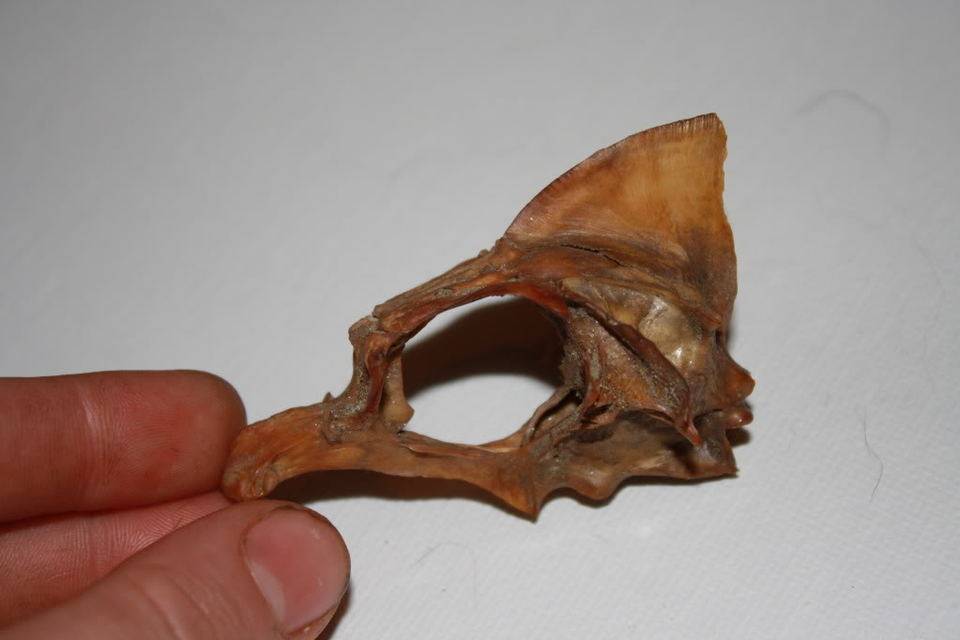
A unique skull discovered near the Connecticut River in western Massachusetts has sparked a discussion regarding its identification. Participants suggest it may belong to a bird, potentially resembling a loon, but note the unusually large sagittal crest and small upper jaw, which complicates identification. Comparisons are made with opossum and fisher skulls, but the narrowing above the eye socket suggests a marine bird. Further investigation through resources like Skullsite.com is recommended for accurate identification.
PREREQUISITES
- Understanding of avian anatomy, particularly skull structure
- Familiarity with the characteristics of bird species such as loons, opossums, and fishers
- Knowledge of sagittal crest significance in mammals and birds
- Experience with online resources for skull identification, such as Skullsite.com
NEXT STEPS
- Research the anatomical features of loon skulls and their variations
- Investigate the skull characteristics of marine birds with salt glands
- Explore the differences between mammalian and avian sagittal crests
- Utilize Skullsite.com to compare additional bird species with bony crests
USEFUL FOR
Bird enthusiasts, wildlife biologists, and anyone interested in osteology or skull identification will benefit from this discussion.