Variations on Sacharov's problem

  • Thread starter Thread starter wrobel
  • Start date Start date
Click For Summary
SUMMARY

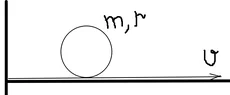
The discussion centers on variations of Sacharov's problem, specifically involving a rubber band on a table with a disk placed on it. As the right end of the band is drawn at a constant speed, the disk rolls to the right without slipping, and its kinetic energy approaches zero as time progresses. The original problem posed by Sacharov involves a bug moving along the band, questioning whether it can catch up to the hand drawing the band. The conversation also references Richard Feynman's historical contributions to the problem and his innovative techniques in calculus.

PREREQUISITES
  • Understanding of nonholonomic systems
  • Familiarity with kinetic energy concepts
  • Basic knowledge of calculus, particularly improper integrals
  • Awareness of classical mechanics principles
NEXT STEPS
  • Explore the mathematical modeling of nonholonomic systems
  • Research the implications of kinetic energy in rolling motion
  • Study Richard Feynman's techniques in calculus, especially regarding improper integrals
  • Investigate the conditions for asymptotic trajectories in dynamic systems
USEFUL FOR

Students and professionals in physics, particularly those interested in classical mechanics, mathematical modeling, and the historical context of Feynman's work.

wrobel
Science Advisor
Insights Author
Messages
1,241
Reaction score
1,049
Here is an interesting problem (in my opinion at least)

A rubber band is placed on a horizontal table and attached to a vertical wall by its left end. A disk of given mass and radius is placed on the band without initial velocity. Then the right end of the band is being drawn with constant speed ##v##. Find the motion of the disk.
It turns out that the kinetic energy of the disk vanishes as ##t\to \infty## while the disk rolls away in the right direction to infinity .
The disk does not slip. Very simple but nonholonomic problem by the way.


Original Sacharov's problem: a bug creeps to the right along the band with a speed ##u## wrt the band. Will the bug catch up a hand which draws the end of the band?

Hope I remember it correctly.
 

Attachments
  • Screenshot_20251213_104445.webp
    Screenshot_20251213_104445.webp
    4.9 KB · Views: 3
Last edited:
Physics news on Phys.org
martinbn said:
Feyman says that he gave the problem to Sakharov.
Feynman also said that he invented the differentiation of an improper integral to calculate it. He must have worked under the pseudonym Euler in the 18th century as well.
 
Last edited:
wrobel said:
Feynman also said that he invented the differentiation of an improper integral to calculate it. He must have worked under the pseudonym Euler in the 18th century as well.
Did he actually say that?
 
martinbn said:
Did he actually say that?
I must apologize, I have just looked through "Surely You're Joking, Mr. Feynman" In this text he definitely says that he learnt this technique from a textbook of analysis.
It seems I was guided by this
google
 

Similar threads

  • · Replies 3 ·
Replies
3
Views
1K
  • · Replies 4 ·
Replies
4
Views
2K
  • · Replies 7 ·
Replies
7
Views
2K
Replies
14
Views
3K
Replies
11
Views
3K
  • · Replies 1 ·
Replies
1
Views
3K
Replies
3
Views
3K
  • · Replies 1 ·
Replies
1
Views
10K
Replies
20
Views
11K
Replies
4
Views
1K