What if the Earth and Moon were attached to each-other?

Click For Summary

Discussion Overview

The discussion explores a hypothetical scenario in which the Earth and Moon are physically connected by an unbreakable structure. Participants examine the implications of this situation on various aspects such as tidal forces, eclipses, and the overall dynamics of the Earth-Moon system.

Discussion Character

  • Exploratory
  • Conceptual clarification
  • Debate/contested

Main Points Raised

  • Some participants propose that for the Moon to remain stationary above a point on Earth, it would need to be in a geostationary orbit, requiring significant changes to its current distance and orbital inclination.
  • Others argue that if the Moon does not rotate and is held by a rigid structure, it would still need to match the Earth's rotation period to avoid tension in the connection.
  • There is a suggestion that the connection would eliminate tides caused by the Moon, but solar tides would still exist, albeit at a reduced strength.
  • One participant questions the frequency and duration of eclipses, suggesting they would not occur daily due to seasonal variations in the Sun's path.
  • Another participant discusses the potential impact on ocean life without the Moon's tidal influence, noting uncertainty about the effects.
  • Some participants speculate on the nature of the connecting structure, considering whether it could be flexible or if it would need to be indestructible to withstand the forces involved.

Areas of Agreement / Disagreement

Participants express multiple competing views regarding the mechanics of the connection, the implications for tides, and the nature of eclipses. The discussion remains unresolved with no consensus on several key points.

Contextual Notes

Limitations include assumptions about the feasibility of an unbreakable connection and the effects of such a scenario on natural phenomena. The discussion does not resolve the complexities of orbital mechanics and the biological implications of altered tidal patterns.

AndrewHuerta
Hello. My name is Andrew Huerta and I am a comic creator. I am currently doing some research for a comic I'm working on and I'm having a bit of trouble grasping some of the concepts I've created.

Basically, what would be the reality of this situation?
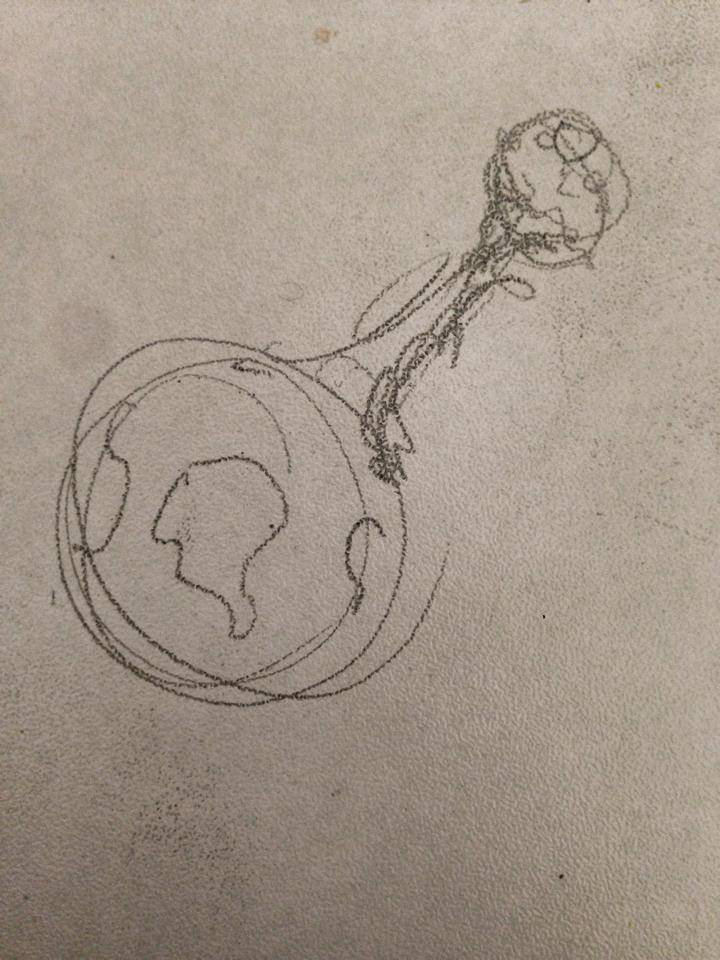
10261914_10202271966692831_1275494183_n_zps4c9ade43.jpg


Like, what would that scenario do the oceans, the view of the sky, days/nights etc...

It would be greatly appreciated.
 
Physics news on Phys.org
Hi Andrew, welcome to PF!

Connecting Earth and Moon mens that the Moon needs to be in a geostationary orbit, so that it always stays above the same point on the Earth's surface(ortherwise the connecting cable would start winding up around the Earth and snap). Such an orbit lies about 36000km above Earth's surface, or about 1/10th of the current lunar orbit. The plane of the orbit needs to lie in the plane of Earth's equator, else the Moon would wobble up and down as seen from the surface(again, leading to snapping of the connector thingy).

So, for the scenario to work, you need to change the Moon's orbital inclination from 5° to 0° and bring it ten times closer.

At such distance, it would look about 10 times larger(by diametre), spanning about 5° on the sky(about 180°). It would be 100 times brighter.

Solar eclipses would be more frequent and longer.

The Earth and its oceans would distort 1000 times more due to tidal forces, but after settling in the new, more oblate shape, there would be no more tides(apart from what little we get from the Sun).
 
Thanks for the reply, BS. Some of your info is very useful, but to be clearer, in this situation, the moon does not rotate or spin at all. The structure that is holding the Moon in place is pretty much an "unbreakable" mechanical pillar. So nothing would snap or wrap around anything.

Its pretty much like someone (Earth) spinning, holding their arm straight out while gripping a baseball (the moon). Does that make sense?

I know this is impossible, but I just need to know what would be the realities/effects of this type of situation.
 
If you are spinning and you grab a ball in your outstretched hand, then the ball necessarily is both rotating(you hold it in your hand, so it always rotates at one rotation per your own rotation, showing the same face to you - just as the Moon does now), and revolving(again, it does one revolution per your one rotation). You can't get around it - your arm is a rigid object that is firmly attached to your body.

But perhaps you meant that you wanted the Moon to stay where it is, distance-wise, and then connect it to the Earth. You still need to match the orbital period to the daily rotation of the Earth, for the above reason.
Once you do that, it would mean huge orbital velocity for the Moon, and so, huge tension in the connector, but since it's indesctructible...
It also has to be magically attached to Earth(and Moon), as there's a huge force trying to pull it out. You basically need to make Earth(and Moon) indestructible as well.

Anyway, in that scenario, you lose the tides, make eclipses more frequent, and the rest is the same.

Oh, and in both cases the Moon is always in the same point on the sky. Some places on Earth would never see it or experience an eclipse.
 
Bandersnatch said:
If you are spinning and you grab a ball in your outstretched hand, then the ball necessarily is both rotating(you hold it in your hand, so it always rotates at one rotation per your own rotation, showing the same face to you - just as the Moon does now), and revolving(again, it does one revolution per your one rotation). You can't get around it - your arm is a rigid object that is firmly attached to your body.

But perhaps you meant that you wanted the Moon to stay where it is, distance-wise, and then connect it to the Earth. You still need to match the orbital period to the daily rotation of the Earth, for the above reason.
Once you do that, it would mean huge orbital velocity for the Moon, and so, huge tension in the connector, but since it's indesctructible...
It also has to be magically attached to Earth(and Moon), as there's a huge force trying to pull it out. You basically need to make Earth(and Moon) indestructible as well.

Anyway, in that scenario, you lose the tides, make eclipses more frequent, and the rest is the same.

Oh, and in both cases the Moon is always in the same point on the sky. Some places on Earth would never see it or experience an eclipse.

Great stuff, here. Ok, so for those who live on the side where the moon is, they would experience an eclipse once a day? And how long would the eclipse last? And those on the side with no moon, would still have nights but just no moon, correct?

And no tides at all? Would there be any sea life without the tides?

Now regarding the moon and Earth pulling each other apart, wouldn't the moon just rotate with the Earth peacefully as long as there's no disturbance between the 2? And would the pillar work better if it were somewhat flexible, like a spring or something, maybe even generating some kind of field or something. I don't know, just throwing ideas out there so this scenario is somewhat believable and isn't too out there.
 
Re: the eclipses. Probably not daily, no. The path of the sun in the sky changes over the seasons due to the Earth axis being tilted, so the eclipses would be also seasonal. For example, in your scenario, for a person at the equator(assuming the Moon attached to the equator - which it should be else everything starts to wobble) living by the pillar, the Moon is directly overhead(zenith) at all times. The Sun passes the zenith on the equator twice a year(21 III, 23 IX). You'll get a total eclipse during those days, and partial eclipses for a few days before and after. The further North or South you live, the closer spaced the two eclipses are, with longer period of no eclipse afterwards. For a person living on one of the tropics, there's just one day(the equinox) of total eclipse. Further North/South you lose the eclipses altogether.
East-West displacement of the observer means the Moon would be lower on the horizon in the opposite direction, and eclipses would happen as described above, but earlier/later on during the day(until you move so far E/W you can't see the Moon any more).

The eclipses last only two minutes.

If the pillar connecting the two bodies is to look anything similar to what you drew on your sketch(i.e., a huge bastard), then its trunk will probably eclipse the Sun much more than the Moon at its end(due to how perspective works). In other words, it'd cast a mean shadow.


Re: the tides.
No, no tides from the Moon. You still get the tides from the Sun(which are about 45% as strong). Remember that in reality you get the combination of the two, which sometimes reinforce and sometimes dull each other(hence e.g., the spring tide). In your scenario, there's just one kind of tides, of constant amplitude.
I don't think we can say with any confidence how would that affect the ocean life.

Re: the revolution.
No, the Moon would only move peacefully in its orbit if you brought it closer to Earth(to the geostationary orbit).
Holding a body above a single point on Earth's surface when orbiting at any other distance requires more/less orbital speed than is natural(depending if it's farther/closer than the geostationary orbit) and a constant applicaton of some external force(i.e., not just gravity) to keep the overly fast/slow body from flying away/crashing into the Earth. The material of the tether doesn't matter insofar as the basic orbital physics is concerned. It does matter in the sense that it has mass that by itself increases tension, but it's the easiest bit to handwave away with some good will on the part of the readers. Say it's made from ultra-light unobtanium or something.

Perhaps looking into the concept of the 'space elevator' might be handy for you. It's basically an idea that uses the same physics we're talking about, so reading about it might be enlightening.
 
Hi Andrew!

If the Moon were in geostationary orbit, then the tether ought to be about [edit: 4.5] times the diameter of the Earth, so your sketch shows the moon too close and too large.

Are you intending the Earth to have a normal length day? The geostationary orbit that Bandersnatch talks about gets further away if the Earth is rotating more slowly. You can keep the moon in it's current position if you slow the Earth's rotation to match the moon. Then a day would be 27.32 normal days long, and you'd have a vastly longer tether that might contain more mass than the Earth itself. You would also need to eliminate the Earth's axial tilt - so no more seasons. This would give you the same reduced and more predictable tides that Bander describes, but they would be based on the much longer day.

Back to Bandersnatch's model: I'm wondering how gravity would behave on the tether. If it is as thick and heavy as your drawing suggests, one might be able to walk from the Earth to the Moon. The atmosphere of the Earth would also drift up the cable and mingle with that of the moon. (This could be bad, as it would also allow the atmosphere to escape into space.) But for a while at least, the moon might have a breathable atmosphere.
 
Last edited:
The angular momentum of the Earth's spin would be spread out over the Earth & moon. That means a day would get a lot longer- someone else can work out the numbers. Too long of a day would roast the day side and freeze the night side- might even boil the oceans on the day side. Try plugging that into a climate-change model! Anybody's guess if life could survive.
 

Similar threads

  • · Replies 30 ·
2
Replies
30
Views
5K
  • · Replies 1 ·
Replies
1
Views
2K
  • · Replies 4 ·
Replies
4
Views
3K
  • · Replies 17 ·
Replies
17
Views
3K
  • · Replies 16 ·
Replies
16
Views
5K
  • · Replies 19 ·
Replies
19
Views
3K
  • · Replies 4 ·
Replies
4
Views
3K
  • · Replies 10 ·
Replies
10
Views
4K
  • · Replies 10 ·
Replies
10
Views
5K
  • · Replies 58 ·
2
Replies
58
Views
7K