Insights What is the relevance of Assembler programming in modern technology?

Click For Summary
The discussion centers on a blog post by Greg Bernhardt about AVX-512 assembly programming and the use of opmask registers for conditional arithmetic. It reflects on the nostalgia of early computing experiences, particularly the transition from older machines that utilized manual address settings and punched cards to modern systems. The conversation emphasizes the ongoing relevance of legacy systems still in use today by various industries, such as telecommunications and transportation, which often rely on outdated technology due to the complexities involved in modernization. The fear surrounding the millennium bug highlighted the challenges of maintaining and updating old code, particularly in assembly language. The potential shift to quantum computing is also noted, with the caveat that not all algorithms will benefit from this technology, especially if they are not designed for parallel processing. The discussion underscores the importance of understanding and preserving legacy programming knowledge in the face of technological advancements.
Messages
38,065
Reaction score
10,580
Greg Bernhardt submitted a new blog post

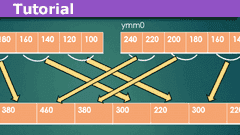
AVX-512 Assembly Programming: Opmask Registers for Conditional Arithmetic Conclusion
AVX-512_conclusion.png


Continue reading the Original Blog Post.
 

Attachments

  • AVX-512_conclusion.png
    AVX-512_conclusion.png
    7.1 KB · Views: 615
  • Like
Likes fresh_42 and Greg Bernhardt
Technology news on Phys.org
The articles brought back memories!

As our university changed machines, which happened from time to time since the 70's, a professor of ours took the old machine and held Assembler courses which included visits of this machine. One could set addresses manually by setting a row of switches. The result could be seen via small red lights. The entire machine was fed with punched cards.

And before some kids will drop comments as "vintage" or "long ago", I'd like to answer: It is far less old fashioned than one might think! Many programs deal with huge amounts of data: telephone companies, transportation companies (railroad companies, airlines, airports, etc.), energy suppliers, meteorologists and so on. They often still run their machines set up in the last century and any modern replacement is often difficult to impossible. People's fear of the millenium bug wasn't because of the missing bits for the millenium, it was because of these old machines and codes, written somewhen in the 70's and still active. Myself has read thousands of codelines, many in Assembler, only to check whether the millenium bug can do any harm. Modernization is often impossible, because of the lack of knowledge in this sector, not because nobody wants to do it. Furthermore, someone has to write the C++ compilers.

The next revolution will probably be quantum computing, but it is a misinformation that all algorithms will speed up. It depends on their ability to be parallelizable. I already see the managers of tomorrow demanding a switch to quantum computing, but nobody can handle the old codes anymore! And what is written and has lived for decades cannot be renewed only because some economists think it can.

So in this sense, the articles are far more relevant than youngsters might think, if they read "Assembler".
 
  • Like
Likes Mark44
Learn If you want to write code for Python Machine learning, AI Statistics/data analysis Scientific research Web application servers Some microcontrollers JavaScript/Node JS/TypeScript Web sites Web application servers C# Games (Unity) Consumer applications (Windows) Business applications C++ Games (Unreal Engine) Operating systems, device drivers Microcontrollers/embedded systems Consumer applications (Linux) Some more tips: Do not learn C++ (or any other dialect of C) as a...

Similar threads

  • · Replies 2 ·
Replies
2
Views
2K
  • · Replies 10 ·
Replies
10
Views
2K
  • · Replies 5 ·
Replies
5
Views
4K
  • · Replies 2 ·
Replies
2
Views
2K
  • · Replies 11 ·
Replies
11
Views
3K
  • · Replies 25 ·
Replies
25
Views
4K
  • · Replies 2 ·
Replies
2
Views
3K
  • · Replies 46 ·
2
Replies
46
Views
5K
  • · Replies 2 ·
Replies
2
Views
1K
  • · Replies 7 ·
Replies
7
Views
3K