DerekZ10
- 4
- 0
Im trying to find a general formula I can store in my calculator that can find the number of onto (surjective) functions exists for a relation of when M is mapped to N.
I can't seem to find a nice formula for it, but based on the below material I will show you what I have developed.
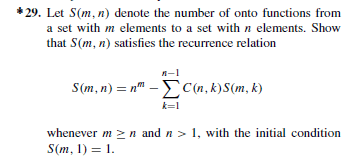
From: Discrete Mathemeatics and Its Applications 7th Edition Rosen pg. 561
 From: Discrete Mathemeatics and Its Applications 7th Edition Rosen pg. 512
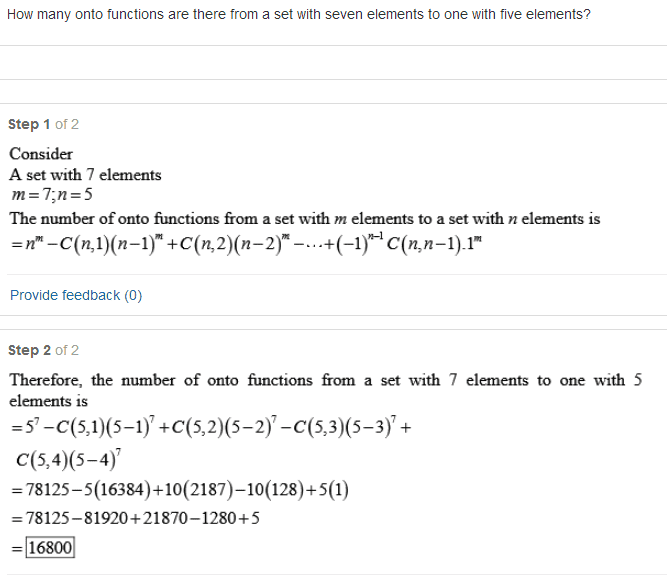
Random Chegg Problem from Google Search I'm using to verify with:
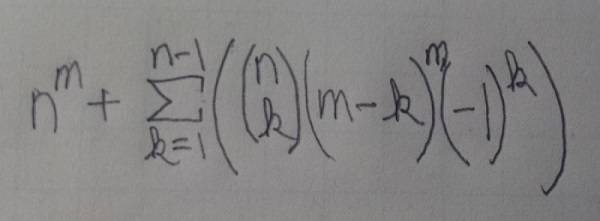
 Here is what I've formed, written out:
In the TI nSpire CX CAS, it's written like this:
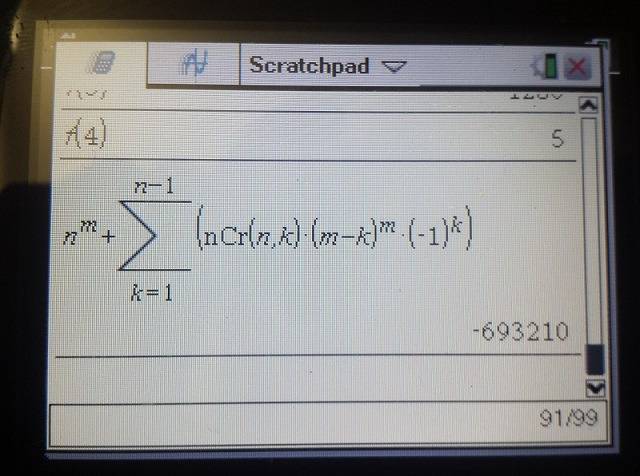
And as you can see, the chegg problem I'm trying to verify it with doesn't match!
But I think it should! If I manually iterate the function like so:
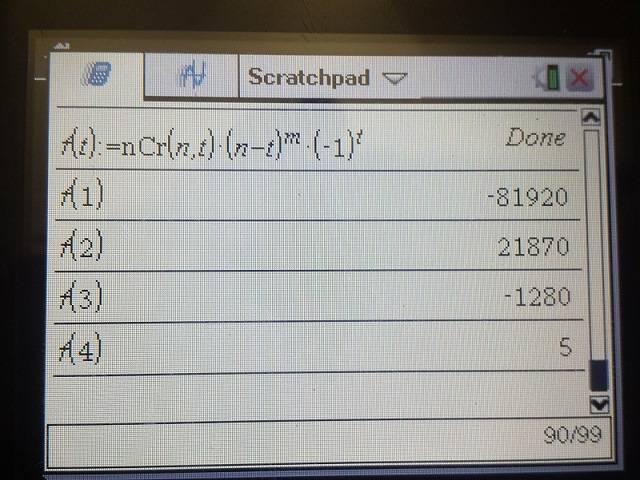 The values are correct and what Chegg is showing. What have I done wrong in my equation?
I can't seem to find a nice formula for it, but based on the below material I will show you what I have developed.
From: Discrete Mathemeatics and Its Applications 7th Edition Rosen pg. 561
Random Chegg Problem from Google Search I'm using to verify with:
In the TI nSpire CX CAS, it's written like this:
And as you can see, the chegg problem I'm trying to verify it with doesn't match!
But I think it should! If I manually iterate the function like so: