tomtomtom1
- 160
- 8
- TL;DR
- Understanding the concept of Axial Loading/Force.
Hello all
I was wondering if some could help me understand the concept of Axial Loading/Force.
From research Axial loading can be defined as a load that passes through the centre of gravity of a members cross section, this causes either compression or tension.
The bit I don't fully understand is that if I applied a uniformly distributed load on a column then regardless of which orientation the column is places and which direction the load it applied the load will always pass through the columns centre of gravity as shown below:-
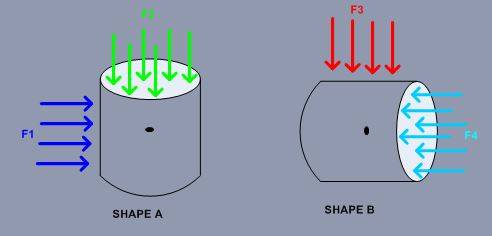
The black dot is meant to represent the centre of gravity.
From the two shapes shown can someone tell which forces are axial and why?
(I have assumed that gravity is acting downwards on both shapes)
Also on a side note are Axial forces and Normal Forces the same thing?
Thank you.
I was wondering if some could help me understand the concept of Axial Loading/Force.
From research Axial loading can be defined as a load that passes through the centre of gravity of a members cross section, this causes either compression or tension.
The bit I don't fully understand is that if I applied a uniformly distributed load on a column then regardless of which orientation the column is places and which direction the load it applied the load will always pass through the columns centre of gravity as shown below:-
The black dot is meant to represent the centre of gravity.
From the two shapes shown can someone tell which forces are axial and why?
(I have assumed that gravity is acting downwards on both shapes)
Also on a side note are Axial forces and Normal Forces the same thing?
Thank you.