Which basis-forms are pseudo-tensors?

  • Context: Undergrad 
  • Thread starter Thread starter SiennaTheGr8
  • Start date Start date
  • Tags Tags
    Basis
Click For Summary
SUMMARY

The discussion centers on the classification of basis-forms as pseudo-tensors or true tensors, particularly in the context of Hodge duality. It is established that the Hodge dual of a pseudo-form is a true pseudo-form, with specific examples drawn from Frankel's "The Geometry of Physics" (3rd edition). The confusion arises in determining which of two basis 2-forms, such as ##dx^2 \wedge dx^3## and its Hodge dual ##dt \wedge dx^1##, is a pseudo-form and which is a true tensor. The conversation suggests that the classification may depend on the chosen canonical ordering of the basis n-form in the respective space.

PREREQUISITES
  • Understanding of Hodge duality in differential forms
  • Familiarity with the concepts of pseudo-forms and true tensors
  • Knowledge of the properties of basis forms in n-dimensional manifolds
  • Basic grasp of the geometry of Minkowski spacetime
NEXT STEPS
  • Study the Hodge dual operator in detail, particularly in the context of differential geometry
  • Explore the definitions and properties of pseudo-forms as outlined in Burke's document on twisted differential forms
  • Examine the implications of basis form ordering on tensor classification in various dimensional spaces
  • Review Frankel's "The Geometry of Physics" for deeper insights into the relationship between forms and their Hodge duals
USEFUL FOR

Mathematicians, physicists, and students of differential geometry who are interested in the classification of differential forms and their applications in theoretical physics.

SiennaTheGr8
Messages
513
Reaction score
210
TL;DR
I understand that the Hodge dual takes "true" forms to pseudo-forms, and vice versa. I'm confused about how this works with basis forms; how can we tell which basis forms are pseudo-tensors?
My understanding is that the Hodge dual of a pseudo-form is always a "true" pseudo-form, and vice versa. However, I'm a little confused about how this applies to basis-forms in general.

I believe I understand how it works for the ##0##-form case: the basis ##0##-form is the scalar ##1## (obviously a true tensor), and its Hodge dual is the basis ##n##-form (for an ##n##-dimensional manifold), which then must be a pseudo-tensor (equal to the volume form in an orthonormal system, if I'm not mistaken).

But what about for other situations? For example, here is an excerpt from Frankel's The Geometry of Physics (3rd edition, p. 363), where the context is ##4##-dimensional Minkowski spacetime:

##*## takes ##p##-forms into pseudo (##4 - p##)-forms. [...] Since the coordinates are orthonormal and ##\sqrt{ | g | } = 1##, we can probably avoid the use of (14.3) [Frankel's general definition for the Hodge dual]. ##*(dx^2 \wedge dx^3)## has the property that ##(dx^2 \wedge dx^3) \wedge *(dx^2 \wedge dx^3) = \| dx^2 \wedge dx^3 \|^2 \, dt \wedge dx^1 \wedge dx^2 \wedge dx^3##. Since the ##dx^\alpha## are orthonormal and ##\| dx^\alpha \|^2 \, = +1## for ##\alpha = 1, 2, 3##, we see that ##\| dx^2 \wedge dx^3 \|^2 \, = \| dx^2 \|^2 \, \| dx^3 \|^2 \, = +1##, and so ##*(dx^2 \wedge dx^3) = dt \wedge dx^1##.

What confuses me is: if ##*(dx^2 \wedge dx^3) = dt \wedge dx^1##, then either ##dx^2 \wedge dx^3## or its Hodge dual ##dt \wedge dx^1##—both of which are basis ##2##-forms—must be a pseudo-form, and the other must be a true tensor. How would one know which is which? And this is of course just an example; my question is more general. I feel that something simple is going right over my head!
 
Physics news on Phys.org
I should add that in the case of Minkowski spacetime, I'd guess that the basis ##2##-forms involving ##dt## are all of the same "type" (either the pseudo-tensors or the true tensors). But again, my question is more general: how to tell in the general case which basis forms are pseudo-tensors and which are true tensors.
 
I'm wondering if ultimately it boils down to the chosen "canonical" ordering of the basis ##n##-form (for an ##n##-dimensional space).

For example, in ##4##-dimensional Euclidean space (so we don't get side-tracked by the "different" nature of time), half of the basis ##2##-forms must be true tensors, and the other half must be pseudo-tensors (because the Hodge dual takes ##2##-forms to ##2##-forms). Say we have ##*(dx \wedge dy) = dz \wedge dw##. One of these basis ##2##-forms must be a true tensor and the other a pseudo-tensor, and it seems to me that it can only be a matter of convention which is which. This must be connected with how one defines the basis ##4##-form, right? If, for instance, the basis ##4##-form is defined like ##dx \wedge dy \wedge dz \wedge dw##, and if in that case ##dx \wedge dy## is a true tensor so that ##*(dx \wedge dy) = dz \wedge dw## is a pseudo-tensor, then my suspicion is that changing the definition of the basis ##4##-form to ##dx \wedge dz \wedge dy \wedge dw## would render ##dx \wedge dy## a pseudo-tensor and ##dz \wedge dw## a true tensor. Or something like that.

Does anyone know whether I'm on the right track?
 
I don't have the full story... I think the following points are relevant.

With pseudo-forms (odd-forms, twisted-forms), there is an orientation in its definition (see p.86),
that is not captured by the notation you are using [not using the general definition used by Frankel].
Definition: A pseudo-p-form ##\alpha## on a vector space ##E## assigns,
for each orientation ##o## of ##E##,
an exterior p-form ##\alpha_0## such that if the orientation is reversed the exterior form is replaced by its negative
\alpha_{-o}=-\alpha_o

Have a look at Burke's unfinished document
https://people.ucsc.edu/~rmont/papers/Burke_DivGradCurl.pdf
See
  • 18 Twisted Differential Forms, especially the notations at the top of 18.2
    and the "##\widehat{dx} dy## hat notation for missing basis forms" at the bottom of 18.2, spilling into 18.3

    1723525057444.png
  • 27. The Star Operator, especially the notation in 27.2
    1723525128432.png


Do a Google-Books search for
"twisted differential forms" "28.10" burke
https://www.google.com/search?q="twisted+differential+forms"+"28.10"+burke&tbm=bks
and notice the orientation that is included geometrical figure.

1723523818634.png


and
"twisted differential forms" "hodge star" burke
1723524779165.png


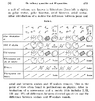
The figures with orientations are likely based on figures in

On ordinary quantities and W-quantities. Classification and geometrical applications
J. A. Schouten; D. Van Dantzig
Compositio Mathematica (1940)
Volume: 7, page 447-473
ISSN: 0010-437X
https://eudml.org/doc/88752
http://archive.numdam.org/article/CM_1940__7__447_0.pdf

1723524486228.png


1723524418759.png


1723525848824.png


See also https://www.amazon.com/Tensor-Analysis-Physicists-Second-Physics/dp/0486655822?tag=pfamazon01-20
 

Attachments

  • 1723525834313.png
    1723525834313.png
    34.8 KB · Views: 92
Last edited:
  • Like
Likes   Reactions: SiennaTheGr8

Similar threads

  • · Replies 13 ·
Replies
13
Views
3K
  • · Replies 6 ·
Replies
6
Views
3K
  • · Replies 29 ·
Replies
29
Views
4K
  • · Replies 7 ·
Replies
7
Views
3K
  • · Replies 1 ·
Replies
1
Views
3K
  • · Replies 4 ·
Replies
4
Views
3K
  • · Replies 2 ·
Replies
2
Views
3K
  • · Replies 6 ·
Replies
6
Views
3K
  • · Replies 2 ·
Replies
2
Views
2K
  • · Replies 4 ·
Replies
4
Views
3K