SUMMARY
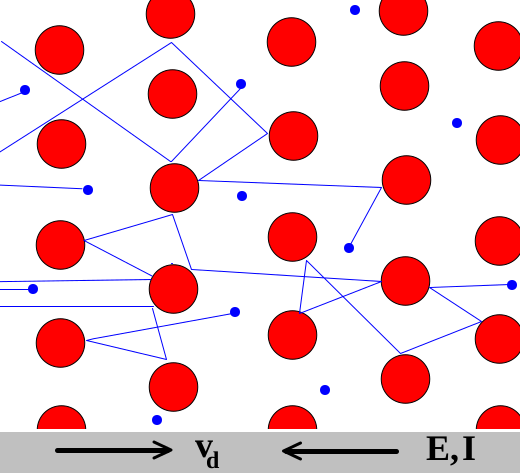
The discussion centers on the heating of resistive wires due to electric current flow, emphasizing that the kinetic energy from the drift velocity of electrons is insufficient to account for the observed heating. Instead, the energy is derived from the electric fields surrounding charged particles, as described by Poynting's Theorem. The interaction between electrons and positive ion cores in the conductor leads to resistive heating, where electrons lose kinetic energy rapidly due to friction forces. The Drude Model provides a foundational understanding of these phenomena.
PREREQUISITES
- Understanding of Poynting's Theorem
- Familiarity with the Drude Model of electrical conduction
- Basic knowledge of electron behavior in conductors
- Concept of resistive heating in electrical circuits
NEXT STEPS
- Study the implications of Poynting's Theorem in electrical engineering
- Explore the Drude Model in detail for insights into electron dynamics
- Investigate the relationship between drift velocity and resistive heating
- Examine advanced topics in solid-state physics related to electron interactions
USEFUL FOR
Electrical engineers, physicists, and students studying solid-state physics or electrical engineering who seek a deeper understanding of resistive heating and electron behavior in conductors.