Why Does Light Penetrate to a Certain Depth?

  • Thread starter Thread starter nmsurobert
  • Start date Start date
  • Tags Tags
    Light Penetration
Click For Summary
SUMMARY

The discussion centers on the phenomenon of light penetration in a sand bed, specifically why light illuminates only a shallow depth before fading to darkness. Participants clarify that this effect is primarily due to internal reflection at the glass-air interface and the stratification of sand layers, which can affect light visibility. Experiments suggested include using black tape to block light and observing the illumination of sand beneath it. The conversation highlights the importance of understanding light behavior in different mediums, particularly in aquarium settings.

PREREQUISITES
  • Understanding of light behavior in different mediums
  • Familiarity with internal reflection principles
  • Basic knowledge of stratification in materials
  • Experience with aquarium lighting setups
NEXT STEPS
  • Research "internal reflection in optics" for deeper insights
  • Explore "stratification in aquarium substrates" for practical applications
  • Learn about "light penetration depth in various materials" for broader context
  • Conduct experiments with "light sources and reflective surfaces" to observe effects firsthand
USEFUL FOR

Aquarists, physicists, and anyone interested in the optical properties of materials, particularly in relation to aquarium lighting and substrate behavior.

nmsurobert
Messages
288
Reaction score
36
someone asked me about this and I don't know how to answer them. I will attach a couple pictures.
They asked me why the light penetrates a certain depth then just disappears instead of gradually fading away. Particularly in the sand bed as seen in the pictures. I've read through this https://en.m.wikipedia.org/wiki/Penetration_depth already. So is it just a property of em waves to diminish quickly depending on the medium? I just took an optic class last semester where I was fortunate enough to learn close to nothing so sorry if it's a dumb question.
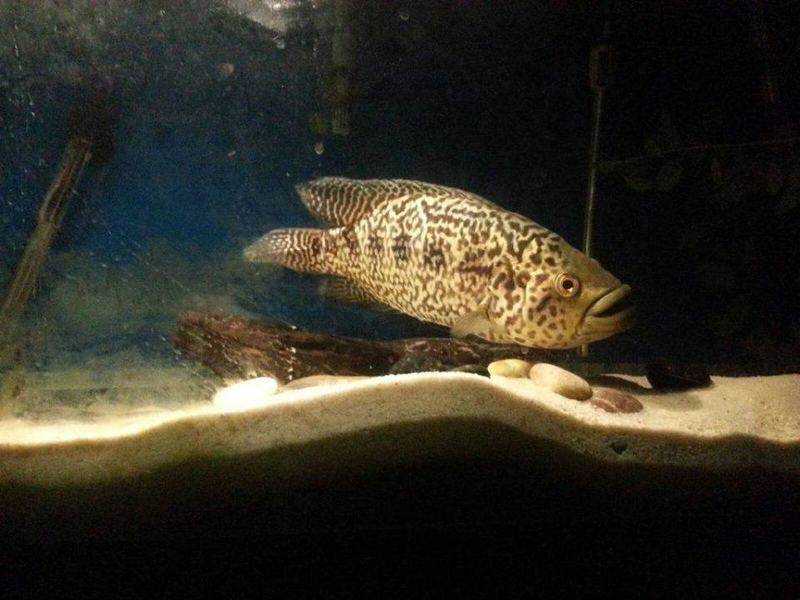
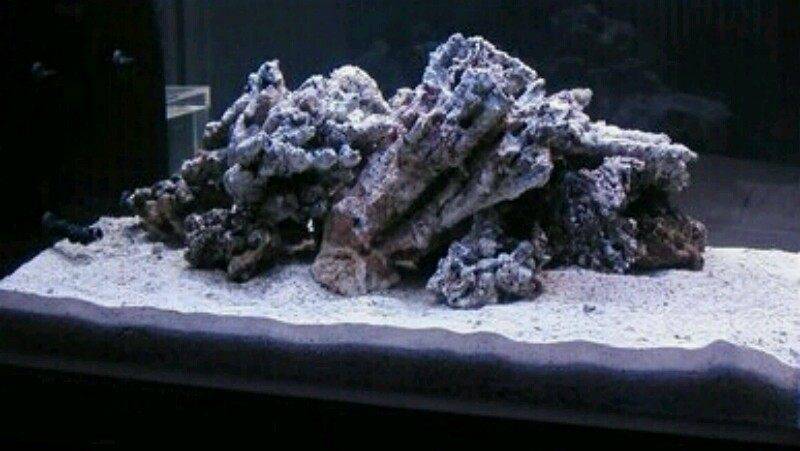
image.jpeg

image.jpeg
 
Science news on Phys.org
This is not light penetrating in the sand bed. This is light from the light tube above that reflects once on the glass-air interface.

[edit]sorry, armament is wrong word; I was looking for the word to translate dutch word armature (light source)
 
BvU said:
This is not light penetrating in the sand bed. This is light from the light tube above that reflects once on the glass-air interface.

[edit]sorry, armament is wrong word; I was looking for the word to translate dutch word armature (light source)
Hmmm well i don't understand that. Why does that happen?
Light penetration or not, can someone explain why only about an inch of sand beneath the surface is visible and anything beneath appears to just fade to darkness?
 
nmsurobert said:
Can you explain why only about an inch of sand is luminated and then drops to basically nothing ?
I hope this picture below will help
Shadow.png

The dashed line marks the ray that is barely obstructed by the sand's surface, the point where this ray reflects the second time marks the start of the shadowy region.
 
  • Like
Likes sophiecentaur and davenn
blue_leaf77 said:
I hope this picture below will help
View attachment 104262
The dashed line marks the ray that is barely obstructed by the sand's surface, the point where this ray reflects the second time marks the start of the shadowy region.
Ooooh ok. That makes total sense. Thank you! Did you make that just to explain it to me? This forum is great.
 
This is not about light penetration. More likely the sand is stratified, with the bottom layer having a darker colour.
This stratification is mentioned in aquarium sites, like this one. See picture towards the end.
http://www.reefkeeping.com/issues/2003-03/eb/.
 
nasu said:
This is not about light penetration. More likely the sand is stratified, with the bottom layer having a darker colour.
This stratification is mentioned in aquarium sites, like this one. See picture towards the end.
http://www.reefkeeping.com/issues/2003-03/eb/.
If we take a look at the boundary between the light and dark region in the photos in the first post, the border shape follows almost exactly the shape of the sand surface that is exposed to the direct light. I don't think a stratification process can be the cause of such perfect congruence.
 
  • #10
So, rather than debating theory, how about an experiment? Take a piece of black plastic (for instance, a strip of electrical tape folded in half, sticky side to sticky side). Place it on the surface of the sand, flush up against the glass so that it blocks all light that would otherwise penetrate the sand. See if the sand below the tape is still illuminated. Compare with the sand to either side of the strip.

Edit: if the tape floats, weight it down with a dusting of sand as needed.
 
  • Like
Likes Merlin3189 and OmCheeto
  • #11
jbriggs444 said:
So, rather than debating theory, how about an experiment? Take a piece of black plastic (for instance, a strip of electrical tape folded in half, sticky side to sticky side). Place it on the surface of the sand, flush up against the glass so that it blocks all light that would otherwise penetrate the sand. See if the sand below the tape is still illuminated. Compare with the sand to either side of the strip.

Edit: if the tape floats, weight it down with a dusting of sand as needed.

I observe the same phenomenon in my fish tank, and that worked!
Placed flat on the gravel, there was still illumination.
But placed flat against the glass, there was no illumination.
So the light was being internally reflected by the glass.

I also did some laser testing with a white cd, at and below the surface of the gravel.
I like blue_leaf77's illustration the best, as it best illustrates that the lit band is due to the non point source nature of the lamp.
With the laser beam, I was able to illuminate only the spot an inch below the level of the gravel.
Everything above and below that was dark.
Unless! I increased the vertical angle, and then I had multiple points illuminated, with diminishing intensity, similar to A.T.'s illustration.
But as BvU correctly stated in post #2, nmsurobert's band is due mostly to a single reflection.
Moving the fish tank lamp forward, will increase the height of the lit band of sand.

illuminated.fish.tank.gravel.2016.08.04.midnight.png


ps. My fish must think it's the weekend and time to party, as it's after 1am and the lights are still on. And that laser light show. Woo Hoo!
 
  • Like
Likes Bandersnatch, BvU and blue_leaf77
  • #12
blue_leaf77 said:
If we take a look at the boundary between the light and dark region in the photos in the first post, the border shape follows almost exactly the shape of the sand surface that is exposed to the direct light. I don't think a stratification process can be the cause of such perfect congruence.
Yes, I observed that feature and I found it interesting.
However stratification of sand is described by several sites about aquariums. And you can see more than one layer, with a darker one in between.
And it may have a similar behavior (following the features of the surface). If I had an aquarium I would just turn off the lights from above and check if this strataification exist or not, with a small light from the side.
 
  • #13
nasu said:
Yes, I observed that feature and I found it interesting.
However stratification of sand is described by several sites about aquariums. And you can see more than one layer, with a darker one in between.
And it may have a similar behavior (following the features of the surface). If I had an aquarium I would just turn off the lights from above and check if this strataification exist or not, with a small light from the side.
I have a fish tank, though as you can see from my image, it is filled with pebbles instead of sand. Some of the pebbles are somewhat translucent, so this complicates the matter. But with front illumination, there is no visible stratification.
In trying to understand the height of the lighted portion, I did the maths yesterday. It was very complicated, as I had to shift directions by 90° after the light hit the water.
Anyways, after much head scratching, my maths claimed that the light should illuminate the top 12.8 mm of gravel, based on angles, and the 5 mm thickness of the glass. So I dug my mostly opaque cd out of the trash, stuck it against the side of the tank at the bottom, and the top 13 mm were illuminated.

base.fish.tank.sand.model.rev2.png

Nothing is drawn to scale, nor are the angles displayed correctly.
The angles only represent the relative change of direction of the light paths.​

ps. I've been an aquarist for about 50 years, and had never noticed this phenomenon before. Hence, my interest.
 
  • Like
Likes blue_leaf77

Similar threads

  • · Replies 11 ·
Replies
11
Views
3K
  • · Replies 1 ·
Replies
1
Views
2K
Replies
10
Views
3K
  • · Replies 24 ·
Replies
24
Views
16K
Replies
1
Views
3K
  • · Replies 17 ·
Replies
17
Views
3K
  • · Replies 3 ·
Replies
3
Views
2K
  • · Replies 4 ·
Replies
4
Views
4K
  • · Replies 2 ·
Replies
2
Views
12K
  • · Replies 16 ·
Replies
16
Views
6K