Why Don't GM Counters Detect Alpha Particles?

Click For Summary

Discussion Overview

The discussion revolves around the detection capabilities of Geiger-Müller (GM) counters, specifically addressing why they typically do not detect alpha particles and exploring the detection of other particles such as neutrons and gamma rays. Participants share insights on the design and functionality of GM counters, including the types of tubes used and the physics behind particle detection.

Discussion Character

  • Exploratory
  • Technical explanation
  • Debate/contested

Main Points Raised

  • One participant notes that GM counters generally do not detect alpha particles due to their low penetrating capability, despite having a high charge and mass.
  • Another participant asserts that GM tubes with a thin mica window can detect alpha particles, depending on the window thickness and energy of the alpha particles.
  • Concerns are raised about the adequacy of GM tubes in detecting alpha particles, with some suggesting that many inexpensive models lack the proper design for this purpose.
  • A participant questions the detection of neutrons, noting that while neutrons are uncharged and cannot ionize gas directly, gamma rays, which are also uncharged, can be detected through secondary interactions.
  • Discussion includes the maximum detectable energy for beta particles and gamma rays, with one participant asking for clarification on the physics behind these limits.
  • Another participant explains that gamma rays interact through the Photoelectric effect or Compton effect, producing ionizing electrons, while also discussing the complexities of neutron detection.
  • One participant mentions using an obsolete GM tube model and seeks further explanation on the detection efficiency of gamma rays and the interaction of neutrons with materials.
  • There is a suggestion that neutrons can be detected in specific gas mixtures and through various methods, including using neutron absorbers or surrounding materials to enhance detection.
  • Another participant emphasizes that the effectiveness of a detector is not solely based on the number of events detected but also on the estimation of the actual number of particles present.

Areas of Agreement / Disagreement

Participants express differing views on the capabilities of GM counters to detect alpha particles and neutrons, with no consensus reached on the effectiveness of various models or methods for detection.

Contextual Notes

Participants highlight limitations in the design and materials of GM counters, the dependence on specific conditions for detection, and the unresolved nature of the physics behind maximum detectable energies for different particles.

Vilius
Messages
3
Reaction score
1
Hi,
I am an undergraduate electronics engineer building a GM counter for my final assessment. I read a lot of theory about GM counters as well as the nuclear physics theories in general, but there is one thing I can not find an answer to. Why do none of the GM counters detect alpha particles? I have looked through so many different models (both pancake and end-window types) and I did not find a single one capable of detecting alpha particles. I know that alpha has the smallest penetrating capability, but at the same time, it has the largest charge and inertia as well (due to a comparably highest mass of all radioactive particles.) Thank you in advance for any observations.
 
Engineering news on Phys.org
Any GM tube with a thin window (usually mica) should detect alpha particles. You will find there will be a minimum energy and that will depend on how thick the window is. A good tube to look at is the LND712. It's small and typically quite expensive, but it's the classic. Anything with a similar window thickness around 2mg/sqcm should do the same job.
 
  • Like
  • Informative
Likes   Reactions: mark_bose, berkeman, Lord Jestocost and 2 others
Vilius said:
Why do none of the GM counters detect alpha particles?
'None' is a bit of a stretch (as it was already stated above), but in general, most GM detectors (and the 'most' here comes from the fact that most of them are made cheap) does not have the right type of GM tube and cover to provide adequate window for them.

Though there are other detectors which does not have window at all:wink:

 
  • Like
Likes   Reactions: Alex A
And what about neutrons? A popular explanation is that the neutrons only have mass with no charge, so they can not ionize the gas inside a GM tube, but gamma photons also do not have a charge, however, gamma rays are detected...
And the last thing. GM counter datasheets often provide ,,maximum detectable beta particle /gamma ray energy" I can understand, why low energy particles/rays do not get detected, but what is the physics behind maximum detectable energy?

Thank you in advance
 
Can you point to a datasheet with a maximum energy limit? On a proper sheet you will get a response curve, which may tail off at high energies, because these interact less with a given amount of matter.

Gamma and X-ray photons are not charged, but they interact by the Photoelectric effect or the Compton effect, and so produce high energy electrons which are charged and ionising - they leave a trail of charged pairs in their wake. A GM tube may only detect 1% of the gamma rays that go through it depending on the energy and construction, and making the metal shell thicker usually results in a tube that is a better gamma detector.

Neutrons are a similar case in that they can for example knock protons out of a hydrogen containing material which is then an ionising radiation and can be detected by a scintillator or a GM tube. This is how neutrons were discovered - a block of paraffin placed in front of a GM tube increased the counts which suggested something previously invisible was being detected. Slow neutrons are often detected by having materials that produce nuclear fragments of high energy, and usually in tubes that operate below the Geiger plateau (and so the pulse size depends on the number of ion pairs produced, a GM tube produces the same large pulse for every event). Nuclear fragments tend to drop a lot of energy in a small path length, producing a big pulse. This enables energy discrimination, which is important, because you want to know what you are detecting. Neutron detection is a huge field and there are radically different ways of doing this, including weirdly simple ways like wrapping silver foil around a GM tube. All methods have strengths and weaknesses.
 
I am using an obsolete Philips 18504 or ZP1400 (one tube has 2 names, really strange, but it is what it is...)
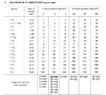
So here is a picture from the datasheet.

,,A GM tube may only detect 1% of the gamma rays that go through it depending on the energy and construction, and making the metal shell thicker usually results in a tube that is a better gamma detector."

Can you explain the reason for that?

About the neutrons, does it mean that neutrons can only ionise hydrogen?

It started as a simple question, but now I see that it went really far... I am really curious :)

Thank you again
 

Attachments

  • 1.jpg
    1.jpg
    46.9 KB · Views: 188
  • Like
Likes   Reactions: Alex A
Vilius said:
And what about neutrons? A popular explanation is that the neutrons only have mass with no charge, so they can not ionize the gas inside a GM tube, but gamma photons also do not have a charge, however, gamma rays are detected..
Neutrons would be detected in a gas, e.g, 10BF3 or 3He, where the 10B and 3He absorb a neutron and fission, for former undergoing an (n,α) reaction and the latter, an (n,p) reaction. Also, depending on the neutron energy, one might surround the tube with paraffin or other hydrogenous material to thermalize the neutrons.

Edit/update: One could also coated a Geiger counter or proportional counter tube with a strong neutron absorber, e.g, Hf, or B4C, with B enriched in 10B, or HfB2, or even 235U. The last option is a fission chamber, which uses fission reactions to interact with neutrons.

Otherwise, one might use so-called Self-Powered Neutron Detectors
https://www.oecd-nea.org/science/rsd/ic96/4-2.pdf
 
Last edited:
  • Informative
  • Like
Likes   Reactions: mark_bose and Alex A
For a detector to be useful, the important question is not how many events it is detecting, or missing, but how many are out there and how accurately that can be estimated. That table gives information on what the tube can and can't detect and how much you would need to adjust the numbers to get the true answer.

GM tubes are usually made of thin materials so to be sensitive to beta rays etc. Gamma rays don't interact well, especially at high energy, so most will sail through the tube like it isn't there.

Hydrogen isn't a great way to detect neutrons (people that work with proton recoil counters may disagree), and putting wax in front of a GM tube with a window is highly inefficient, but a proton and a neutron have similar masses so when a neutron does hit a proton the maximum kinetic energy transfer can happen. If you are going to play marbles, you want it to hit another marble. A bowling ball would probably barely move, and you wouldn't expect a GM tube to detect neutrons normally.
 
  • Like
Likes   Reactions: mark_bose and Astronuc

Similar threads

  • · Replies 20 ·
Replies
20
Views
7K
Replies
12
Views
2K
  • · Replies 1 ·
Replies
1
Views
2K
  • · Replies 6 ·
Replies
6
Views
3K
  • · Replies 3 ·
Replies
3
Views
2K
Replies
1
Views
2K
  • · Replies 2 ·
Replies
2
Views
2K
  • · Replies 8 ·
Replies
8
Views
4K
Replies
2
Views
2K
  • · Replies 9 ·
Replies
9
Views
2K