SUMMARY
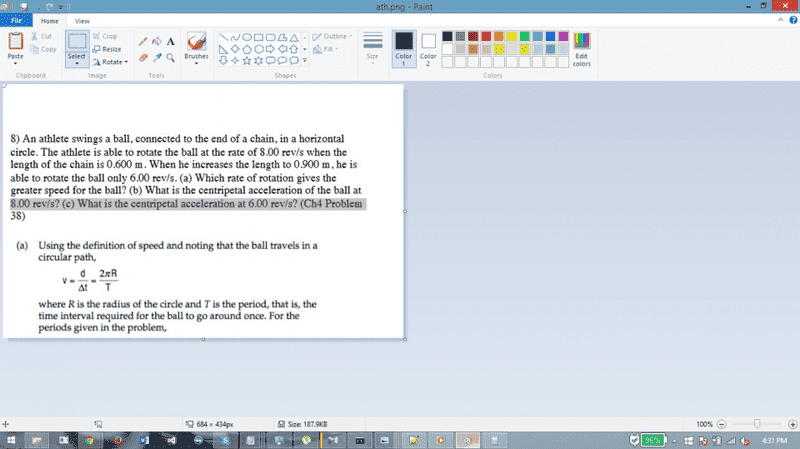
The discussion clarifies the relationship between linear velocity and angular velocity in circular motion. The formula for linear velocity is given by $$v = \frac{2 \pi}{T} R$$, where $$R$$ represents the radius of the circular path. The angular frequency is defined as $$\omega = \frac{2\pi}{T}$$, leading to the conclusion that linear velocity is the product of angular velocity and radius, expressed as $$v = \omega R$$. This relationship is crucial for understanding motion in circular paths.
PREREQUISITES
- Understanding of angular velocity and linear velocity concepts
- Familiarity with circular motion equations
- Basic knowledge of trigonometric functions and their derivatives
- Concept of angular frequency and its relation to period
NEXT STEPS
- Study the derivation of circular motion equations in physics
- Learn about the relationship between angular frequency and period in detail
- Explore the implications of angular velocity in different physical systems
- Investigate the role of radius in determining linear velocity in various contexts
USEFUL FOR
Students of physics, educators teaching circular motion concepts, and anyone interested in the mathematical relationships governing motion in circular paths.