Why is my air conditioner making sounds?

Click For Summary

Discussion Overview

The discussion revolves around the unusual sounds emitted by a 24000 BTU inverter air conditioner, particularly from the indoor unit. Participants explore potential causes for the noises, the implications of refrigerant levels, and the effects of moisture or air in the system. The conversation includes technical explanations and personal experiences related to air conditioning systems.

Discussion Character

  • Exploratory
  • Technical explanation
  • Debate/contested
  • Conceptual clarification

Main Points Raised

  • One participant describes a pattern of reduced airflow and cooling followed by strange sounds, suggesting a possible issue with refrigerant or moisture in the system.
  • Another participant speculates that the sound may be related to vapor or gas bubbles in the refrigerant.
  • Concerns are raised about the absence of a vacuum pump during installation, which some participants argue could lead to system failure.
  • There are inquiries about the specifics of the sound pattern, including the reasons for reduced airflow and the frequency of the sounds.
  • One participant mentions that household refrigerators often make similar noises, which may not indicate a problem.
  • Another participant refers to an installation manual that outlines diagnostic codes and the importance of a vacuum procedure before refrigerant introduction.

Areas of Agreement / Disagreement

Participants express differing views on the implications of the sounds and the necessity of a vacuum pump during installation. Some agree on the potential risks associated with moisture and air in the system, while others remain uncertain about the specific causes of the noises.

Contextual Notes

There are unresolved questions regarding the specific nature of the sounds and their implications for system performance. The discussion also highlights the importance of proper installation procedures, such as the use of a vacuum pump, which some participants believe is critical for system reliability.

Who May Find This Useful

This discussion may be useful for individuals experiencing similar issues with air conditioning units, HVAC technicians, and those interested in understanding the operational characteristics of inverter air conditioners.

Shervan360
Messages
26
Reaction score
4
TL;DR
air conditioner strange sound
Hello,

I bought an air conditioner 24000 btu Inverter. ( for home). The indoor unit makes strange noises/sounds at night.

The pattern is as follows:
First, wind blowing and cooling are reduced to 80%. (Similar to fan mode)
After some minutes(About 3-4 minutes),
Then the sound (sound in the video) comes a few times and then everything returns to normal.
Wind blowing and cooling will be normal and will not be a problem.
No sound comes out of the outdoor unit.
Please watch the video.
thank you
https://youtu.be/Cj0R5KeF8m4
 

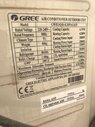
Attachments

  • gree01.jpeg
    gree01.jpeg
    29.2 KB · Views: 55
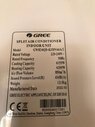
  • gree02.jpeg
    gree02.jpeg
    54.2 KB · Views: 114
Physics news on Phys.org
I can not say for sure but, the sound reminds me of vapor or gas bubbles in a fluid.

Maybe have the unit checked for a low amount of refrigerant or contamination / moisture in the system.

Please let us know what the fix is, we like to learn too!

Cheers,
Tom
 
  • Skeptical
  • Like
Likes   Reactions: PhDeezNutz and Shervan360
Tom.G said:
I can not say for sure but, the sound reminds me of vapor or gas bubbles in a fluid.

Maybe have the unit checked for a low amount of refrigerant or contamination / moisture in the system.

Please let us know what the fix is, we like to learn too!

Cheers,
Tom
Thank you,
With the pressure gauge we checked the Gas and refrigerant is normal.
How can I know if there is moisture or air in system?
 
Shervan360 said:
How can I know if there is moisture or air in system?
Moisture is the easy one, It generally freezes, the ice blocks refrigerant circulation, the system stops moving thermal energy. It can also overload the compressor causing it to shut down.

As for air, it has moisture in it which leads to blockage as above. That's why, when the coolant loop is opened, and also at initial installation, a vacuum pump is first used to evacuate the system before refrigerant is introduced. In both cases, a fresh dessicant is installed to absorb any remaining moisture.

OK, enough general background.

Household refrigerators often make similar noises. I've gotten so used to them that I don't 'hear' them any more. If I recall correctly, the sound occurs shortly after the compressor shuts off... probably just some refrigerant boiling as the pressure equalizes on the High and Low pressure side of the compressor. Doesn't seem to be a problem for the refrigerator.

Since you seem to have a Heat Pump system that handles both heating and cooling, it could be a small leak in one of the change-over valves that switches between the heating and cooling cycles.

Unless it noticably progresses, my suggestion is 'Don't worry about it for now, but if it gets noticeably worse, have (a different) heat pump specialist look at it.'

Cheers,
Tom
 
  • Love
Likes   Reactions: Shervan360
Tom.G said:
Moisture is the easy one, It generally freezes, the ice blocks refrigerant circulation, the system stops moving thermal energy. It can also overload the compressor causing it to shut down.

As for air, it has moisture in it which leads to blockage as above. That's why, when the coolant loop is opened, and also at initial installation, a vacuum pump is first used to evacuate the system before refrigerant is introduced. In both cases, a fresh dessicant is installed to absorb any remaining moisture.

OK, enough general background.

Household refrigerators often make similar noises. I've gotten so used to them that I don't 'hear' them any more. If I recall correctly, the sound occurs shortly after the compressor shuts off... probably just some refrigerant boiling as the pressure equalizes on the High and Low pressure side of the compressor. Doesn't seem to be a problem for the refrigerator.

Since you seem to have a Heat Pump system that handles both heating and cooling, it could be a small leak in one of the change-over valves that switches between the heating and cooling cycles.

Unless it noticably progresses, my suggestion is 'Don't worry about it for now, but if it gets noticeably worse, have (a different) heat pump specialist look at it.'

Cheers,
Tom
I greatly appreciate your time. Unfortunately, the installer didn't use a vacuum pump.
 
Shervan360 said:
I greatly appreciate your time. Unfortunately, the installer didn't use a vacuum pump.
Then you are guaranteed the system will fail.
 
  • Sad
Likes   Reactions: Shervan360
Shervan360 said:
The pattern is as follows:
First, wind blowing and cooling are reduced to 80%. (Similar to fan mode)
After some minutes(About 3-4 minutes),
Then the sound (sound in the video) comes a few times and then everything returns to normal.
Wind blowing and cooling will be normal and will not be a problem.
Could you explain the text in bold fonts a little further?
 
  • Like
Likes   Reactions: Shervan360
Lnewqban said:
Could you explain the text in bold fonts a little further?
wind blowing = airflow speed/Fan speed
 
Averagesupernova said:
Then you are guaranteed the system will fail.
Do you think I should do a vacuum now? Of course, we have to empty all the gas and refill it.
 
  • #10
Shervan360 said:
Do you think I should do a vacuum now? Of course, we have to empty all the gas and refill it.
I am assuming you would take on this job of evacuating the system and refilling?
 
Last edited:
  • Skeptical
Likes   Reactions: Shervan360
  • #11
Shervan360 said:
wind blowing = airflow speed/Fan speed
I understand.
But what I was trying to ask was about the pattern that you have described:
1)Why the wind blowing and cooling are reduced to 80% at first?
2)How many times after 3-4 minutes) the sound (sound in the video) comes before all returns to normal.
3) Will wind blowing and cooling will be normal, and will not be a problem, at 80% airflow, or at 100%, or other?
Thanks.
 
  • Like
Likes   Reactions: Shervan360
  • #12
Lnewqban said:
I understand.
But what I was trying to ask was about the pattern that you have described:
1)Why the wind blowing and cooling are reduced to 80% at first?
2)How many times after 3-4 minutes) the sound (sound in the video) comes before all returns to normal.
3) Will wind blowing and cooling will be normal, and will not be a problem, at 80% airflow, or at 100%, or other?
Thanks.
1) I don't know. (Some people say that inverter ACs are like this.)
2) 3-4 times.
3) at 100% airflow and cooling.
 
  • #13
Again, thanks.
Do you know if an additional condensate pump has been installed inside the indoor unit?
Do you have more than one indoor unit in the same system?

https://www.greecomfort.com/assets/documents/archive/multi-revision-a/installation-manual.pdf
I have found this installation manual for your model, which indicates that:

"This unit has onboard diagnostics. Informational and error codes will be displayed on the LED display on the front panel of the indoor unit in place of the temperature display. The unit will provide informational codes to alert the user of special system operations. Informational codes are not signs of system malfunctions or failures. The following is a list of system informational codes and descriptions."

It also specifies a vacuum procedure prior to liberate the refrigerant factory charge contained in the condenser (outdoor) unit:

"The deep vacuum method requires a vacuum pump capable of pulling a vacuum of 500 microns and a vacuum gauge capable of accurately measuring this vacuum depth. The deep vacuum method is the most positive way of assuring a system is free of air and liquid water."
 
  • Love
Likes   Reactions: Shervan360
  • #14
Lnewqban said:
Again, thanks.
Do you know if an additional condensate pump has been installed inside the indoor unit?
Do you have more than one indoor unit in the same system?

https://www.greecomfort.com/assets/documents/archive/multi-revision-a/installation-manual.pdf
I have found this installation manual for your model, which indicates that:

"This unit has onboard diagnostics. Informational and error codes will be displayed on the LED display on the front panel of the indoor unit in place of the temperature display. The unit will provide informational codes to alert the user of special system operations. Informational codes are not signs of system malfunctions or failures. The following is a list of system informational codes and descriptions."

It also specifies a vacuum procedure prior to liberate the refrigerant factory charge contained in the condenser (outdoor) unit:

"The deep vacuum method requires a vacuum pump capable of pulling a vacuum of 500 microns and a vacuum gauge capable of accurately measuring this vacuum depth. The deep vacuum method is the most positive way of assuring a system is free of air and liquid water."

Thank you,
Do you know if an additional condensate pump has been installed inside the indoor unit?
I don't know, but I attached AC technical specifications. (PDF file)

Do you have more than one indoor unit in the same system?
One indoor unit.

Your link is not the manual of the AC, but I do not have any errors on the LED display.
 

Attachments

  • #15
You are welcome.
The pump is an additional item that is sometimes installed inside the indoor unit by the installer in cases where natural drain of the condensate (water generated during cooling) is difficult to achieve.
Those are sometimes noisy when cycling.
 
  • Like
Likes   Reactions: Shervan360
  • #16
Lnewqban said:
You are welcome.
The pump is an additional item that is sometimes installed inside the indoor unit by the installer in cases where natural drain of the condensate (water generated during cooling) is difficult to achieve.
Those are sometimes noisy when cycling.
No, It is not installed.
 
  • #17
Shervan360 said:
No, It is not installed.
Then, the noise could have two sources:
1) Air bubbles and humidity in refrigerant, as explained by @Tom.G above.
2) Mechanism moving the vent based on changes of the percentage of airflow.

I would not worry much about it, unless it interferes with your sleeping time.
Best!
 
  • Love
Likes   Reactions: Shervan360
  • #18
The problem was from the drain pipe! It was due to the accumulation of water/water building up. (Although we had the drain water outlet properly and did not have any water leakage.)
We installed a pipe with a smaller diameter and the problem was solved.
Now we have the following pattern, but the sound is reduced by one-twentieth.

images (2).jpg


First, wind blowing(airflow) and cooling are reduced to 80%. (Similar to fan mode)
After some minutes(About 3-4 minutes),
Then the sound (sound in the video) comes a few times and then everything returns to normal.
Wind blowing and cooling will be normal and will not be a problem.
No sound comes out of the outdoor unit.
 
  • Like
  • Informative
Likes   Reactions: Tom.G, BillTre and berkeman
  • #19
Thanks for the follow-up.
It is fulfilling and makes the thread more complete.
Problem - Analysis - Solution
 
  • Love
Likes   Reactions: Shervan360

Similar threads

  • · Replies 13 ·
Replies
13
Views
7K
  • · Replies 6 ·
Replies
6
Views
4K
  • · Replies 12 ·
Replies
12
Views
2K
  • · Replies 6 ·
Replies
6
Views
2K
  • · Replies 5 ·
Replies
5
Views
10K
  • · Replies 2 ·
Replies
2
Views
2K
  • · Replies 4 ·
Replies
4
Views
4K
  • · Replies 9 ·
Replies
9
Views
70K
  • · Replies 3 ·
Replies
3
Views
3K
Replies
27
Views
6K