Beekeeper
- 15
- 2
- TL;DR
- I am working on a sonoluminescence experiment and am having trouble with it. The problem is that although I can trap a bubble, I cannot get it to glow.
Hi, I am working on a sonoluminescence experiment and am having trouble with it. The problem is that although I can trap a bubble, I cannot get it to glow.
I am following the same procedure described by 'The Thought Emporium' and you can see a video about it here: .
In a nutshell the procedure is similar to the standard one described here: http://techmind.org/sl/ but rather than having two transducers on either side of the flask, I just have one transducer at the bottom.
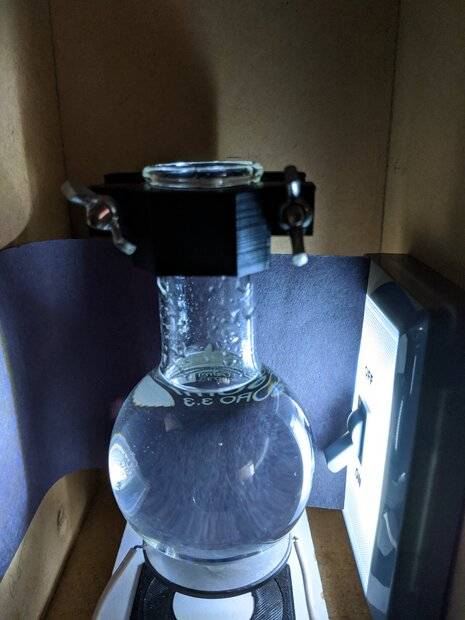
Below is a picture of my flask with the trapped bubble. I wonder if anyone else has attempted the experiment following this procedure and been successful or can offer me any advice?
Thanks.
I am following the same procedure described by 'The Thought Emporium' and you can see a video about it here: .
In a nutshell the procedure is similar to the standard one described here: http://techmind.org/sl/ but rather than having two transducers on either side of the flask, I just have one transducer at the bottom.
Below is a picture of my flask with the trapped bubble. I wonder if anyone else has attempted the experiment following this procedure and been successful or can offer me any advice?
Thanks.
Last edited by a moderator: