A photon vs an electron. Wave or particle?

Click For Summary
SUMMARY

The discussion clarifies the nature of electrons and photons, establishing that electrons are definitively particles, while photons exhibit wave-like properties due to oscillating electromagnetic fields. Both entities demonstrate dual characteristics, displaying either particle-like or wave-like behavior based on measurement conditions. The concept of "wave-particle duality" has evolved, with modern quantum mechanics rejecting the simplistic categorization of these entities as merely particles or waves. Instead, they are better understood as quantum objects whose properties depend on the type of measurement performed.

PREREQUISITES
  • Understanding of quantum mechanics principles
  • Familiarity with wavefunctions and their role in quantum measurements
  • Knowledge of electromagnetic fields and their behavior
  • Concept of wave-particle duality in physics
NEXT STEPS
  • Explore the implications of quantum mechanics on wavefunction collapse
  • Study the behavior of quantum objects in different measurement scenarios
  • Investigate the historical development of quantum theory post-1925
  • Learn about the mathematical representation of wavefunctions in quantum mechanics
USEFUL FOR

Physicists, students of quantum mechanics, and anyone interested in the foundational concepts of particle physics and wave behavior.

FallenApple
Messages
564
Reaction score
61
So we know for a fact that an electron is a particle. The "wave" like properties are not waves at all, its just the wavefunction that is a mathematical wave which is used for getting probabilities for where the electron will end up.

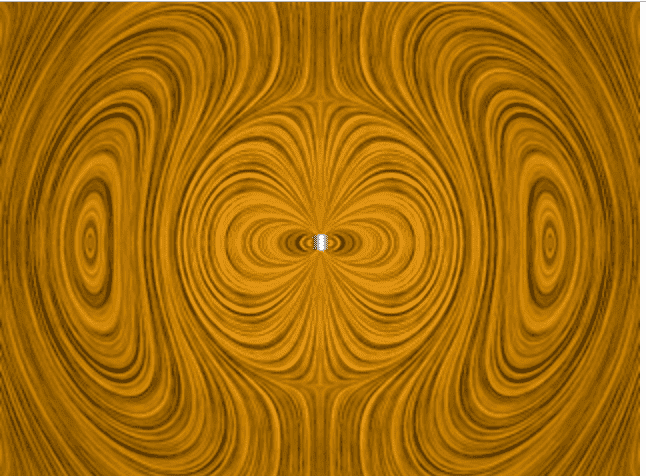
But what about a photon? When a charge oscillates, its gives off loops of EM fields that are actually physical waves. So then we don't get solid points like the electron?

I just can't imagine that those loops of field can converge in one point. If that is the case, then at that point, the electric and magnetic fields are no longer perpendicular, which is a contradiction.
Screen Shot 2017-01-26 at 8.20.25 PM.png
 
Physics news on Phys.org
Electrons and photons are neither particles nor waves, as those words are understood in ordinary English usage. Both will display particle-like behavior (such as having a definite position) or wave-like behavior (interference, diffraction) depending on what you do with them, but that doesn't mean that they're either.

A corollary to this is that the statement "We know for a fact that an electron is a particle" is true only if you are using a definition of "particle" that includes photons as well.
 
Nugatory said:
Electrons and photons are neither particles nor waves, as those words are understood in ordinary English usage. Both will display particle-like behavior (such as having a definite position) or wave-like behavior (interference, diffraction) depending on what you do with them, but that doesn't mean that they're either.

A corollary to this is that the statement "We know for a fact that an electron is a particle" is true only if you are using a definition of "particle" that includes photons as well.

I thought that there's no such thing as matter waves. It's just particles upon wave function collapse and who knows what before then. Even when there is an interference pattern(due the no measurement), the pattern when zoomed in is made of discrete clumps, which indicates that particles have landed.
 
FallenApple said:
I thought that there's no such thing as matter waves. It's just particles upon wave function collapse and who knows what before then.
This "wave-particle duality" idea that collapse turns a wave into a particle was abandoned with the discovery of modern quantum mechanics in 1925 or thereabouts. At the turn of the 20th century physicists knew only classical waves and classical particles, so when they first encountered quantum phenomena around the turn of the 20th century they naturally interpreted these phenomena in those terms: particles have a definite position so If it has a definite position it's a particle; it acquires that position when a position measurement collapses the wave function; therefore it's a particle after collapse.

However, we now know that's that's not what was going on. Instead we have a quantum object. If we measure its position the wave function will collapse to a state of definite position and indefinite everything (non-commuting) else; if we measure something else the wave function will collapse to a state in which that something else is definite and the position is not. The states of definite position do not mean "it is a particle", they mean that a detector at a given position will trigger. Unfortunately, by then we had gotten in the habit of calling these quantum objects "particles" and the name stuck, even long after it became clear that they aren't anything like what the ordinary English-language word "particle" suggests.
Even when there is an interference pattern(due the no measurement), the pattern when zoomed in is made of discrete clumps, which indicates that particles have landed.
Yes, and both photons and electrons display that behavior. The dot on the screen is the result of a position measurement; it's saying "the photon/electron was detected at this position".
 
  • Like
Likes   Reactions: 256bits
FallenApple, it's really far more efficient to ask questions rather than posting statements hoping they will be corrected. Trust me - you will like the results.
 
  • Like
Likes   Reactions: anorlunda

Similar threads

  • · Replies 4 ·
Replies
4
Views
1K
  • · Replies 18 ·
Replies
18
Views
2K
  • · Replies 28 ·
Replies
28
Views
5K
  • · Replies 21 ·
Replies
21
Views
2K
  • · Replies 1 ·
Replies
1
Views
1K
Replies
3
Views
4K
  • · Replies 36 ·
2
Replies
36
Views
8K
  • · Replies 10 ·
Replies
10
Views
2K
  • · Replies 5 ·
Replies
5
Views
1K
  • · Replies 4 ·
Replies
4
Views
2K