Best models to describe molecules

  • Context: Undergrad 
  • Thread starter Thread starter lucas_
  • Start date Start date
  • Tags Tags
    Models Molecules
Click For Summary
SUMMARY

The discussion centers on the complexities of modeling molecular interactions, emphasizing that traditional concepts like wave functions and Hamiltonians are essential for understanding chemical bonding. Participants highlight the inadequacy of simplistic models, such as treating molecules as classical objects, and stress the importance of quantum mechanics in explaining phenomena like Brownian motion and molecular coherence. The conversation references the Journal of Condensed Matter Physics and critiques a paper from the American Journal of Modern Physics, underscoring the necessity of relying on mainstream physics for accurate interpretations of molecular behavior.

PREREQUISITES
  • Quantum mechanics fundamentals
  • Understanding of molecular bonding and interactions
  • Familiarity with concepts of Brownian motion and random walks
  • Knowledge of effective models in atomic and condensed matter physics
NEXT STEPS
  • Research the implications of the Born-Oppenheimer theorem in quantum mechanics
  • Explore the latest findings in the Journal of Condensed Matter Physics
  • Study the role of quantum coherence in molecular interactions
  • Investigate effective models used in atomic and condensed matter systems
USEFUL FOR

Researchers, physicists, and students in the fields of quantum mechanics, molecular chemistry, and condensed matter physics seeking to deepen their understanding of molecular interactions and the limitations of classical models.

lucas_
Messages
413
Reaction score
23
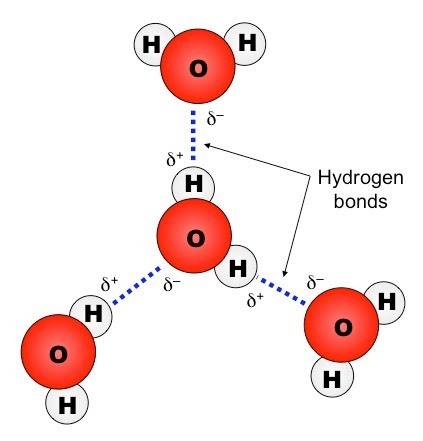
Molecules don't really look like this with clearly defined objects and outlines. Remember that in the double slit experiments, we can't even model what happens between measurements, like how the electron behave between emitter and detector.
246519


So what is the best model to describe them? How can molecules interact using without the concept of wave function or hamiltonians? How do you visualize models physically?

Are there more exotic ways that they can interact? What's the latest in Atomic and Condensed Matter study about this all?
 
Physics news on Phys.org
Really, you're going to have to put in a bit more effort in your questions. What you have written is either overly broad like "What's the latest in Atomic and Condensed Matter study about this all? " or just plumb wrong "How can molecules interact using without the concept of wave function or hamiltonians? "
 
Let me rephrase my questions.

Random walk or Brownian motions are supposed to be what characterize molecules (how they bond and stuff). Is there some process that can override the random walk to initiate global coherence of some kind? If we treat molecules as nuts and bolts, this won't happen. But they are quantum system. So the quantumness may still be there and have features not found in nut and bolts macroscopic system? What are the features not commonly seen?
 
lucas_ said:
Let me rephrase my questions.

Random walk or Brownian motions are supposed to be what characterize molecules (how they bond and stuff). Is there some process that can override the random walk to initiate global coherence of some kind? If we treat molecules as nuts and bolts, this won't happen. But they are quantum system. So the quantumness may still be there and have features not found in nut and bolts macroscopic system? What are the features not commonly seen?

This is published in the Journal of Condense Matter Physics which I was reading

https://pdfs.semanticscholar.org/1354/0ea83c8e1d6a886fc74b17693ffea1478ef0.pdf
Unsolved mysteries of water in its liquid and glassy phases

"Abstract. Although H2O has been the focus of a considerable amount of research since the
beginning of the century, its peculiar physical properties are still not well understood. First we discuss some of the anomalies of this ‘complex fluid’. Then we describe a qualitative interpretation in terms of percolation concepts. Finally, we discuss recent experiments and simulations relating to the liquid–liquid phase transition hypothesis that, in addition to the known critical point in water, there exists a ‘second’ critical point at low temperatures. In particular, we discuss very recent measurements at Tsukuba of the compression-induced melting and decompression-induced melting lines of high-pressure forms of ice..."
 
lucas_ said:
This is published in the Journal of Condense Matter Physics which I was reading

https://pdfs.semanticscholar.org/1354/0ea83c8e1d6a886fc74b17693ffea1478ef0.pdf
Unsolved mysteries of water in its liquid and glassy phases

"Abstract. Although H2O has been the focus of a considerable amount of research since the
beginning of the century, its peculiar physical properties are still not well understood. First we discuss some of the anomalies of this ‘complex fluid’. Then we describe a qualitative interpretation in terms of percolation concepts. Finally, we discuss recent experiments and simulations relating to the liquid–liquid phase transition hypothesis that, in addition to the known critical point in water, there exists a ‘second’ critical point at low temperatures. In particular, we discuss very recent measurements at Tsukuba of the compression-induced melting and decompression-induced melting lines of high-pressure forms of ice..."

The solution to the above seems related to the so called QED coherence in matter:

This is a peer review paper published in the American Journal of Modern Physics

<remainder of post deleted by moderator>
 
Last edited by a moderator:
The American Journal of Modern Physics is published by a predatory publisher. Wikipedia lists a number of criticisms, as does Peter Woit’s blog.
 
  • Like
Likes   Reactions: Dale
lucas_ said:
above peer reviewed journal

It is not. It's a crackpot paper in a predatory journal.
 
  • Like
Likes   Reactions: Dale
lucas_ said:
If you will rely on mainstream physics. It can only explain half of the data.

PF is for discussion of mainstream physics.
 
lucas_ said:
How can molecules interact using without the concept of wave function or hamiltonians?
Well, you can't. There is not way to understand chemical bonding without quantum mechanics. Period. Ok, maybe ionic type of bonds can be somehow explained by purely electrostatic interaction (but why would an electron jump from sodium atom to chlorine?)
lucas_ said:
How do you visualize models physically?
Actually, the picture of a water molecules made of three circles: one circle is an oxygen, two are hydrogen is a pretty good one. If you want to be more precise, you can make a picture of the electron wave function probability density. I found one on the web site

https://www.nicepng.com/ourpic/u2e6...tron-density-water-molecule-electron-density/. Yes, more precise but your simple three circle picture is just as good to give an idea of the structure of the molecule.
water molecule.png
 
  • Like
Likes   Reactions: Spinnor
  • #10
Sean Carroll has given several popular talks about the meaning of quantum mechanics that I would recommend. Part of the OP's confusion might be that the wave function is defined empirically to describe quantum statistics, and, strictly speaking, does not describe the empirical behavior of individual quantum objects (or at least, the wave-function doesn't have a 'physical manifestation' in the same way that classical concepts do in the behavior of familiar solids, liquids and gases.) It is a profound but empirically justified leap of intuition to hypothesize that the wave function does describe the motion of individual particles, for example, or even the whole universe itself, and not a large ensemble of independent and identically prepared particles (even though the large ensemble of measurements is what is needed in some sense to 'resolve' the simplicity of an otherwise coherent wave function with the highly entangled state of the universe we are sensitive to.)

At a 'classical' level (i.e. in terms of what your senses actually feel when photons of various forms bounce into them) individual molecules seem to behave very randomly, and their behavior strongly depends on their environment. Water molecules behave very differently as water vapor than they do in their liquid state. There are many so-called effective models of AMO and condensed matter systems that model classical phenomena and 'hide' quantum effects in specially defined statistical correlations. The classical effective models might make perfectly good predictions within their appreciable domain of relevance, but their probabilistic nature imposes a hard limit on their predictive power, and quantum mechanics is always somewhere in the background. So if you're averse to gambling, you want your world outlook to be quantum mechanical, at least until a better theory is discovered or developed.

At the single-molecule level, quantum effects cause special 'resonance' phenomena (classically unexpected interactions with light that seem to cause interesting configuration changes), tunneling of light particles such as hydrogen atoms, and often enhance fluidity (especially when constitutive particles are very light.) In both dilute and condensed phases, the Born-Oppenheimer theorem is extremely helpful in elucidating an enormous variety of quantum effects. Essentially, matter likes to reside in its lowest energy (ground) state(s), and multiplicities aside (from the way you happen to glance at it) it is very difficult for this ground state to change appreciably with respect to itself. Because of this, many phenomena, especially those that occur at lowish temperature, can be modeled in terms of a few (i.e. one or two) particles propagating on an effective potential sustained by the ground state of the ambient medium.
 

Similar threads

  • · Replies 4 ·
Replies
4
Views
3K
  • · Replies 1 ·
Replies
1
Views
2K
  • · Replies 12 ·
Replies
12
Views
3K
  • · Replies 0 ·
Replies
0
Views
3K
  • · Replies 0 ·
Replies
0
Views
3K
  • · Replies 1 ·
Replies
1
Views
3K
  • · Replies 2 ·
Replies
2
Views
2K
  • · Replies 3 ·
Replies
3
Views
3K
  • · Replies 6 ·
Replies
6
Views
1K
  • · Replies 4 ·
Replies
4
Views
3K