SUMMARY
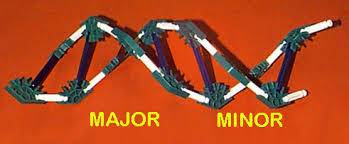
The discussion focuses on differentiating A-T and T-A base pairs in DNA grooves, specifically the major and minor grooves. The major groove features distinct combinations of hydrogen-bond donors and acceptors, allowing for specific protein interactions, while the minor groove presents a more generic structure, facilitating broader binding. Proteins that bind to DNA often interact with the minor groove due to its uniformity across base pairs, whereas those that require specific sequences target the major groove. Understanding these differences is crucial for molecular biology applications involving DNA-protein interactions.
PREREQUISITES
- Understanding of DNA structure and base pairing
- Knowledge of hydrogen bonding in molecular interactions
- Familiarity with protein-DNA binding mechanisms
- Basic comprehension of molecular geometry and spatial orientation
NEXT STEPS
- Explore the structural differences between major and minor grooves in DNA
- Study protein-DNA interaction mechanisms, focusing on groove specificity
- Learn about techniques for visualizing DNA structures, such as X-ray crystallography
- Investigate the role of methyl groups in base pair recognition and binding
USEFUL FOR
Molecular biologists, biochemists, and researchers studying DNA-protein interactions will benefit from this discussion, particularly those interested in the specificity of binding sites in genetic research.