Capacitance and induced charge of a spherical Capacitor + dielectric

Click For Summary
SUMMARY

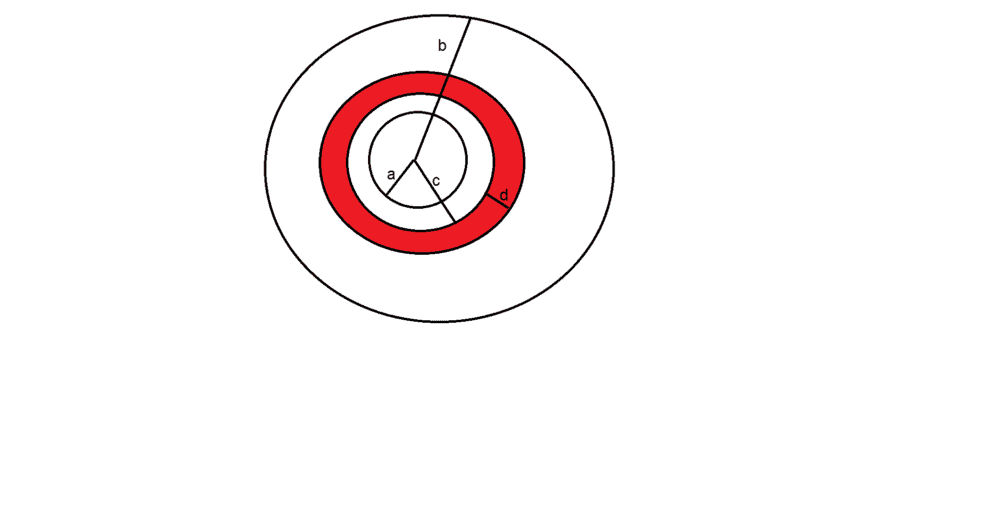
The discussion focuses on the calculation of capacitance and induced charge in a spherical capacitor with a dielectric. The voltage across the capacitor is derived using the integral of the electric field, leading to the formula for capacitance C = Q/V. The participants explore the relationship between the electric field in the dielectric and the induced charge, questioning the validity of the equation Q - Q' = Q/k for induced charge Q'. Additionally, Gauss's law is suggested as a method to determine the location of induced charges within the dielectric material.

PREREQUISITES
  • Understanding of electric fields and potentials in electrostatics.
  • Familiarity with spherical capacitors and their capacitance formulas.
  • Knowledge of dielectrics and their effect on electric fields, specifically the dielectric constant (k).
  • Proficiency in applying Gauss's law to electrostatic problems.
NEXT STEPS
  • Study the derivation of capacitance for spherical capacitors with dielectrics.
  • Learn about the application of Gauss's law in determining electric fields in various geometries.
  • Research the concept of induced charge and its dependence on dielectric materials.
  • Explore the relationship between electric field strength and dielectric constant in detail.
USEFUL FOR

Students and professionals in physics, electrical engineering, and materials science who are studying electrostatics, capacitors, and dielectrics.

titansarus
Messages
62
Reaction score
0
Homework Statement
We have two conductor spherical shells with radius ##a## and ##b## with charges +Q and -Q and a dielectric ##k## with thickness ##d## is put in distance ##c## from the center. (As in the picture

I) Find the Capacitance of capacitor?

II) Find the induced charge inside dielectric in a position with radial distance$r$ where $c<r<c+d$
Relevant Equations
##C = Q/V , V =-\int E.ds ##
I) For the first part I used:

##V = - \int E ds = \int_a^c \frac{1}{4\pi\epsilon_0} Q /r^2 dr+ \int_c^{c+d} \frac{1}{k} \frac{1}{4\pi\epsilon_0} Q /r^2 dr + \int_{c+d}^b \frac{1}{4\pi\epsilon_0} Q /r^2 dr ##

And by using ##C = Q/V## We get an answer which is somehow large for writing here but It is just a bit of algebra after evaluating those integrals.

II) For this part I am not sure what should I use. If I say that ##E_{in ~dielectric} = \frac{1}{k} E_{without~dielectric} ## We get ##Q - Q' = Q/k## where Q' is induced charge. But I am not sure is it safe to use this equation in this part? The answer isn't in terms of ##r## radial distance.
physics question 10.png
 
Physics news on Phys.org
titansarus said:
I) For the first part I used:

##V = - \int E ds = \int_a^c \frac{1}{4\pi\epsilon_0} Q /r^2 dr+ \int_c^{c+d} \frac{1}{k} \frac{1}{4\pi\epsilon_0} Q /r^2 dr + \int_{c+d}^b \frac{1}{4\pi\epsilon_0} Q /r^2 dr ##

And by using ##C = Q/V## We get an answer which is somehow large for writing here but It is just a bit of algebra after evaluating those integrals.

II) For this part I am not sure what should I use. If I say that ##E_{in ~dielectric} = \frac{1}{k} E_{without~dielectric} ## We get ##Q - Q' = Q/k## where Q' is induced charge. But I am not sure is it safe to use this equation in this part? The answer isn't in terms of ##r## radial distance.View attachment 242350
Where is the induced charge located in the dielectric? Does it make sense to expect variation with r?
EDIT: Use Gauss's law to determine where the induced charges reside. You know how E varies with k.
 

Similar threads

  • · Replies 11 ·
Replies
11
Views
2K
  • · Replies 4 ·
Replies
4
Views
2K
  • · Replies 23 ·
Replies
23
Views
2K
  • · Replies 10 ·
Replies
10
Views
3K
Replies
14
Views
3K
  • · Replies 7 ·
Replies
7
Views
2K
  • · Replies 6 ·
Replies
6
Views
1K
  • · Replies 6 ·
Replies
6
Views
2K
Replies
11
Views
1K
  • · Replies 5 ·
Replies
5
Views
679