Discussion Overview
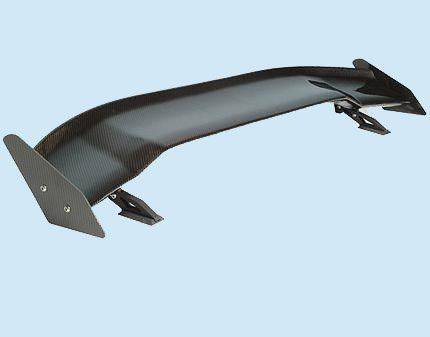
The discussion centers around the effectiveness of a specific car wing design in generating downforce, exploring the principles of aerodynamics, particularly the relationship between wing shape, angle of attack, and airflow. Participants examine theoretical and practical aspects of wing design, including implications for racing and everyday driving.
Discussion Character
- Exploratory
- Technical explanation
- Debate/contested
- Mathematical reasoning
Main Points Raised
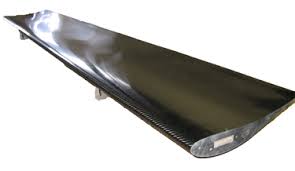
- Some participants suggest that an upside-down airplane wing design is effective for generating downforce, while others argue that the specific design in question appears to be a right-side up wing.
- One participant emphasizes the importance of additional information, such as the wing's cross-section, to make informed speculation about its effectiveness.
- Another participant notes that speed is a critical factor in determining the effectiveness of the wing for downforce.
- It is mentioned that while inverting an airfoil generally produces downforce, the actual performance can vary due to other factors, including airflow over the car and the angle of attack.
- Some participants highlight that racing teams utilize wind tunnels and simulations for testing, while others rely on practical adjustments during track testing.
- One participant claims that the wing could produce downforce but might incur significant drag, suggesting a trade-off between grip and speed.
- Another participant discusses the potential need for a twist in the wing to optimize performance based on airflow disturbances caused by the car's shape.
- There is a mention of a study indicating that the angle of attack is a crucial factor in downforce generation.
- One participant asserts that the wing can generate downforce if mounted at a negative angle of attack, referencing Newton's third law of motion.
- A correction is made regarding a link to a study on aerodynamics, indicating the importance of accurate references in discussions.
Areas of Agreement / Disagreement
Participants express a variety of viewpoints regarding the effectiveness of the car wing design, with no consensus reached on its performance. There are competing views on the importance of wing shape, angle of attack, and external factors affecting downforce generation.
Contextual Notes
Limitations include the lack of specific details about the wing's cross-section, the conditions under which it would operate, and the assumptions regarding airflow disturbances. The discussion also reflects varying interpretations of aerodynamic principles.