Endriu
- 2
- 0
Hi all,
I'm doing a stress analysis and I’m considering 3 buried pipelines carrying oil.
Vibrating wire strain gauges have been installed in different sections for a total of 468 strain gauges.
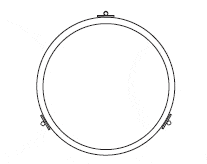
These have been arranged on the surface of the pipelines 120°apart:
This pipelines have suffered from a landslide. There has been a strain relief procedure accordingly. After that, the pipe has undergone another progressive landslide.
The data I surveyed by the strain gauges belong to the period that goes from august 2013 (start of the strain relief) to now.
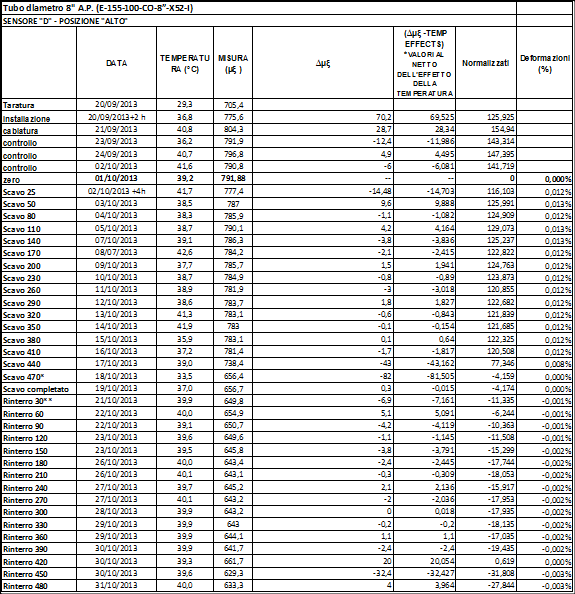
Here attached an example :
(Data from a strain gauge during the strain relief procedure of the buried pipeline)
I need to compare the results I have from the finite elements stress analysis of the pipeline before and after the strain relief procedure, with the strain gauges’ data.
I’m looking for a software or a standard calculation method to get the stress [N/m^2] out of the strain gauge’s output data [microstrain].
Could you please help me out?
Thank you.
I'm doing a stress analysis and I’m considering 3 buried pipelines carrying oil.
Vibrating wire strain gauges have been installed in different sections for a total of 468 strain gauges.
These have been arranged on the surface of the pipelines 120°apart:
This pipelines have suffered from a landslide. There has been a strain relief procedure accordingly. After that, the pipe has undergone another progressive landslide.
The data I surveyed by the strain gauges belong to the period that goes from august 2013 (start of the strain relief) to now.
Here attached an example :
(Data from a strain gauge during the strain relief procedure of the buried pipeline)
I need to compare the results I have from the finite elements stress analysis of the pipeline before and after the strain relief procedure, with the strain gauges’ data.
I’m looking for a software or a standard calculation method to get the stress [N/m^2] out of the strain gauge’s output data [microstrain].
Could you please help me out?
Thank you.

