Circuit Analysis Theorem For the Number of Independent Equations

Join the discussion
Registration is free. Ask a follow-up in this thread, or start your own.
5 replies · 2K views
rtareen
Messages
162
Reaction score
32
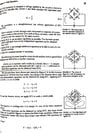
I attached a screenshot of the book (sorry no pdf available for this book). Right above the somewhat central line they give the theorem that if there are m currents and n nodes, then there will be n - 1 independent equations from the current law and m - n - 1 from the voltage law.

I count 4 (branching) nodes and 6 currents. So the number of equations given by the current law is 4 - 1 = 3. Thats fine. But then we should get one more (6- 4 - 1) from the voltage law. But they end up with three more from the voltage law leading to a total of six equations, which they will need because there are six unknown currents.

So what's going on here?
 
Attachments
  • Theorem.jpg
    Theorem.jpg
    76.4 KB · Views: 235
Engineering news on Phys.org
rtareen said:
I count (...) 5 currents (...) because there are six unknown currents.

So what's going on here?

Good question.
 
Borek said:
Good question.
Well I fixed that. It still leads to only one more equation according to this theorem. What else is wrong?
 
I think the issue here is "independent equations". You can make lots of equations from KVL & KCL, but you don't need all of them. For example, in the bridge circuit shown, if I told you the values for I1, I2, and I3, couldn't you solve the whole circuit?

But, honestly, I haven't really thought about this much. I never liked the network theory classes I had to take (several decades ago).
 
I've just made a post that ties circuits to polyhedrons. Essentially every node is a vertex, every branch is an edge, and every indivisible loop is a face. There is a current continuity EQ for every node/vertex, and a voltage loop EQ for every loop/face. Because the continuity EQs are all equal to zero, the resultant vector is the zero vector, and thus there is 1 nullspace DOF in that set. And since a polyhedron can topographically be stretched so that 1 face could have the image of all the rest (i.e., a Schlegal diagram), it is a combination of loops, and thus there is 1 nullspace DOF in the set of loop/face EQs - and since there must be an EMF element in some branch to have a non-null system, the resultant vector is not the zero vector, and thus there is no other nullspace DOF. Therefore, the net rank of the combined set is ( # of node/vertices + # of loop/faces - 2 ), which of course as per Euler's Law of Polyhedra is equal to the # of branch/edge currents.

https://www.physicsforums.com/threads/circuit-analysis-via-polyhedron.1050802/