SUMMARY
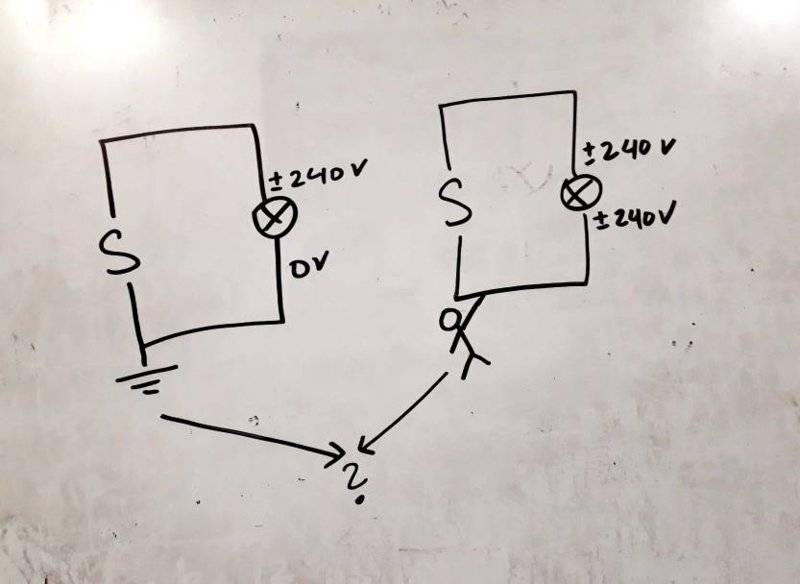
The discussion centers on the differences between grounded and floating circuits, specifically addressing the safety implications of touching live wires. A grounded circuit maintains a neutral potential at 0V, while a floating circuit can present dangerous voltages if a person becomes part of the circuit. The conversation highlights that while a grounded connection stabilizes voltage, a person touching a live wire can experience a shock due to the high resistance of the human body, which allows current to flow under certain conditions. Key concepts include the behavior of AC voltage, the role of grounding, and the implications of circuit impedance.
PREREQUISITES
- Understanding of AC voltage and current flow
- Knowledge of grounding and neutral wire functions
- Familiarity with electrical circuit theory
- Awareness of safety standards in electrical installations
NEXT STEPS
- Research the principles of AC voltage and current flow in circuits
- Study the function and importance of grounding in electrical systems
- Learn about the implications of high resistance in human bodies when interacting with electrical circuits
- Explore the operation and safety features of RCDs (Residual Current Devices)
USEFUL FOR
Electrical engineers, safety inspectors, electricians, and anyone involved in electrical installations or maintenance will benefit from this discussion, particularly those focused on understanding circuit safety and grounding principles.