Confusion with the direction of E-fields near conductors

Click For Summary

Discussion Overview

The discussion revolves around the behavior of electric fields (E-fields) near conductors, particularly focusing on the directionality of these fields and the implications of charge distribution on the surface of conductors. Participants explore theoretical concepts related to electric fields, charge movement, and the interface between different media.

Discussion Character

  • Technical explanation
  • Conceptual clarification
  • Debate/contested
  • Mathematical reasoning

Main Points Raised

  • Some participants suggest that if the electric field is not perpendicular to the surface of a conductor, charges would move along the surface, leading to uneven charge density.
  • There is a discussion about the assumption that the electric field magnitude is constant over a small area, which may not hold true due to varying charge densities.
  • One participant notes that the tangential component of the electric field is preserved at the interface between two media, implying that if the field inside the conductor is zero, the tangential component outside must also be considered.
  • Another participant questions the implications of having a tangential electric field component at the surface of a conductor, suggesting it would cause electrons to move until equilibrium is reached.
  • Some participants express confusion about the concept of an interface between two media and its relevance to the electric field behavior at the surface of conductors.
  • There is a mention of the effect of surface curvature on charge distribution, indicating that uneven surfaces can lead to non-uniform charge densities.
  • Mathematical reasoning is introduced regarding the relationship between electric fields across an interface, with references to integrals and boundary conditions.

Areas of Agreement / Disagreement

Participants express varying interpretations of the behavior of electric fields at the surface of conductors, with no clear consensus on the implications of tangential components or the effects of charge distribution. The discussion remains unresolved with multiple competing views.

Contextual Notes

Some assumptions about the uniformity of charge distribution and the behavior of electric fields near conductors are not fully explored, leading to potential gaps in understanding the implications of surface curvature and external fields.

rudransh verma
Gold Member
Messages
1,067
Reaction score
96
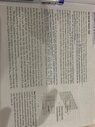
In this page you can see it’s written: E must be perpendicular to the surface. If it were not then the charges would move due to a component along the surface.
I am assuming the field is generated due to the charges on the surface.
I have a doubt. Is the author saying if it were not perpendicular then some charges would leave the surface.
Because maybe the field is not actually perpendicular. That’s why the surface charge density is not same everywhere. Some of the field vectors are not perpendicular and due to that some charges shift from their place and we get uneven charge density.

I don’t understand one more line below: we assume that the cap area A is small enough so that the field Magnitude E is constant…
So that means Es magnitude is changing over the entire surface because of the varying charge density. Some places there is more charge so E produced is more and vice versa. The area A we are considering has the same charge density everywhere in it and so is E in that area.
 

Attachments
  • image.jpg
    image.jpg
    62.8 KB · Views: 157
Last edited:
Physics news on Phys.org
The tangential component of the electric field is preserved at an interface between two media, so if the electric field inside the conductor is ##0## then the tangential component of the electric field outside the conductor must be...
 
  • Like
Likes   Reactions: sysprog, Ibix and vanhees71
ergospherical said:
an interface between two media
What does that mean? I didn’t catch you. Also Please complete your sentence.
 
rudransh verma said:
What does that mean?
An interface between two media is the surface where two different materials meet.

rudransh verma said:
Please complete your sentence.
The idea is that you learn how to do that. If the electric field is zero inside a conductor and the tangential component doesn't change at the interface, what is the tangential component immediately outside the conductor?
 
  • Like
Likes   Reactions: vanhees71
Ibix said:
An interface between two media is the surface where two different materials meet
Two media means one is air and other is the conductor itself. And interface is the surface of the conductor.
 
ergospherical said:
The tangential component of the electric field is preserved at an interface between two media, so if the electric field inside the conductor is 0 then the tangential component of the electric field outside the conductor must be...
@Ibix is he saying that there is a tangential component of external field just outside the surface of conductor if it’s not perpendicular.
 
rudransh verma said:
@Ibix is he saying that there is a tangential component of external field
No, I'm asking you to deduce the value of the tangential component from what I (and @ergospherical) have said.
 
  • Like
Likes   Reactions: vanhees71
Ibix said:
No, I'm asking you to deduce the value of the tangential component from what I (and @ergospherical) have said.
I guess Esintheta
 
cmon put some effort into it lad
 
  • #10
ergospherical said:
cmon put some effort into it lad
All I know is the perpendicular component would be Ecos and other would be Esin if E is at an angle with area vector.
 
  • Sad
Likes   Reactions: weirdoguy
  • #11
If you have a tangential e-field component at the surface of a conductor, that will exert a force on the electrons at the surface that will make them move. They will continue to move until their contribution to the total e-field cancels the original applied field. Like a ball rolling into a valley, it will find an equilibrium (ignoring strange cases, like huge fields...). That equilibrium has no force on the electrons, which means no net tangential e-field component. One of the key points here is the assumption that a conductor has an essentially unlimited supply of conduction band electrons that can be easily moved around. Then they will move to a place of rest where they have eliminated the tangential e-field gradients that would otherwise exert a force on them. This doesn't work for the perpendicular component because the electrons aren't free to move beyond the interface (into or out of the conductor).
 
  • Like
Likes   Reactions: Delta2, sysprog and vanhees71
  • #12
rudransh verma said:
I guess Esintheta
If the field inside the conductor is zero, what is the tangential field just inside the conductor?

If the tangential field is continuous across the interface, given your answer to the first question, what is the tangential field at the interface?
 
  • Like
Likes   Reactions: sysprog, vanhees71 and DaveE
  • #13
Ibix said:
If the field inside the conductor is zero, what is the tangential field just inside the conductor?
Zero ! So?
 
  • Like
Likes   Reactions: DaveE
  • #14
DaveE said:
They will continue to move until their contribution to the total e-field cancels the original applied field.
I don’t get that line. There is no applied field. Just the field of positive charges distributed unevenly on the surface of the conductor.
But I can understand that they will find equilibrium somewhere. I am guessing it will not leave the surface.
 
  • #15
rudransh verma said:
Zero ! So?
So the field is perpendicular.
 
  • #16
Ibix said:
So the field is perpendicular.
Are you implying that the tangential field just inside is also a tangential field just outside. And since the just inside tangential field is zero so is just outside tangential field.
 
  • #17
rudransh verma said:
I don’t get that line. There is no applied field. Just the field of positive charges distributed unevenly on the surface of the conductor.
But I can understand that they will find equilibrium somewhere. I am guessing it will not leave the surface.
I guess I was presupposing the problem of what happens when an externally generated e-field is applied to a conductor. The field at the surface is a combination of the field created by external charges plus the field created by the internal charges.

The case of no applied e-field is the trivial case, then the electrons will move in the conductor to create an e-field with zero gradient inside. What happens at the surface is that any excess charge (like if you had more electrons than protons) will accumulate at the surface evenly distributed, since they repel each other and try to move as far away as possible. But there will still be no tangential field by the same reasoning, if there was, the charges would move along the surface to compensate.
 
  • #18
ergospherical said:
The tangential component of the electric field is preserved at an interface between two media
That means same tangential field will have an effect just as much outside just as inside.
 
  • #19
Yeah, well the idea is that if you take a tiny rectangular curve ##\mathcal{C}## straddling the interface then ##\displaystyle{\oint}_{\mathcal{C}} \mathbf{E} \cdot d\mathbf{r} = \int_{\mathcal{S}} \nabla \times \mathbf{E} \cdot d\mathbf{S}##. If ##\partial_t \mathbf{B}## is bounded then as ##\mathcal{C}## shrinks the surface integral goes to zero and therefore ##\mathbf{E}_1 \cdot \delta \mathbf{l} - \mathbf{E}_2 \cdot \delta \mathbf{l} = \Delta \mathbf{E} \cdot \delta \mathbf{l} = 0## (where ##\delta \mathbf{l}## is one of the long edges of the rectangle parallel to the interface). Since the orientation of ##\delta \mathbf{l}## in the plane is arbitrary, ##\Delta \mathbf{E}## has no component parallel to the interface.
 
  • #20
DaveE said:
What happens at the surface is that any excess charge (like if you had more electrons than protons) will accumulate at the surface evenly distributed, since they repel each other and try to move as far away as possible.
This assumes that the surface has a uniform curvature. As soon as there is a hill or valley the surface charge can be wildly uneven because the direction of tangent changes
 
  • #21
ergospherical said:
Yeah, well the idea is that if you take a tiny rectangular curve ##\mathcal{C}## straddling the interface then ##\displaystyle{\oint}_{\mathcal{C}} \mathbf{E} \cdot d\mathbf{r} = \int_{\mathcal{S}} \nabla \times \mathbf{E} \cdot d\mathbf{S}##. If ##\partial_t \mathbf{B}## is bounded then as ##\mathcal{C}## shrinks the surface integral goes to zero and therefore ##\mathbf{E}_1 \cdot \delta \mathbf{l} - \mathbf{E}_2 \cdot \delta \mathbf{l} = \Delta \mathbf{E} \cdot \delta \mathbf{l} = 0## (where ##\delta \mathbf{l}## is one of the long edges of the rectangle parallel to the interface). Since the orientation of ##\delta \mathbf{l}## is arbitrary, ##\Delta \mathbf{E}## has no component parallel to the interface.
So what if there is a non perpendicular field due to charges at the surface. That would mean there is a tangential field just inside the conductor. But we know field is zero there. So the field is perpendicular at the surface. Also if it were not true some charges would move around the surface.
 
  • #22
rudransh verma said:
That would mean there is a tangential field just inside the conductor.
Then there would be a force on the charges and they would move until there was no force.
 
  • Like
Likes   Reactions: rudransh verma
  • #23
Ibix said:
Then there would be a force on the charges and they would move until there was no force.
And it is possible that they would never stop and continuously move along the surface.
 
  • #24
  • #25
  • #26
rudransh verma said:
But the uneven distribution of charge will change and will attain a new uneven distribution. Right?
Yes, but it will be stable. They will stop moving.
 
  • #27
DaveE said:
Yes, but it will be stable. They will stop moving.
Is this field always perpendicular to the surface? Because if it were not then there would be a tangential field just inside. And we know field inside is zero always.
 
  • #28
rudransh verma said:
And it is possible that they would never stop and continuously move along the surface.
No, because they will move to reduce their energy and there is eventually some minimum point of that. Or you can observe that electrons will move away from regions of too-negative charge towards regions of too-positive charge, reducing the negativity of the region they leave and the positivity of the region they approach.

The exception, as @DaveE says, is time-varying electric fields where the electrons have to move to keep the field zero - that's how an antenna works.
 
  • #29
rudransh verma said:
Is this field always perpendicular to the surface? Because if it were not then there would be a tangential field just inside. And we know field inside is zero always.
Yes. That's what nearly every reply has said.

A tangential field would cause charges to move along the surface, which they are free to do.

The perpendicular e-field at the surface will try to make charges move towards or from the surface. But those charges aren't free to exit the conductor, so they accumulate at the surface. This will cause the internal e-field to be zero, but the external perpendicular field can't be canceled out since the charges can't move across the boundary.
 
  • Like
Likes   Reactions: Ibix
  • #30
@DaveE To summarise I will say there is a isolated conductor which has zero E inside and outside. Now it’s charged. For a brief moment there will be a net internal electric field due to all these charges but that net field will soon disappear because these charges will soon redistribute itself in such a way that the net field on each charge due to all charges is zero. Field at every point become zero. Now the charges are at the surface making perpendicular field to the surface. Why? Its true that the outside tangential field will have an effect inside tangentially. But that doesn’t mean outside field is perpendicular. The field can well be at an angle and there would be an internal tangential field. Why are we saying because the internal field is zero! Of course It’s will be zero . All the charges are now on surface. Real reason is that the charges don’t move on the surface. That’s why the field lines are perpendicular to the surface.
I guess it was experimentally seen that charges don’t move on the surface. They become static. That is why we say fields are perpendicular.

@ergospherical You say inside field is zero. Tangential field both inside and thus outside is zero. Field is so perpendicular. But isn’t it possible that there is no field inside but the field due to surface charge is not perpendicular and have a tangential component along the surface.
 
Last edited:

Similar threads

  • · Replies 15 ·
Replies
15
Views
2K
  • · Replies 6 ·
Replies
6
Views
638
  • · Replies 1 ·
Replies
1
Views
1K
  • · Replies 14 ·
Replies
14
Views
2K
  • · Replies 6 ·
Replies
6
Views
3K
  • · Replies 4 ·
Replies
4
Views
2K
  • · Replies 2 ·
Replies
2
Views
4K
  • · Replies 3 ·
Replies
3
Views
2K
  • · Replies 8 ·
Replies
8
Views
2K
  • · Replies 5 ·
Replies
5
Views
1K