Discussion Overview
The discussion revolves around the process of rewinding the armature of a burned-up winch motor, with participants sharing insights on winding patterns, techniques, and challenges encountered during the repair process. The conversation includes technical aspects of armature winding, including coil configurations and securing methods.
Discussion Character
- Technical explanation
- Exploratory
- Debate/contested
Main Points Raised
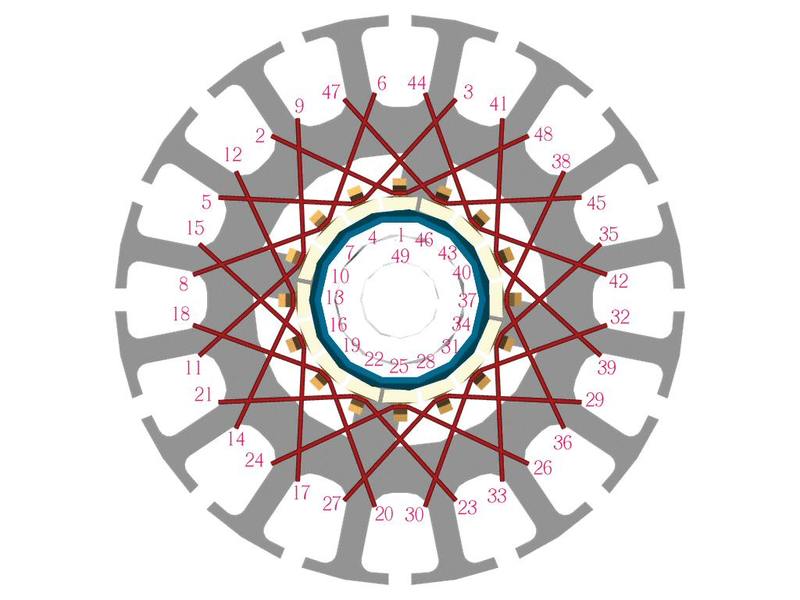
- One participant questions the winding route of the coils, suggesting it should skip channels differently than indicated in a tutorial.
- Another participant advises unwinding the old motor to replicate the original winding pattern, mentioning different winding schemes like "lap" or "wave."
- A participant describes the wire routing through the armature slots, indicating that coils skip channels in a specific manner.
- One contributor notes their armature has a different configuration than shown in a diagram, indicating a need for adjustment in their winding approach.
- Another participant emphasizes the importance of recognizing repetitive patterns in winding and suggests creating a linear drawing to visualize the process.
- One participant shares their experience with a similar armature and discusses the challenges of securing conductors against movement during operation.
- A suggestion is made to create a template for winding coils outside the motor to avoid damaging insulation during the process.
Areas of Agreement / Disagreement
Participants generally agree on the importance of understanding the original winding pattern and securing the coils properly, but there are multiple competing views regarding the specific winding techniques and configurations. The discussion remains unresolved regarding the optimal approach to rewinding the armature.
Contextual Notes
Participants express uncertainty about the exact winding patterns due to the condition of the original wires and the variations in armature designs. There are references to different winding schemes and the need for careful observation of existing patterns.