Defining a vector in magnitude,angle form.

Click For Summary
Vectors can be defined in two primary forms: unit vector form and magnitude-angle form. The magnitude-angle form often leads to confusion, particularly when defining vector operations like negation. The discussion highlights the challenge of understanding the direction of vectors without a visual reference, especially in complex calculations. It questions the necessity of writing -B when the angle may seem to provide sufficient directional information. Clarity in vector representation is essential for effective problem-solving in physics and mathematics.
Hijaz Aslam
Messages
66
Reaction score
1
I've learned that vectors can be defined in,basically, two ways. (1) Unit Vector Form (xi+yj+zk) (2)Magnitude angle form.
The second form always adds a confusion in problems. For instance let's define a function A and B as:
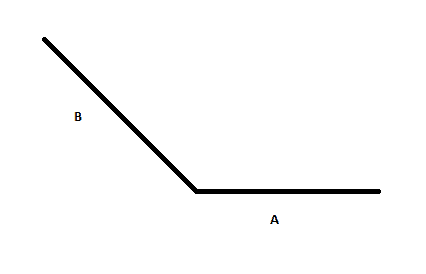
YzorQto.png


When we define -B why do we do it as follows:
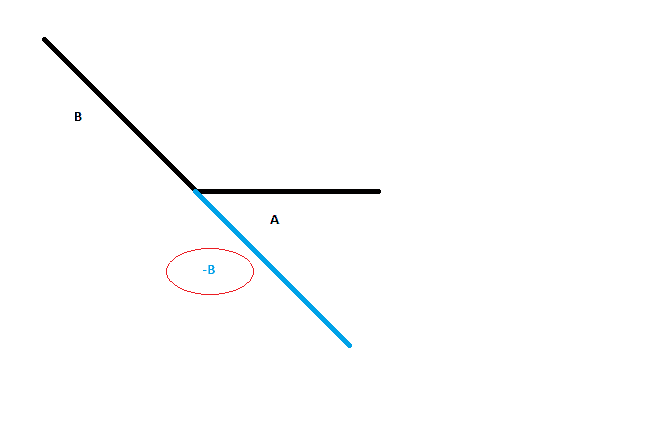
pj8S94Y.png


I mean why do we write it as -B isn't the information of the direction clear from the angle between A and the Blue line?
 
Mathematics news on Phys.org
You may not always have a diagram to refer to, especially if your vector calculations get long and involved.
 
Here is a little puzzle from the book 100 Geometric Games by Pierre Berloquin. The side of a small square is one meter long and the side of a larger square one and a half meters long. One vertex of the large square is at the center of the small square. The side of the large square cuts two sides of the small square into one- third parts and two-thirds parts. What is the area where the squares overlap?

Similar threads

  • · Replies 9 ·
Replies
9
Views
2K
  • · Replies 1 ·
Replies
1
Views
2K
  • · Replies 4 ·
Replies
4
Views
1K
  • · Replies 3 ·
Replies
3
Views
2K
  • · Replies 16 ·
Replies
16
Views
4K
  • · Replies 3 ·
Replies
3
Views
2K
  • · Replies 3 ·
Replies
3
Views
2K
  • · Replies 1 ·
Replies
1
Views
2K
  • · Replies 3 ·
Replies
3
Views
3K
  • · Replies 0 ·
Replies
0
Views
1K