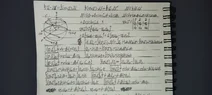
ok, I'll just describe what I did. First I drew a sphere and arrows representing the basis vectors: r, r theta, r phi sin theta. Where they meet, r x theta = phi. I see that maintaining that implicit order for the determinant of the curl results in the correct results for the curl: {r, theta, phi}.
I defined unit vector path and vector area, dl and da, and I note that (1/3) dl dot da = dV, the unit volume. I undid two vector integrals to create both the divergence and the curl: for vector function U, its closed integral dot da = integral divergence U dV; and also closed integral curl U dot da = closed integrals U dot dl.
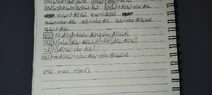
For the curl, I wrote out the results of the determinant of column vectors (r, del r, U r), (theta, del theta, U theta), and so for phi. Then I followed a similar procedure as the divergence, undoing the integrals by direct comparison.
For the gradient, I assumed the dels within the column vectors of the curl were gradients. I listed the results of the curl, and then took the most general form of each del operator as the gradient.