Effects of NA vs. Turbine Plenums on Turbocharged Cars

  • Context: Graduate 
  • Thread starter Thread starter rolls
  • Start date Start date
  • Tags Tags
    Cars Effects Turbine
Click For Summary

Discussion Overview

The discussion centers on the effects of using naturally aspirated (NA) intake plenums in turbocharged cars, specifically regarding air distribution and pressure dynamics within the engine. Participants explore theoretical implications and practical considerations of different plenum designs in turbocharged applications.

Discussion Character

  • Technical explanation
  • Debate/contested
  • Exploratory

Main Points Raised

  • One participant questions whether using an NA plenum in a turbocharged application could lead to uneven air distribution, potentially causing certain cylinders to run leaner and hotter.
  • Another participant suggests that if the flow rate through the NA plenum is uniform, air distribution should be even, but acknowledges that fluctuations could lead to lean conditions depending on specific circumstances.
  • A participant emphasizes that in turbocharged engines, air is forced into the cylinders, which alters the flow dynamics compared to NA engines.
  • Another participant argues that suction exists in turbocharged engines due to pressure differentials, which influences flow behavior, despite the higher pressure created by the turbocharger.
  • One participant discusses the role of pressure differentials in driving flow and mentions factors such as geometry, heat, and vibration affecting air quality and flow velocity.
  • A later reply agrees that a higher pressure differential generally results in faster flow but notes that there are limiting cases that may not apply to this discussion.

Areas of Agreement / Disagreement

Participants express differing views on the presence and role of suction in turbocharged engines, as well as the implications of using NA plenums in such applications. The discussion remains unresolved, with multiple competing perspectives on the flow dynamics involved.

Contextual Notes

Participants reference theoretical models and experimental approaches to validate their claims, indicating that the discussion is contingent on specific conditions and assumptions regarding airflow and pressure dynamics.

rolls
Messages
50
Reaction score
0
I have a question about using NA (naturally aspirated) intake plenums on turbo charged cars and the detrimental effects it may have.

Here is a standard NA plenum for an rb30 engine
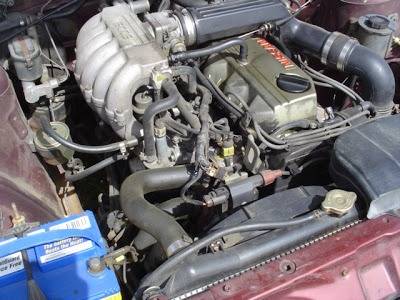
aaf.jpg


Here is a turbo plenum for an rb30 engine
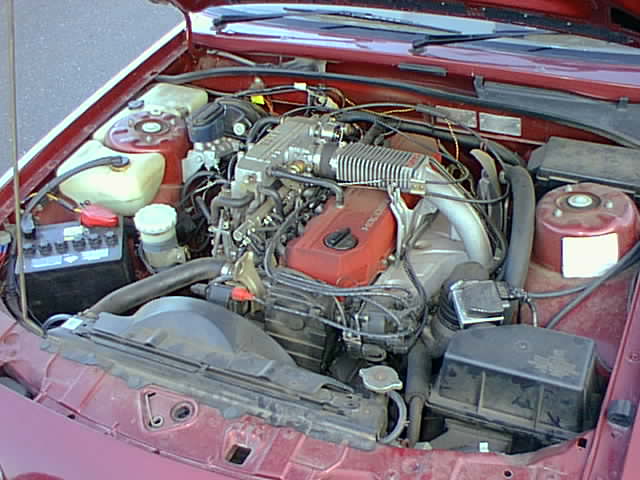
VL-Turbo-Overview.jpg


The difference is with the turbo one the plenum (large chamber) is above the runners, apparently this causes the air to break on the wall and disperse evenly into the cylinders, causing air mixtures to be static between them all.

If using the first NA plenum in a turbo charged application would it cause the pressure it be higher at the middle two cylinders, hence they get more air and in turn run leaner (hotter, more detonation prone) ?

The second question is some people cut and shut the turbo plenums to be front facing like this (originally entered from the centre like the first two pictures, now enters from one end).
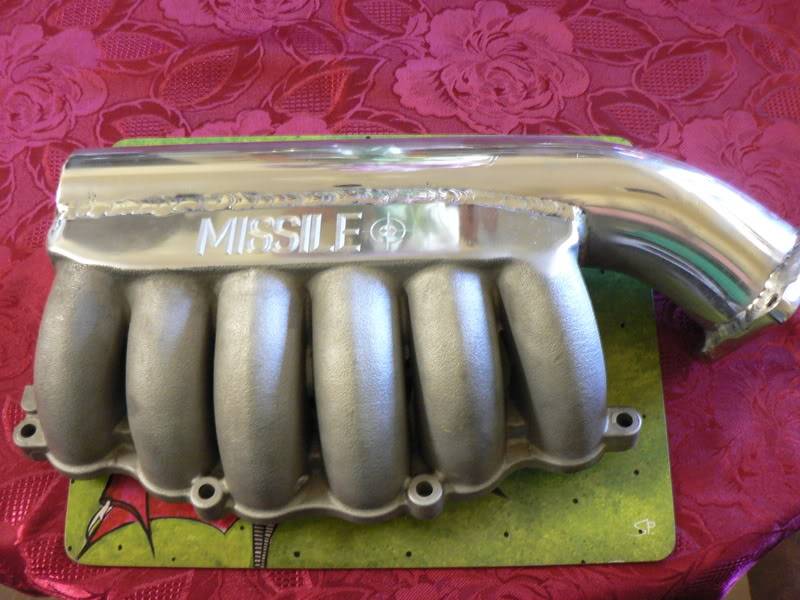
P1020258.jpg


In this case would the air create a high pressure zone at the rear of the plenum causing the rear cylinders to get more air and run leaner?

Note all these questions are assuming a turbo charged application, eg air is being forced into the plenums, not under vacuum like in a naturally aspirated engine.
 
Physics news on Phys.org


Theoretically for the NA plenum, the air distribution should be uniform throughout all the ends of the plenum, given the flow rate through the plenum is uniform, steady state. If the flow rate is fluctuating then, it is possible for the air to run leaner, that is dependent on your conditions, etc. I would find the second design less optimal, in comparison to first, as theoretically the suction caused by the engine, should not allow optimal air flow through the rear, flow would dominate through the beginning.


You can prove this through pure experiments, modeling, but it should make sense and help out.'

Best.


There is no suction in a turbo charged engine though, the air is being forced into the cylinders, this changes things.


There is suction in a turbo engine. Suction is simply the flow of fluid from a higher pressure region to a lower pressure region. The turbocharger makes the higher pressure region even more pressurized, but it doesn't change the overall flow behavior (other than the fact that there is a substantially larger pressure differential driving the flow). This higher pressure differential does mean that the flow velocity will be higher, but there shouldn't be anything fundamentally different about the flow behavior.


there is always suction in the engine, via a pressure difference, simply from the combustion of gases, the increase in volume gas, and release of gases through the exhaust, etc.

Simply put, pressure differential drives the flow, and thus dictates the flow velocity! If you are similar with navies stokes, this makes sense, but intutitively, if you have a higher pressure differential, this means faster flow right? I'm currently designing a venturi with a plenum and runner, and I see the velocity being greatly affected by geometry (as you said), heat, vibration from the engine, which dictates air quality, etc.

Again it all comes down to how fast the engine creates combustion, then how the fast the gases exhaust, and these effects on the plenum and air quality.. these can be done experimentally (by yourself) or equally numerically, theoretically..

Best


In general, yes, a higher pressure differential means faster flow. There are limiting cases (choked flow), but I don't believe they apply here.
 

Similar threads

  • · Replies 30 ·
2
Replies
30
Views
5K
  • · Replies 18 ·
Replies
18
Views
3K
  • · Replies 7 ·
Replies
7
Views
2K
Replies
13
Views
6K
  • · Replies 20 ·
Replies
20
Views
4K
  • · Replies 6 ·
Replies
6
Views
7K
  • · Replies 3 ·
Replies
3
Views
3K
Replies
12
Views
9K
  • · Replies 11 ·
Replies
11
Views
23K
  • · Replies 4 ·
Replies
4
Views
10K