Estimation of the damping coefficient of a suspenion

Click For Summary
SUMMARY

The discussion focuses on estimating the damping coefficient of a suspension system for a seat equipped with a hydraulic damper and coil spring. Participants suggest using a system identification approach, where known excitations are applied to measure displacement and tune model parameters. They recommend methods such as applying an impulse using a falling mass and utilizing precise draw-wire displacement sensors for accurate measurements. The conversation also highlights the potential complexity of damping coefficients, noting that they may differ in compression and rebound.

PREREQUISITES
  • Understanding of multibody dynamics modeling
  • Familiarity with system identification techniques
  • Knowledge of hydraulic dampers and their characteristics
  • Experience with displacement measurement tools, such as draw-wire sensors
NEXT STEPS
  • Research methods for applying known excitations in dynamic systems
  • Explore the use of high-speed cameras for motion analysis in damping tests
  • Investigate the characteristics of adjustable force hydraulic dampers
  • Learn about the principles of damping coefficient measurement in suspension systems
USEFUL FOR

Engineers, researchers, and developers involved in suspension system design, particularly those focused on seat comfort and performance optimization.

serbring
Messages
267
Reaction score
2
Hi all,

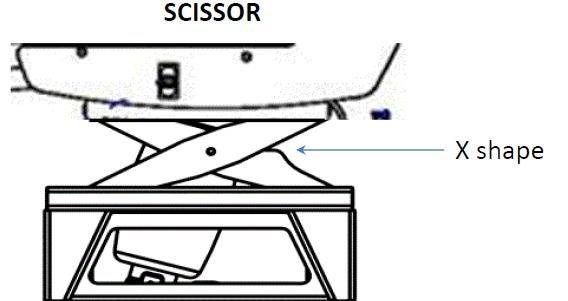
I have a suspended seat with a scissor mechanism like the following:
fb2c50db-5ac3-416f-a643-3c32f76c4924.jpg
This seat is composed of coil spring and a hydraulic damper. My aim is to develop a multibody model of that seat. Actually, my model is quite complete, only the parameters of damper are missing (i.e. the damping coefficient with respect to its piston speed). I do not have any technical details about it, so I need to estimate it. I am thinking to use a system identification approach, that means, applying a known excitation to the seat, measure the displacement of the seat cushion and tune the model parameter so that the measured displacement will be reproduced. I do not have any rig so that I can easily apply a known excitation. I was thinking to excite the seat by applying an impulse (falling mass at a certain height) to the seat cushion. What do you think about this approach? Do you know an easier approach to get the damping curve of the damper?

Thanks,

best regards
 

Attachments

  • fb2c50db-5ac3-416f-a643-3c32f76c4924.jpg
    fb2c50db-5ac3-416f-a643-3c32f76c4924.jpg
    17.1 KB · Views: 913
Engineering news on Phys.org
The damper manufacturer must supply that information. Otherwise, no seat manufacturer would know which size damper to buy.
 
Hi Anorlunda,

you are on right, unfortunately I do not work for any seat manufacturer. I have contacted both the seat and the damper manufacturer and both have not supplied any information. So I was thinking to use an experimental mode.

PS
I am sorry for the late reply, I trusted on the email alert :|
 
If you know the spring constant, you can estimate the damper coefficient by displacing the seat, releasing it, and then measuring the subsequent displacement vs time.
 
Yep! you're on right. Easy and safe. This made me think, that this type of dampers has two different coefficients, one in compression and the other in rebound, right?
 
serbring said:
Yep! you're on right. Easy and safe. This made me think, that this type of dampers has two different coefficients, one in compression and the other in rebound, right?
I don't know about that. Damping coefficients are usually assumed to be the same for both directions.
 
  • Like
Likes   Reactions: serbring
anorlunda said:
How about you just experiment. 60 seconds of searchiing found this item, an adustable force air damper.
https://www.alibaba.com/product-det...l?spm=a2700.7724838.2017115.49.57c31d936fIF7q

They are inexpensive. How about just buying one, then use the adjustment to tune it to your needs?

Which kind of test you are thinking about? I need to find the parameters of the damper that is already installed in a seat suspension
 
serbring said:
Which kind of test you are thinking about? I need to find the parameters of the damper that is already installed in a seat suspension

Ah, I see. Are you able to make a deflection, then release it while accurately measuring the position versus time recovery? That is similar to excitation that you suggested in #1, except that instead of a periodic excitation it would be a step function. Success depends on the instrumentation available.

Come to think of it, a video recording analyzed frame-by-frame would be a good way to measure deflection versus time.

Edit: The whole test and analysis might be easier if you removed the damper from the chair.
 
Last edited:
  • #10
serbring said:
Yep! you're on right. Easy and safe. This made me think, that this type of dampers has two different coefficients, one in compression and the other in rebound, right?

I don't know about shocks for seats, but the shocks used for high end sports car suspensions frequently have 3 separate characteristics - high speed compression, low speed compression, and rebound. The simple model used in physics problems frequently assumes that there's a single damping coefficient, but this is frequently not the case in reality.
 
  • Like
Likes   Reactions: serbring
  • #11
anorlunda said:
Ah, I see. Are you able to make a deflection, then release it while accurately measuring the position versus time recovery? That is similar to excitation that you suggested in #1, except that instead of a periodic excitation it would be a step function. Success depends on the instrumentation available.

Come to think of it, a video recording analyzed frame-by-frame would be a good way to measure deflection versus time.

Edit: The whole test and analysis might be easier if you removed the damper from the chair.

I know that the best is testing only the damper, but I do not have any tool to apply a known load. Any suggestion is appreciated. My idea is to install very precise draw-wire displacement sensors. I do also have a high speed camera.
 

Similar threads

  • · Replies 1 ·
Replies
1
Views
4K
Replies
2
Views
6K
  • · Replies 4 ·
Replies
4
Views
3K
Replies
3
Views
11K
  • · Replies 2 ·
Replies
2
Views
2K
Replies
9
Views
2K
  • · Replies 2 ·
Replies
2
Views
3K
  • · Replies 6 ·
Replies
6
Views
4K
Replies
7
Views
2K
  • · Replies 131 ·
5
Replies
131
Views
8K