Leonhard Euler's 4-Squares Identity & Maxwell's Equations

Click For Summary
SUMMARY

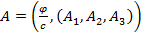
Leonhard Euler's four-square identity is fundamentally linked to quaternion multiplication and provides insights into the structure of Maxwell's equations in four-dimensional space. The discussion highlights the differences between scalar and vector equations, emphasizing that while both share four-dimensional symmetries, they do not exhibit the same numeric structure. The quaternion differential of the four-potential A directly yields the electric field (E) and magnetic field (B) components, demonstrating the relevance of Euler's identity in electrodynamics.

PREREQUISITES
  • Understanding of Euler's four-square identity
  • Familiarity with quaternion mathematics
  • Knowledge of Maxwell's equations
  • Basic concepts of electrodynamics
NEXT STEPS
  • Study quaternion multiplication and its applications in physics
  • Explore the mathematical foundations of Maxwell's equations
  • Research the implications of the Lorenz gauge in electromagnetic theory
  • Investigate the relationship between scalar and vector fields in physics
USEFUL FOR

Mathematicians, physicists, and engineers interested in the intersection of algebra and electromagnetism, particularly those exploring the applications of quaternion mathematics in theoretical physics.

Edgar53
Messages
3
Reaction score
0
The 4-Squares-Identity of Leonhard Euler
(https://en.wikipedia.org/wiki/Euler%27s_four-square_identity) :


upload_2017-11-19_23-4-30.jpg

upload_2017-11-19_23-4-30.jpg

upload_2017-11-19_23-4-30.jpg

upload_2017-11-19_23-4-30.jpg

upload_2017-11-19_23-4-30.jpg


has the numeric structure of Maxwell’s equations in 4-space:

upload_2017-11-19_23-5-23.png

upload_2017-11-19_23-7-31.png

upload_2017-11-19_23-6-41.png

Is somebody aware of litterature about this?
 

Attachments

  • upload_2017-11-19_23-4-30.jpg
    upload_2017-11-19_23-4-30.jpg
    2.4 KB · Views: 859
  • upload_2017-11-19_23-4-30.jpg
    upload_2017-11-19_23-4-30.jpg
    1.7 KB · Views: 886
  • upload_2017-11-19_23-4-30.jpg
    upload_2017-11-19_23-4-30.jpg
    1.6 KB · Views: 925
  • upload_2017-11-19_23-4-30.jpg
    upload_2017-11-19_23-4-30.jpg
    1.7 KB · Views: 411
  • upload_2017-11-19_23-4-30.jpg
    upload_2017-11-19_23-4-30.jpg
    1.7 KB · Views: 483
  • upload_2017-11-19_23-5-23.png
    upload_2017-11-19_23-5-23.png
    1,018 bytes · Views: 471
  • upload_2017-11-19_23-6-41.png
    upload_2017-11-19_23-6-41.png
    660 bytes · Views: 456
  • upload_2017-11-19_23-7-31.png
    upload_2017-11-19_23-7-31.png
    553 bytes · Views: 448
Physics news on Phys.org
Edgar53 said:
has the numeric structure of Maxwell’s equations in 4-space:

It appears not to.
 
If you adjust the signs: Euler = (+,+,+,+) and Minkowski = (+, - , - , - ) in your notation, why should there be a difference? Not sure about the Maxwell equations, but the other one is just a formula. Both have symmetries and both are four dimensional, so similarities can be expected, which happens quite often in science without any deeper correlations.
 
Edgar53 said:
has the numeric structure of Maxwell’s equations in 4-space
I am with @Vanadium 50 on this. It doesn’t seem to have the same structure to me. One is a scalar equation and the other is a vector equation.
 
Of course, it has much to do:

Leonhard Euler's four-squares identity prefigures quaternion multiplication:
upload_2017-12-4_22-1-12.png

upload_2017-12-4_21-55-41.png

upload_2017-12-4_21-55-41.png

upload_2017-12-4_21-55-41.png

upload_2017-12-4_21-55-41.png

It is the very reason why quaternions have a multiplicative norm, i.e. the length
of a product of two quaternions equals the product of the lengths of the
quaternions. Multiplication with a unit quaternion performs an isoclinic
double-rotation in 4-dimensional space; multiplication with an arbitrary
quaternion a double-rotation plus a stretching by the length of the quaternion.

Taking the quaternion differential
upload_2017-12-4_22-5-30.png
of the 4-potential A yields directly
the electromagnetic field in both components E and B:
upload_2017-12-4_22-12-50.png

upload_2017-12-4_22-12-50.png

upload_2017-12-4_22-12-50.png

j
upload_2017-12-4_22-12-50.png

k
upload_2017-12-4_22-12-50.png

after rearranging the terms in lines 2, 3, and 4:
upload_2017-12-4_22-14-20.png

i
upload_2017-12-4_22-14-20.png

j
upload_2017-12-4_22-14-20.png

k
upload_2017-12-4_22-14-20.png

The first line identically vanishes under Lorenz gauge
upload_2017-12-4_22-15-55.png
;
The terms:
upload_2017-12-4_22-22-5.png

are the components of the electric field (under inversion of sign, due to
the Minkowski metric (+1,-1,-1,-1));
and the terms:
upload_2017-12-4_22-18-37.png
;
upload_2017-12-4_22-18-37.png
;
upload_2017-12-4_22-18-37.png
are
upload_2017-12-4_22-20-29.png

are the components of the magnetic field.
The result is then:
upload_2017-12-4_22-25-5.png

i.e. the quaternion differential of the 4-potential A yields both,
the source (E) and the curl (B) part of the electromagnetic
field.
Leonhard Euler's four-square identity offers the most direct access to,
and is probably the reason for Electrodynamics!
 

Attachments

  • upload_2017-12-4_21-55-41.png
    upload_2017-12-4_21-55-41.png
    594 bytes · Views: 384
  • upload_2017-12-4_21-55-41.png
    upload_2017-12-4_21-55-41.png
    684 bytes · Views: 389
  • upload_2017-12-4_21-55-41.png
    upload_2017-12-4_21-55-41.png
    655 bytes · Views: 368
  • upload_2017-12-4_21-55-41.png
    upload_2017-12-4_21-55-41.png
    689 bytes · Views: 400
  • upload_2017-12-4_22-1-12.png
    upload_2017-12-4_22-1-12.png
    870 bytes · Views: 370
  • upload_2017-12-4_22-5-30.png
    upload_2017-12-4_22-5-30.png
    205 bytes · Views: 369
  • upload_2017-12-4_22-12-50.png
    upload_2017-12-4_22-12-50.png
    674 bytes · Views: 390
  • upload_2017-12-4_22-12-50.png
    upload_2017-12-4_22-12-50.png
    638 bytes · Views: 391
  • upload_2017-12-4_22-12-50.png
    upload_2017-12-4_22-12-50.png
    665 bytes · Views: 394
  • upload_2017-12-4_22-12-50.png
    upload_2017-12-4_22-12-50.png
    914 bytes · Views: 405
  • upload_2017-12-4_22-12-50.png
    upload_2017-12-4_22-12-50.png
    640 bytes · Views: 398
  • upload_2017-12-4_22-14-20.png
    upload_2017-12-4_22-14-20.png
    640 bytes · Views: 354
  • upload_2017-12-4_22-14-20.png
    upload_2017-12-4_22-14-20.png
    652 bytes · Views: 351
  • upload_2017-12-4_22-14-20.png
    upload_2017-12-4_22-14-20.png
    635 bytes · Views: 382
  • upload_2017-12-4_22-14-20.png
    upload_2017-12-4_22-14-20.png
    668 bytes · Views: 363
  • upload_2017-12-4_22-15-55.png
    upload_2017-12-4_22-15-55.png
    451 bytes · Views: 353
  • upload_2017-12-4_22-17-7.png
    upload_2017-12-4_22-17-7.png
    996 bytes · Views: 400
  • upload_2017-12-4_22-18-37.png
    upload_2017-12-4_22-18-37.png
    494 bytes · Views: 358
  • upload_2017-12-4_22-18-37.png
    upload_2017-12-4_22-18-37.png
    509 bytes · Views: 342
  • upload_2017-12-4_22-18-37.png
    upload_2017-12-4_22-18-37.png
    502 bytes · Views: 376
  • upload_2017-12-4_22-20-29.png
    upload_2017-12-4_22-20-29.png
    422 bytes · Views: 346
  • upload_2017-12-4_22-22-5.png
    upload_2017-12-4_22-22-5.png
    1 KB · Views: 393
  • upload_2017-12-4_22-25-5.png
    upload_2017-12-4_22-25-5.png
    975 bytes · Views: 390
Edgar53 said:
Leonhard Euler's four-squares identity prefigures quaternion multiplication

The four squares identity has squares inside the parentheses on the LHS. The quaternion multiplication equation you wrote down does not. So I don't see how your claim here is justified.
 
This thread is overly speculative and is now closed.
 

Similar threads

  • · Replies 7 ·
Replies
7
Views
2K
  • · Replies 13 ·
Replies
13
Views
2K
  • · Replies 10 ·
Replies
10
Views
893
  • · Replies 2 ·
Replies
2
Views
1K
  • · Replies 4 ·
Replies
4
Views
1K
Replies
6
Views
3K
  • · Replies 1 ·
Replies
1
Views
3K
  • · Replies 1 ·
Replies
1
Views
599
  • · Replies 22 ·
Replies
22
Views
2K
  • · Replies 33 ·
2
Replies
33
Views
2K