Homework Help Overview
The discussion revolves around the experimental investigation of Faraday's Law of Induction, specifically focusing on the relationship between induced electromotive force (EMF) and the rate of change of magnetic flux as a magnet is dropped through a solenoid. Participants explore the implications of varying the velocity of the magnet and its effect on the induced EMF.
Discussion Character
- Exploratory, Conceptual clarification, Assumption checking
Approaches and Questions Raised
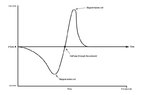
- The original poster attempts to understand how increasing the velocity of a magnet affects the induced EMF and seeks clarification on the relationship between velocity and EMF. Some participants suggest sketching a graph of EMF versus time and question how the changing EMF will be measured. Others discuss the characteristics of the graph and the implications of the areas under the curve.
Discussion Status
The discussion is ongoing, with participants providing insights and posing questions to deepen understanding. There is a focus on experimental design considerations, such as the adequacy of measurement equipment and the need for a clear objective in the investigation. Some guidance has been offered regarding the interpretation of the graph and the relationship between induced EMF and velocity.
Contextual Notes
Participants note the importance of understanding the response time of measurement devices and the potential limitations of equipment in capturing rapidly changing EMF. There is also mention of the need to consider conservation of energy in the context of the experiment.