Pawlal
- 2
- 0
Hi.
After some study, I came across symmetrical components.
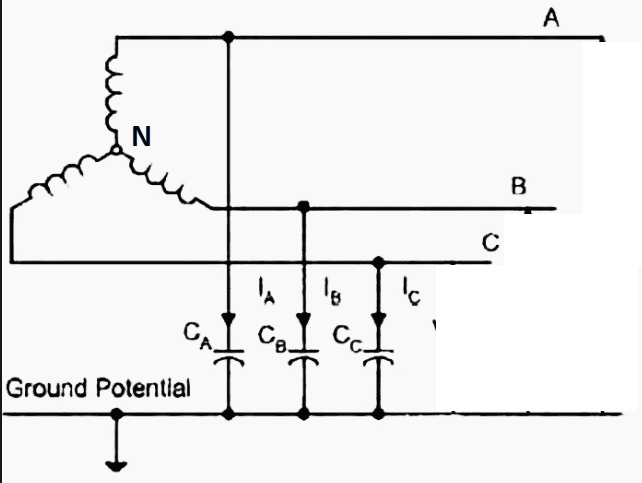
I found the attached schematic below on the internet, and will use it to explain my question.
Question:
Imagine that a single-line to Earth fault occur in one of the phases, i.e. resulting in an unbalanced system (we assume it was balanced before the fault).
In a balanced unfaulty system, the voltage difference between N and ground potential would be ~0 right?
If we calculate the symmetrical components of the voltages (zero, positive and negative) is it true that that the zero sequence voltage equals the voltage between N and ground?
Thanks :)
After some study, I came across symmetrical components.
I found the attached schematic below on the internet, and will use it to explain my question.
Question:
Imagine that a single-line to Earth fault occur in one of the phases, i.e. resulting in an unbalanced system (we assume it was balanced before the fault).
In a balanced unfaulty system, the voltage difference between N and ground potential would be ~0 right?
If we calculate the symmetrical components of the voltages (zero, positive and negative) is it true that that the zero sequence voltage equals the voltage between N and ground?
Thanks :)
Attachments
