Finding the induced EMF in a solenoid-wire system

Click For Summary
SUMMARY

The discussion focuses on calculating the induced electromotive force (EMF) in a solenoid-wire system, where the solenoid has a radius R and a number of turns per length n. The relevant equations include the magnetic field B = μnI and the magnetic flux φ = BπR². The participants suggest treating the system as a transformer, applying mutual inductance M to derive the voltage across the wire. The problem is framed within the context of undergraduate general physics, emphasizing the use of fundamental principles rather than advanced mathematics.

PREREQUISITES
  • Understanding of electromagnetic induction principles
  • Familiarity with mutual inductance concepts
  • Knowledge of basic calculus for differentiation
  • Proficiency in applying Faraday's law of electromagnetic induction
NEXT STEPS
  • Study the concept of mutual inductance in electromagnetic systems
  • Learn how to apply Faraday's law to various configurations of inductors
  • Explore the mathematical derivation of induced EMF in solenoid systems
  • Investigate transformer theory and its applications in electrical engineering
USEFUL FOR

Students and educators in physics, electrical engineers, and anyone interested in understanding electromagnetic induction and transformer principles.

titansarus
Messages
62
Reaction score
0
Homework Statement
We have a very big solenoid like the figure below. (it stretches outside and inside of the screen) It has radius ##R## and number of turns per length ##n##. A very large wire of length ##L>>R## is tangent to the solenoid and perpendicular to its axis (without physically connecting to the solenoid). The Current in solenoid is changing with rate ##\alpha = di/dt##. Find the induced emf on the wire. Note that it is a question of Undergrad General Physics and is not meant to be solved with very advanced mathematical techniques.
Relevant Equations
##d \phi / dt = - \epsilon## ,##\phi = \int B da##
I know that ##B = \mu n I## and ##\phi = B \pi R^2##. So with have ##d\phi / dt = \mu n \alpha \pi R^2##. But I don't know what to do with this? is this the answer? I don't think so but I don't know what to do after this.
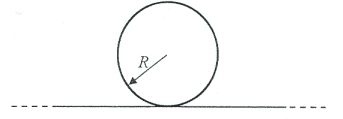
emf.png
 
Physics news on Phys.org
titansarus said:
Problem Statement: We have a very big solenoid like the figure below. (it stretches outside and inside of the screen) It has radius ##R## and number of turns per length ##n##. A very large wire of length ##L>>R## is tangent to the solenoid and perpendicular to its axis (without physically connecting to the solenoid). The Current in solenoid is changing with rate ##\alpha = di/dt##. Find the induced emf on the wire. Note that it is a question of Undergrad General Physics and is not meant to be solved with very advanced mathematical techniques.
Relevant Equations: ##d \phi / dt = - \epsilon## ,##\phi = \int B da##

I know that ##B = \mu n I## and ##\phi = B \pi R^2##. So with have ##d\phi / dt = \mu n \alpha \pi R^2##. But I don't know what to do with this? is this the answer? I don't think so but I don't know what to do after this.

View attachment 245176
This one is fun.
My 1st reaction was zero.

But then: think of the solenoid-wire system as a transformer. Then do two Gedankenexperimente a la Einstein:

Setup 1. consider the wire as the primary "winding" and the solenoid (coil) as the secondary. Coil is open. Then you can write the voltage across the coil in 2 ways: in terms of a changing flux and in terms of a changing primary current. In other words, this is just mutual inductance M and you can actually compute M for this setup.

Setup 2: now make the primary the coil and the secondary the wire. The wire is open. You can now write the voltage across the wire in terms of M and the coil current.

A very good problem IMO.

Realizing that it's the same M (not easy to prove BTW) you can now find the voltage across the wire.
 

Similar threads

  • · Replies 7 ·
Replies
7
Views
2K
  • · Replies 7 ·
Replies
7
Views
3K
Replies
8
Views
1K
Replies
7
Views
1K
  • · Replies 2 ·
Replies
2
Views
958
  • · Replies 9 ·
Replies
9
Views
3K
  • · Replies 15 ·
Replies
15
Views
7K
  • · Replies 2 ·
Replies
2
Views
911
Replies
3
Views
2K
Replies
3
Views
2K