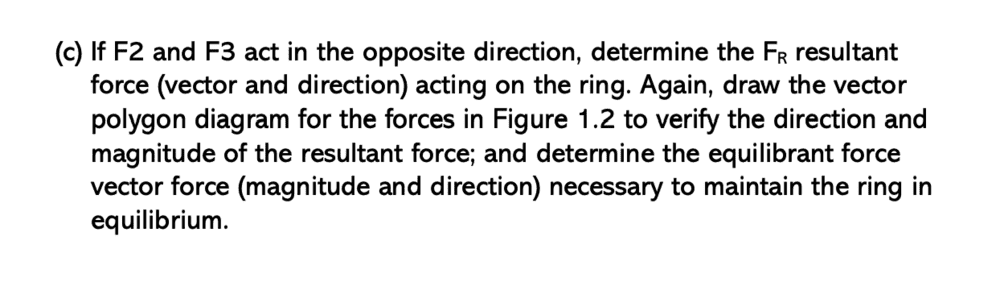
Finding the resultant force using a vector polygon diagram

Click For Summary
SUMMARY

The resultant force calculated using a vector polygon diagram is 21.767 N at an angle of 61.34 degrees (or 151.34 degrees bearing). The initial miscalculation occurred due to the exclusion of force F1, which is essential for accurate results. After including all forces, the recalculated resultant force was 21.82 N at an angle of 61.30 degrees, with the discrepancy attributed to rounding errors. Understanding the vector addition of forces is crucial for precise calculations in physics.

PREREQUISITES
  • Understanding of vector addition in physics
  • Familiarity with force components and their representation
  • Knowledge of trigonometric functions for angle calculations
  • Experience with vector polygon diagrams
NEXT STEPS
  • Study vector addition techniques in physics
  • Learn how to construct and analyze vector polygon diagrams
  • Explore the impact of rounding errors in force calculations
  • Investigate the role of trigonometry in resolving forces
USEFUL FOR

Students and professionals in physics, engineers involved in force analysis, and anyone interested in mastering vector calculations for accurate force determination.

Bolter
Messages
262
Reaction score
31
Homework Statement
See below
Relevant Equations
None
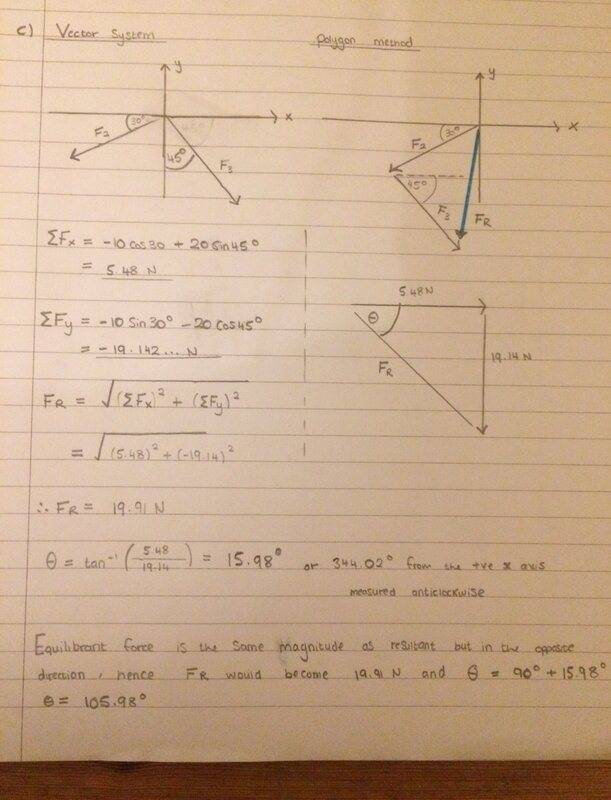
Hi I made an attempt at this problem but have got the wrong answer
Screenshot 2020-09-28 at 20.30.02.png

Screenshot 2020-09-28 at 20.30.32.png

IMG_5296.JPG


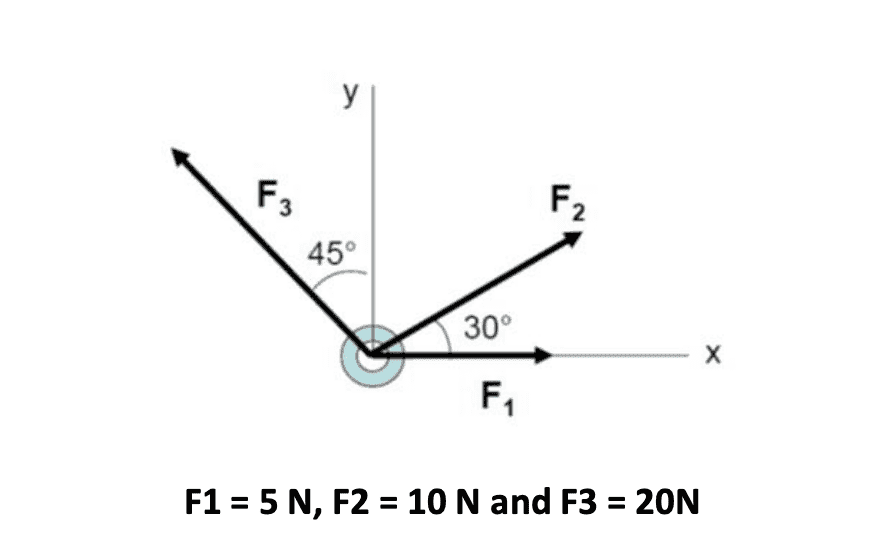
The correct answer is actually resultant force = 21.767 N at 61.34 degrees (or 151.34 degrees bearing), but I don't know how they got that?

Any help would be appreciated! Thanks
 
Physics news on Phys.org
Are you including F1?
 
  • Like
Likes   Reactions: BvU
Lnewqban said:
Are you including F1?

Oops, I initially thought the Q wanted me to solely focus on force F2 and F3 and ignore F1. I think I got the answer now when taking F1 into account

I got resultant force to be 21.82N at angle 61.30 degrees, which is slightly different from the correct answer given. But I thinks it's because of rounded values.
 
  • Like
Likes   Reactions: Lnewqban

Similar threads

Replies
5
Views
3K
  • · Replies 11 ·
Replies
11
Views
2K
  • · Replies 5 ·
Replies
5
Views
2K
  • · Replies 5 ·
Replies
5
Views
3K
Replies
17
Views
3K
  • · Replies 1 ·
Replies
1
Views
3K
  • · Replies 18 ·
Replies
18
Views
1K
  • · Replies 9 ·
Replies
9
Views
2K
Replies
3
Views
2K
  • · Replies 1 ·
Replies
1
Views
2K