99gray
- 1
- 0
1.
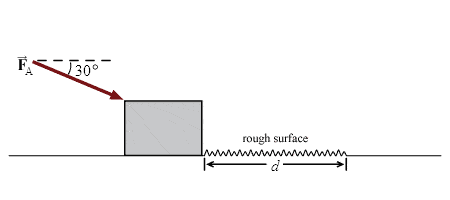
A box of mass
m = 59.0 kg
(initially at rest) is pushed a distance
d = 83.0 m
across a rough warehouse floor by an applied force of
FA = 204 N
directed at an angle of 30.0° below the horizontal. The coefficient of kinetic friction between the floor and the box is 0.100. Determine the work done by the force of friction
W = fdcosΘ
Fƒ=μN
I used the two above equations and I found that the applied force of friction would be 57.82 because that is .1*59*9.8 and then if you put that into the first equation, the work would be 57.82*83*cos30 which equals 4156.108 and then since it is opposite the applied force, it would be -4156.108. At least I thought. That's wrong and I don't know why. Please help!
A box of mass
m = 59.0 kg
(initially at rest) is pushed a distance
d = 83.0 m
across a rough warehouse floor by an applied force of
FA = 204 N
directed at an angle of 30.0° below the horizontal. The coefficient of kinetic friction between the floor and the box is 0.100. Determine the work done by the force of friction
Homework Equations
W = fdcosΘ
Fƒ=μN
The Attempt at a Solution
I used the two above equations and I found that the applied force of friction would be 57.82 because that is .1*59*9.8 and then if you put that into the first equation, the work would be 57.82*83*cos30 which equals 4156.108 and then since it is opposite the applied force, it would be -4156.108. At least I thought. That's wrong and I don't know why. Please help!