Focussing a Pentax K S2 with Live View for Moon Photography

  • Context: Stargazing 
  • Thread starter Thread starter sophiecentaur
  • Start date Start date
  • Tags Tags
    Moon Photography
Click For Summary
SUMMARY

The forum discussion centers on the challenges of focusing a Pentax K S2 camera using Live View for moon photography. Users shared techniques, including using a Bahtinov mask to focus on bright stars before shifting to the moon, and discussed the impact of LCD brightness on focusing accuracy. One user noted the absence of maria on the lunar far side, highlighting the unique geological features visible during full illumination. The conversation also touched on the importance of adjusting camera settings to optimize focus and image quality.

PREREQUISITES
  • Pentax K S2 camera operation
  • Understanding of Live View focusing techniques
  • Knowledge of Bahtinov masks for astrophotography
  • Basic principles of lunar geology (Selenology)
NEXT STEPS
  • Research Pentax K S2 Live View settings and features
  • Learn about using Bahtinov masks for precise focusing
  • Explore techniques for photographing celestial bodies during different lunar phases
  • Investigate the geological differences between the near and far sides of the moon
USEFUL FOR

Astronomy enthusiasts, astrophotographers, and anyone interested in optimizing their techniques for photographing the moon and understanding lunar geology.

sophiecentaur
Science Advisor
Homework Helper
Messages
30,332
Reaction score
7,451
I have been struggling with focussing my Pentax K S2 using Live view. The image of the Moon (or the Sun, with filter) is too burned out to focus. The photos are OK so the camera takes care of that. Anyway, I have a tedious workaround which involves focussing on a bright star (with bhatinov mask), locking the focus and moving to the Moon. I think the image below is about as sharp as my 80ED will produce but I still need to be able to focus 'live' and I am fighting that one.
Nevertheless, that picture that I got last night is fascinating because there are no shadows. The normally impressive craters are only visible from the pale stuff on the walls which (I have been told) came from below the surface on impact. Also, the 'rays' are much more visible. It looks like some other object.
That picture reminded me of the original pictures of the far side, all of which must have been taken around New Moon, when the far side was all illuminated. I used to think there was something different about the geology (Selenology?) of the other side but it must have been about no shadows on full sun.
They must have taken great care to only take pictures with the Sun well out of the way in order to protect the camera film etc. (I believe it was a film / develop / scan /transmit system)
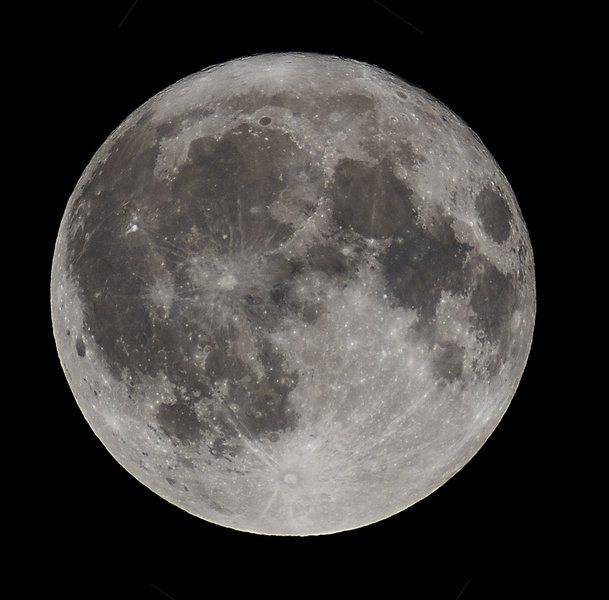
Full moon 94_edited-1.jpg

PS Any crits about that image. All comments gratefully received.
 
  • Like
Likes   Reactions: davenn, fresh_42 and phinds
Astronomy news on Phys.org
sophiecentaur said:
PS Any crits about that image. All comments gratefully received.

flaming disgusting hahaha :-p:-p:-p:biggrin:

seriously, awesome image mate ... nice details considering a full moon :smile:
always difficult to get good details at that time

Dave
 
sophiecentaur said:
I have been struggling with focussing my Pentax K S2 using Live view. The image of the Moon (or the Sun, with filter) is too burned out to focus.

Nice photo! One (hopefully) helpful suggestion: on my camera, there's a way to toggle Live View between a display that "auto-brightnesses itself" and "how the actual photo looks". Check to see if the Pentax has that as well.
 
That's a great photo. But there is something different about the lunar far side, namely that there are no maria on the far side, as the attached NASA image shows
lunar_farside.jpg
 
  • Like
Likes   Reactions: sophiecentaur
phyzguy said:
That's a great photo. But there is something different about the lunar far side, namely that there are no maria on the far side, as the attached NASA image showsView attachment 212435
That's yet another of those 'ridiculous' facts in Astronomy. That is crazy and there has to be an explanation. Any ideas?
Nice picture, btw. Take it yourself didja? :wink: Actually, it looks like a composite as there is a left/right split as the shadows are different on each side. Sneaky NASA, again.
 
Andy Resnick said:
Nice photo! One (hopefully) helpful suggestion: on my camera, there's a way to toggle Live View between a display that "auto-brightnesses itself" and "how the actual photo looks". Check to see if the Pentax has that as well.
I will try to find out. Thing is, having a lens with no aperture control / measure is unusual for a modern camera. I did consider using a filter but it would have to be over the front of the objective or it would upset the focussing once I remove it.
It's hard to spot stars on LV, even. I think the processor is too damned smart as it seems to treat random stars as noise until it decides they are actual stars, at which point it displays them. LV is fine with a normal scene and you can zoom in on the LV display and get great focus on one small selected portion. I must try Pentax Users Forum. There's a lot of know how there.
 
The suggestions were that I had my screen brightness turned up too high. Well, I had done just that. I will need an opportunity to see if it's ok now I have turned it down. I can't remember turning it up but it could have been on a bright sunny day. That's sort of thing is common with bells and whistles cameras. You have to remember to cancel Manual Focussing and Exposure settings whenever you put the camera back in its home or you will not be ready for the moment when the kids or animals do something interesting. :smile:
 
sophiecentaur said:
I have a tedious workaround which involves focussing on a bright star (with bhatinov mask), locking the focus and moving to the Moon
I don't know if it would help, but can you get a good focus on the edge of the moon where you get a good black/white sharp line?
 
The edge (was) burned out too !
I found the error. The LCD display had been cranked up. Silly me. All ok now.
 
  • Like
Likes   Reactions: Andy Resnick
  • #10
Here's one I took that same night:
DSC_2249%20copy_zpscdjdnk3l.jpg


sophiecentaur said:
Nevertheless, that picture that I got last night is fascinating because there are no shadows. The normally impressive craters are only visible from the pale stuff on the walls which (I have been told) came from below the surface on impact.

Agreed: here are close-up views of regions around Plato and Ptolemaeus showing the difference:

DSC_2249%20copy-2_zps2q1fgtkh.jpg


DSC_0337-2_zpsklathymq.jpg


DSC_2249%20copy-3_zpssg5l6rpp.jpg


DSC_0337-3_zpsjpq1bgc6.jpg
 
  • Like
Likes   Reactions: sophiecentaur and russ_watters
  • #11
Andy Resnick said:
Here's one I took that same night:
View attachment 212714
Agreed: here are close-up views of regions around Plato and Ptolemaeus showing the difference:
Haha. Not only can you take good pictures but your filing system also works.
 

Similar threads

  • · Replies 77 ·
3
Replies
77
Views
7K
  • · Replies 3 ·
Replies
3
Views
2K
  • · Replies 1 ·
Replies
1
Views
5K
  • · Replies 6 ·
Replies
6
Views
3K
  • · Replies 27 ·
Replies
27
Views
1K
  • · Replies 7 ·
Replies
7
Views
2K
  • · Replies 5 ·
Replies
5
Views
2K
  • · Replies 38 ·
2
Replies
38
Views
14K
  • · Replies 2 ·
Replies
2
Views
2K
  • · Replies 32 ·
2
Replies
32
Views
5K