Help designing 2-way audio crossover

  • Thread starter Thread starter BeautifulLight
  • Start date Start date
  • Tags Tags
    Audio Designing
Click For Summary

Discussion Overview

The discussion revolves around designing a two-way audio crossover for a speaker system, focusing on the appropriate crossover frequencies for a tweeter and mid-woofer. Participants explore the implications of resonant frequencies, crossover slopes, and the interaction between the two drivers.

Discussion Character

  • Exploratory
  • Technical explanation
  • Debate/contested
  • Mathematical reasoning

Main Points Raised

  • One participant notes that the resonant frequency of a tweeter should be multiplied by 2.5 to determine the lowest crossover point, suggesting a value of 3,800 Hz for their specific tweeter.
  • Another participant questions the rationale behind the 3,800 Hz crossover point, raising concerns about potential frequency gaps and the impact of resonant frequency on sound quality.
  • There is a suggestion to overlap the crossover points of the tweeter and mid-woofer, with a focus on aligning their respective -3 dB points to ensure a smooth transition in sound output.
  • A participant seeks clarification on the significance of the 3 dB figure commonly referenced in audio discussions, questioning its origin and relevance to human sound perception.
  • Another participant provides a mathematical explanation of the 3 dB point as it relates to power and filter behavior, emphasizing the relationship between theoretical concepts and practical audio design.

Areas of Agreement / Disagreement

Participants express differing views on the appropriate crossover points and the implications of resonant frequencies, indicating that multiple competing perspectives remain without a clear consensus.

Contextual Notes

The discussion includes assumptions about the behavior of audio components and the mathematical principles underlying filter design, which may not be universally applicable across all scenarios.

Who May Find This Useful

Individuals interested in audio engineering, speaker design, and those looking to deepen their understanding of crossover networks and filter behavior may find this discussion beneficial.

BeautifulLight
Messages
39
Reaction score
0
Mid-woofer

FR.png


Tweeter

asdf.jpg
Links: https://www.parts-express.com/vifa-oc25sc65-04-1-textile-dome-tweeter--264-1018 https://www.madisoundspeakerstore.c.../silver-flute-w17rc38-04-ohm-6-1/2-wool-cone/

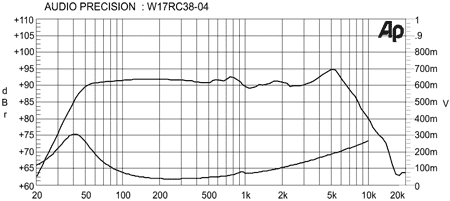
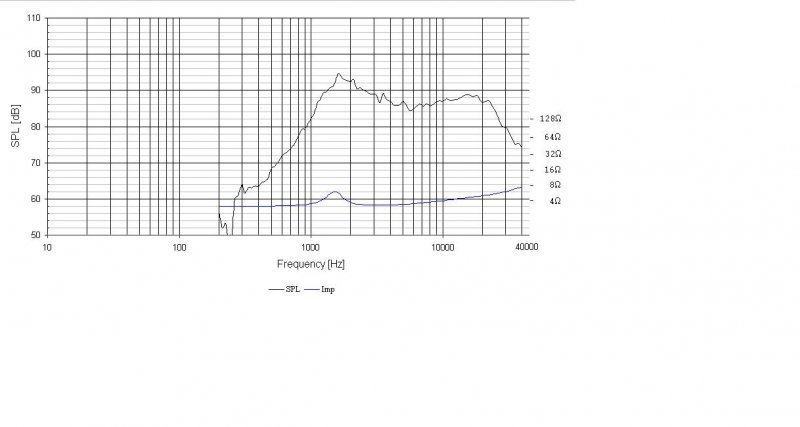
For tweeters, they say to take the resonant frequency and multiply that by 2.5x, and that figure should be the lowest you should cross your tweeter over. The resonant frequency of my desired tweeter is exactly 1,520hz. If you do the math, that's 3,800hz.

Why is this?

Is a 3.8khz crossover point the absolute lowest my tweeter will be able to cross at the lowest possible slope, which would be a 6dB/octave? I understand I can cross lower if I'm using a steeper slope, but I just want to make sure this is correct.

Also, that mid-woofer plays relatively flat up to about 5khz with the exception of that little peak. If I wire a 10uF poly cap in series with my tweeter giving me a x-over point of 3.8khz at 6dB/octave, then where should I cross my mid-woofer over? Should I overlap? How much?Do you guys think it would be better to cross with a steeper slope on my tweeter or just use a notch filter on the mid-woofer? I really don't want my mid-woofer playing past 3khz because of the peak at 5khz. However, I'd be breaking rules if I crossed my tweeter under 3.8khz.
 

Attachments

  • asdf.jpg
    asdf.jpg
    28.9 KB · Views: 577
Engineering news on Phys.org
Thanks for the post! Sorry you aren't generating responses at the moment. Do you have any further information, come to any new conclusions or is it possible to reword the post?
 
BeautifulLight said:
lowest you should cross your tweeter over...
Why is this?

Well, think about it - if you send your tweeter a signal at its resonant frequency, won't it sound too loud? That'll be annoying if a certain note blasts out louder than everything else.

Similarly, what if your crossover has a frequency gap between high end of midrange and low end of tweeter ? Wont there be a dead spot in frequency responsive, ie certain notes won't get made into sound ?
 
BeautifulLight said:
Should I overlap? How much?
Wouldn't you place their respective -3db points right atop one another, so that as one fades out the other is fading in ?
 
jim hardy said:
Wouldn't you place their respective -3db points right atop one another, so that as one fades out the other is fading in ?

I know you didn't arbitrarily choose that 3dB figure, so I'm asking where you got it from. I see the 3dB figure all the time. For instance, if you double the power, you only get a 3dB gain. I'm not interested in why that is now, I just want to know where everyone is getting the 3dB figure from or why it's so common. I mean why not 5 or why not 10? Does this have something to do with the way humans perceive sound? Is it not linear?

And I didn't even think about that for the resonant frequency. That makes sense, thanks.
 
3db being half power, when both are down by half their sum will be one. So your response will be fairly flat.

What would be sum if both were down by 90% at your crossover frequency? Maybe a dead spot?

Don't be afraid to look for simple thinking, it is usually the right direction.

3db point falls nicely from the math of filters. So it's very common.

In a simple RC filter, it's the frequency at which XC = R and each sees 0.707 of Vsupply since it's a vector summation.
It's called "corner frequency" .
0.707 being 1/sqrt(2) , at corner frequency power dissipated in the R is (Vsupply2)/(sqrt(2)2)/R

which = Vsupply2/2R , half power...

Filters is another whole world in which the math and real world behavior are sooo closely related that it's fascinating. I recommend you learn all you can for it will greatly enrich your audio hobby experience.
Look for old LM833 appnotes...
 

Similar threads

  • · Replies 2 ·
Replies
2
Views
8K