How can I evenly heat a series of metal plates to a controlled temp?

Click For Summary
SUMMARY

This discussion focuses on methods to evenly heat metal plates with hexagonal cells to a precise temperature of 41°C for two hours, specifically for applications related to honey extraction. The suggested heating methods include warm water circulation, inductive heating, and microwave techniques, with an emphasis on the importance of material choice, such as using copper for better thermal conductivity. The conversation highlights the need for a controlled heating system that minimizes thermal gradients and ensures consistent temperature maintenance.

PREREQUISITES
  • Understanding of thermal conductivity and material properties, particularly for metals like copper and stainless steel.
  • Knowledge of heating methods, including water circulation systems and inductive heating.
  • Familiarity with temperature control systems and their components.
  • Basic principles of thermodynamics related to heat transfer and thermal gradients.
NEXT STEPS
  • Research "liquid cooling plate" designs for effective heat distribution.
  • Explore "hourglass tube radiator" concepts for embedded heating elements.
  • Investigate the use of inductive heating systems for precise temperature control.
  • Learn about microwave heating techniques and their applications in food processing.
USEFUL FOR

This discussion is beneficial for engineers, food technologists, and anyone involved in thermal processing or honey extraction, particularly those seeking efficient and controlled heating solutions for metal plates.

omgcornflakes
Messages
1
Reaction score
0
TL;DR
Need to heat 8-12 metal plates to 41C for 2 hours.
(In opening, hi. I'm a lawyer, not a physicist, and I'm entirely out of my depth here.)

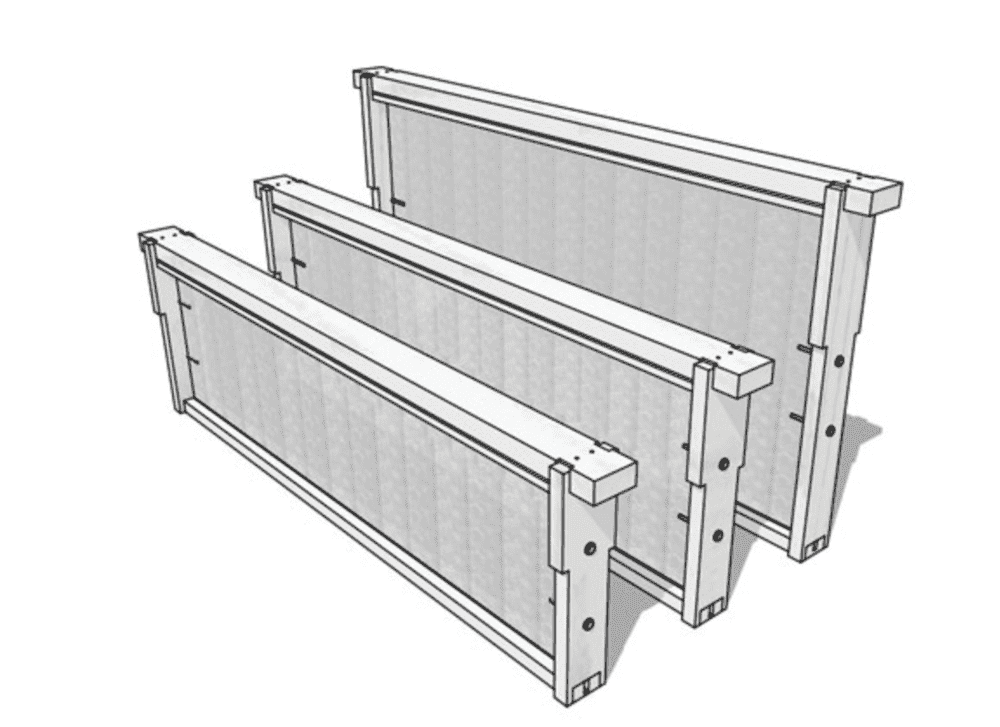
I need to make roughly 8 wooden frames (19 inches x 1-1/16 inches x 9-1/8 inches). Into each, I'd like to place a thin metal plate with hexagonal cells (5.27 mm cell diameter) pressed into them. I need to heat these cells (or, more specifically, what will be the contents of these cells) to 41C and maintain that temperature for 2 hours. It needs to be *fairly* precise (+/- 2C, more or less) and something that can be repeated at 2 week (give or take) intervals.
1572792552146.png


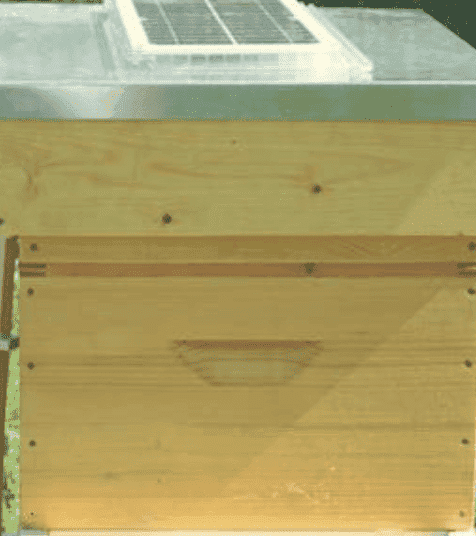
The frames/plates will be perpendicular to the ground and parallel to each other in a wooden box. No heating element (other than the plates, which will be coated in wax) can be exposed.
1572792736537.png


Heat source ideally needs to be above the frames/plates and must be fairly easy to lift off/remove. Solar would be workable or, failing that, something else that can safely be left outside.

So my question is, mostly...how do I heat these plates?
 
Engineering news on Phys.org
How about soaking them in a warm water bath?
 
There are many ways to heat the plates, but almost all will be prohibited by the application.
You have not identified the application so I can only guess you are melting honey to extract it from the comb inside a hive.
A thermal version of the flow-hive. https://en.wikipedia.org/wiki/Flow_Hive

One problem is that the metal comb is arranged vertically so there will be a thermal gradient if you do not circulate the air to even out the heating. That suggests a warm air circulation system would be needed with the heat source at the bottom.

If the metal plates were double skinned they could be heated by warm water rising between the plates like in a counter flow heat exchanger, or a radiator. By keeping the circulation fast there would be less trouble with fighting stratification, to prevent formation of a thermal siphon.

If the metal plates were thick and made from copper the heat could spread more evenly. Stainless steel has poor thermal conductivity so it will be difficult to maintain an even temperature over an area. Sugar reacts to reduce some metal oxides, so the choice of metal may be very important to prevent critical contamination of the product.

Separate parts of the frames could be heated inductively by employing a slightly resistive metal comb surrounded by a coil. But that would require a complex control system.

Another possibility would be a microwave oven technique. The EM energy would be reflected from the bare metal surfaces, but would heat a dielectric such as wax or honey.

Maybe there are ultrasonic methods available where the ceramic or metal plate vibrates to heat the coated surface.

If the metal plate had an array of series semiconductor junctions, or NTC thermistor elements, it could be designed to be heated electrically and to self regulate the local temperatures.

41°C may be sufficient to flow honey, but not wax? 41°C is insufficient to decontaminate or sterilise the plate, or to kill disease and parasites.

Without knowing the application, and the artificial restrictions imposed, we cannot refine the selection.
 
I would opt for water heating. Google up 'liquid cooling plate' and 'hourglass tube radiator': those might give some ideas for the heating elements to be embedded in the frames. To keep them removable there are quick connect plugs/receivers for small water pipes.
The system should be filled up only during the heating period, and you should make it so that it drains down when the pump is off.
Temperature can be set and maintained within a water tank with conventional devices: you need only a decent pump to fill up the system and circulate the water.
 

Similar threads

  • · Replies 5 ·
Replies
5
Views
5K
  • · Replies 5 ·
Replies
5
Views
2K
  • · Replies 7 ·
Replies
7
Views
2K
Replies
5
Views
8K
Replies
3
Views
2K
Replies
7
Views
15K
Replies
3
Views
2K
Replies
3
Views
8K
  • · Replies 3 ·
Replies
3
Views
3K
  • · Replies 2 ·
Replies
2
Views
6K