How do i make chemicals by equation?

  • Thread starter Thread starter Klacid
  • Start date Start date
  • Tags Tags
    Chemicals
Click For Summary
SUMMARY

This discussion focuses on the process of creating chemicals from molecular formulas and chemical equations. It emphasizes that molecular formulas represent compounds and that a typical chemical reaction is expressed as A + B → C + D. The conversation highlights the importance of understanding chemical reactions, safety precautions, and the necessity of having the correct precursors for successful chemical synthesis. Additionally, it confirms that learning chemistry enables individuals to derive equations from molecular formulas, although the feasibility of reactions must be established beforehand.

PREREQUISITES
  • Understanding of molecular formulas and chemical reactions
  • Knowledge of basic chemistry concepts and terminology
  • Familiarity with safety protocols in chemical experimentation
  • Experience with chemical synthesis and reaction mechanisms
NEXT STEPS
  • Study organic chemistry principles, focusing on reaction mechanisms
  • Learn about the synthesis of organic compounds from precursors
  • Research safety measures for conducting chemical experiments
  • Explore the use of chemical equations in predicting reaction outcomes
USEFUL FOR

Chemistry students, laboratory technicians, and anyone interested in chemical synthesis and reaction mechanisms will benefit from this discussion.

Klacid
Messages
2
Reaction score
0
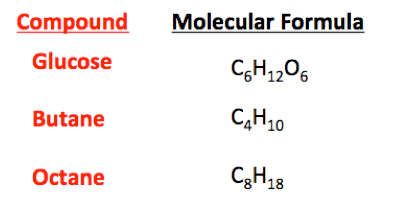
Hey guys i wanted to know how make some chemicals when i have an equation, for example:
molecularformula.png
 
Chemistry news on Phys.org
Klacid said:
Hey guys i wanted to know how make some chemicals when i have an equation, for example:

molecularformula.png
First of all, you don't have any equations in the graphic above. These are called the molecular formulas for the various compounds shown.

A typical chemical formula, or reaction, looks like this:

A + B → C + D,

where A and B are the molecular formulas of the reagents, and C and D are the molecular formulas of the reaction products.

There are many different chemical reactions which are studied in chemistry. Some of these reactions can be quite dangerous if proper safety precautions are not employed.

Study some chemistry and then come back if you have any questions.
 
  • Like
Likes   Reactions: Klacid
1- Although these molecular formulae would be recognised as the compounds named, it is not always the case that a molecular formula represents a single compound. It could represent several isomers with different structures.
2 - How you make a compound depends on what precursors you have. In general you can't just mix the elements in the required proportion, heat it and hope to get what you want. Strangely enough the compounds you list are more likely to be starting points for the production of other compounds. (Well glucose certainly; butane and octane are mainly fuels, though they could be partially oxidised to produce more reactive compounds.) They would generally be obtained from a biological source (glucose) or petroleum (butane and octane.)
 
Ok thanks guys, and last question, when i learn chemistry, is that possible i will know how to make equations from a molecular formula?
 
Yes, the molecular formulae help you work out the number of molecules of each substance to put in the equation.
When you make equations, the molecular formulae tell you what numbers to put in, but they don't help you know whether the reaction is likely. If you know that a reaction works, it simply gives you the correct quantities. For example, it is possible to make butane from pentanoic acid by removing CO2, using soda lime. The overall reaction is:
Pentanoic acid + Sodium Hydroxide -> Butane + Sodium Carbonate + water
C5H10O2 + 2 NaOH -> C4H10 + Na2CO3 + H2O
 
  • Like
Likes   Reactions: Klacid

Similar threads

  • · Replies 46 ·
2
Replies
46
Views
6K
  • · Replies 3 ·
Replies
3
Views
2K
  • · Replies 10 ·
Replies
10
Views
3K
Replies
4
Views
3K
  • · Replies 1 ·
Replies
1
Views
2K
  • · Replies 2 ·
Replies
2
Views
3K
  • · Replies 1 ·
Replies
1
Views
2K
  • · Replies 10 ·
Replies
10
Views
2K
Replies
4
Views
2K
  • · Replies 5 ·
Replies
5
Views
3K