Tryhard_
- 1
- 0
- TL;DR
- Why does the usual proof for expression of chemical potential for pure substances not work when they are in a mixture ? where does it fail and need to change ?
Hello, I've been struggling with understanding how the molar fraction term appears in the expression of chemical potential as a fonction of pressure when the element is in a mixture,
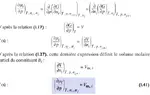
here is the proof given in my textbook for the expression of chemical potential of a pure substance (pure gas)

My problem isn't with this proof but rather why it doesn't work the same when the element is in a mixture because every step seems to work the same when the element is in a mixture, and the partial molar volume for a gas or a liquid in a mixture is the same as when same liquid is pure (it's the change in volume of the system per change in moles of the element right ?)
for example for a gas in a mixture of two gases let's say we have n1 + n2 = ntot => V = ntot*RT/P = (n1 + n2)*RT/P => dV/dn1 = RT/p where is the mistake ?
the text book uses partial pressure and molar fraction when elements are in a mixture but never gives a reason as to why:
 (this is the formula the textbook gives when a liquid is in a mixture)
Thanks a lot in advance for any help!
here is the proof given in my textbook for the expression of chemical potential of a pure substance (pure gas)
My problem isn't with this proof but rather why it doesn't work the same when the element is in a mixture because every step seems to work the same when the element is in a mixture, and the partial molar volume for a gas or a liquid in a mixture is the same as when same liquid is pure (it's the change in volume of the system per change in moles of the element right ?)
for example for a gas in a mixture of two gases let's say we have n1 + n2 = ntot => V = ntot*RT/P = (n1 + n2)*RT/P => dV/dn1 = RT/p where is the mistake ?
the text book uses partial pressure and molar fraction when elements are in a mixture but never gives a reason as to why:
Thanks a lot in advance for any help!