SUMMARY
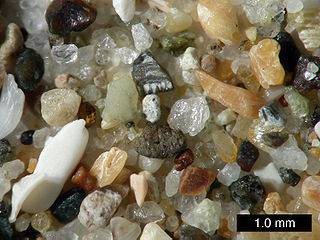
A handful of sand can contain a significant number of the 92 naturally occurring elements, with estimates suggesting that around 78 to 81 stable elements may be present. Elements such as Technetium (Tc) and Promethium (Pr) are considered man-made and unstable, while rare elements like Iridium may also be found in trace amounts due to geological processes. The presence of noble gases, including Neon, is possible if the sand contains dissolved air or water. Overall, the composition of sand reflects the geological history and processes of the Earth's crust.
PREREQUISITES
- Understanding of naturally occurring elements and their stability
- Basic knowledge of geological processes and mineral composition
- Familiarity with the concept of trace elements in environmental science
- Awareness of the solubility of gases in geological contexts
NEXT STEPS
- Research the chemical composition of volcanic magma and its relation to surface rocks
- Explore the role of trace elements in soil and sediment analysis
- Learn about the geological processes that lead to the formation of sand
- Investigate the solubility and behavior of noble gases in geological environments
USEFUL FOR
Geologists, environmental scientists, and anyone interested in the elemental composition of natural materials and geological processes.