How much bulge means a bad cap?

  • Thread starter Thread starter Viper01
  • Start date Start date
  • Tags Tags
    Means
Click For Summary
SUMMARY

The discussion centers on diagnosing a malfunctioning 50" Plasma TV following a lightning strike. A bulging capacitor was identified, but experts assert that any bulge indicates failure, and it is advisable to replace it. The input fuse should be checked first, as it may have blown due to the surge. If the fuse is intact, further investigation into the power supply and potential semiconductor failures is necessary.

PREREQUISITES
  • Understanding of basic electronics and components, specifically capacitors.
  • Knowledge of surge protection mechanisms, including MOVs (Metal Oxide Varistors).
  • Familiarity with testing equipment such as a multimeter or Kill-o-Watt.
  • Safety protocols for working with AC mains and electronic devices.
NEXT STEPS
  • Learn how to safely test an input fuse in electronic devices.
  • Research the function and replacement of electrolytic capacitors in power supplies.
  • Investigate the role of MOVs in surge protection and their replacement procedures.
  • Explore methods for diagnosing power supply issues in televisions.
USEFUL FOR

Electronics enthusiasts, repair technicians, and anyone troubleshooting power supply issues in televisions or similar devices will benefit from this discussion.

Viper01
Messages
2
Reaction score
0
How did you find PF?: Searching for how much bulge means a bad cap?

Hi!

I'm a new member.
My Xbox One and 50" Plasma got busted from a lightning even with a 2 surge protectors to protect it. Both would not turn on anymore.
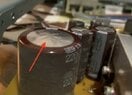
Tv is rarely use and I still hoping I could fixed it before I bring it to the electronics depot. I opened it and hoping for a burned parts but did not see any except this capacitor. Have not tried to test the capacitor for I need to bring it to work so I can hv the proper equipment to test it.

Do you guys think this cap is bad already?

Thank you!
 

Attachments

  • IMG-9130.jpg
    IMG-9130.jpg
    23.3 KB · Views: 178
Engineering news on Phys.org
Welcome to PF.

It does look to be bulging a little bit, but I doubt that would cause the whole TV to not work. More likely the input fuse was blown if there are MOVs inboard of the fuse (that's how surge protection works sometimes). Have you been able to find the input fuse and beep it?

If the input fuse is intact, it's likely that the surge caused a latchup somewhere, leading to the failure of a semiconductor. When you turn it on, does it draw any input current? Do you have a Kill-o-Watt or other power measuring device that you can use to see if it's trying to turn on?

BTW, you may already know this, but please don't be probing inside the TV when it is connected to the AC Mains. Disconnect from the AC Mains to test the fuse inside, etc. The only way you can probe inside a powered-up device like that is if you are using an Isolation Transformer and really know what you are doing. Thanks.
 
  • Like
Likes   Reactions: davenn and dlgoff
Yes, I agree that cap probably isn't your only problem.

However, my rule is any bulge is too much. For most people it is just easier, and better to replace it that to worry about measuring it or guessing about it's current or future health. Electrical components shouldn't show any mechanical deformation, ever.
 
  • Like
Likes   Reactions: dlgoff and berkeman
Regarding repairs, that cap is a goner regardless it's likely not the (main) reason for not powering up.
That is the way (of repairs).

But the problem with lightning strikes is, that without detailed and professional analysis you just won't know what's wrong. And this includes measurements on the primary side, in 'live' conditions. Unless you are qualified just don't do that.

Since it's already open, just check the fuse (with power cord disconnected), then close back everything and find somebody qualified.
 
  • Like
Likes   Reactions: berkeman
berkeman said:
Welcome to PF.

It does look to be bulging a little bit, but I doubt that would cause the whole TV to not work. More likely the input fuse was blown if there are MOVs inboard of the fuse (that's how surge protection works sometimes). Have you been able to find the input fuse and beep it?

If the input fuse is intact, it's likely that the surge caused a latchup somewhere, leading to the failure of a semiconductor. When you turn it on, does it draw any input current? Do you have a Kill-o-Watt or other power measuring device that you can use to see if it's trying to turn on?

BTW, you may already know this, but please don't be probing inside the TV when it is connected to the AC Mains. Disconnect from the AC Mains to test the fuse inside, etc. The only way you can probe inside a powered-up device like that is if you are using an Isolation Transformer and really know what you are doing. Thanks.
Hi!

"When you turn it on, does it draw any input current? Do you have a Kill-o-Watt or other power measuring device that you can use to see if it's trying to turn on?"
- When I turn it on, I usually hear a sound every time I plug it in and the usual red light on the on/off sw.
Green light does not goes on anymore the next press on the switch or the remote to turn the tv on. There is a box where the plug goes in that I will open next time when I got the chance. Maybe there's the MOVs inside.

Appreciate all your response.
 
Last edited by a moderator:
For what it is worth, I've repaired several computer monitors and laptop power supplies that died, by replacing ALL the electrolytic capacitors in the power supply. If one cap has failed you can be sure the rest have degraded.

The observed indication is usually one, or occasionally two, electrolytics have a domed top, indicating failure. The switching power supply simply stops switching.
There is a box where the plug goes in that I will open next time when I got the chance.
That sounds like it is the power supply, and the most likely failure point.

See if you can find someone competent to measure the power supply output voltage(s), (if any!).

Have fun,
Tom
 
Last edited:
Viper01 said:
How did you find PF?: Searching for how much bulge means a bad cap?

Hi!

I'm a new member.
My Xbox One and 50" Plasma got busted from a lightning even with a 2 surge protectors to protect it. Both would not turn on anymore.
Tv is rarely use and I still hoping I could fixed it before I bring it to the electronics depot. I opened it and hoping for a burned parts but did not see any except this capacitor. Have not tried to test the capacitor for I need to bring it to work so I can hv the proper equipment to test it.

Do you guys think this cap is bad already?

Thank you!
The "safe answer" is ANY bulge is a bad sign.
 
DaveE said:
my rule is any bulge is too much
+1 on that
 

Similar threads

  • · Replies 12 ·
Replies
12
Views
18K
Replies
2
Views
2K
  • · Replies 4 ·
Replies
4
Views
2K
  • · Replies 7 ·
Replies
7
Views
2K
  • · Replies 18 ·
Replies
18
Views
1K
  • · Replies 14 ·
Replies
14
Views
3K
  • · Replies 16 ·
Replies
16
Views
5K
  • · Replies 1 ·
Replies
1
Views
2K
  • · Replies 15 ·
Replies
15
Views
2K
  • · Replies 31 ·
2
Replies
31
Views
4K