Discussion Overview
The discussion focuses on how signals are transmitted through RCA cables, specifically addressing the roles of the inner conductor and the ground wire. Participants explore the mechanics of signal transmission and the implications of using or omitting the ground wire in audio applications.
Discussion Character
- Technical explanation, Debate/contested
Main Points Raised
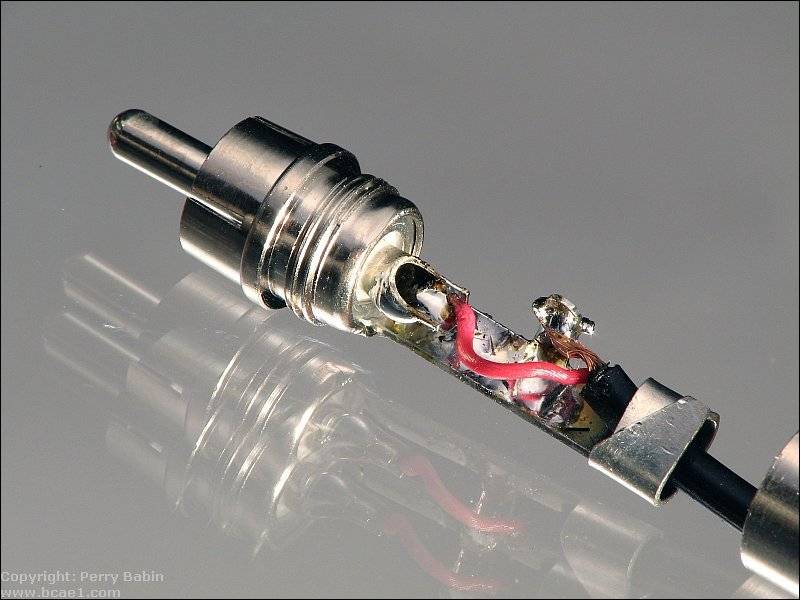
- One participant questions how a signal can be transmitted through only the inner conductor (red) of an RCA cable and inquires about the function of the ground wire (black).
- Another participant clarifies that there are two conductors in an RCA cable: the inner (red) and the outer braid, which together form a circuit.
- Some participants report that the cable can transmit sound without the black wire, suggesting that an alternative ground connection may exist.
- One participant proposes that the absence of the black wire might be compensated by another ground connection, possibly through the other stereo channel or common earthing.
- Another participant suggests that the ground connection might be established through the connector casing, indicating that there could be an unofficial path joining the signal grounds at both ends, which may affect sound quality.
- There is a mention of potential sound quality differences when the black wire is connected versus when it is not, with concerns about noise pickup in the absence of a proper ground connection.
Areas of Agreement / Disagreement
Participants express differing views on the necessity and function of the ground wire in RCA cables, with no consensus reached on the implications of its absence for sound quality and signal integrity.
Contextual Notes
Some claims depend on specific configurations and assumptions about grounding and connections, which are not fully detailed in the discussion.