gary350
- 291
- 83
- TL;DR
- How to calculate the amplification of a cone
Some where I read as sound travel away from the source its volume become 50% less every time cross sectional area doubles. Like throwing a rock into the lake wave rings get larger and larger diameter as the wave travel away from the rock. It seems to me same thing should happen in reverse.
I built a cardboard cone it measures 13" square on the big end and 1" square on the small end. Cone is 24" long. When I use cone to listen to TV I can turn volume down so low no one can hear it but me with the cone 15 ft away.
I can hear birds in the trees that I can not hear any other way.
I can year people talking across the street very easy.
I can hear things very far away that can not be heard without the cone.
13x13 = 169 sq in at the big end. 1x1 = 1 sq in at small end. I'm not sure if that is called a sound increase of 169 times or not?
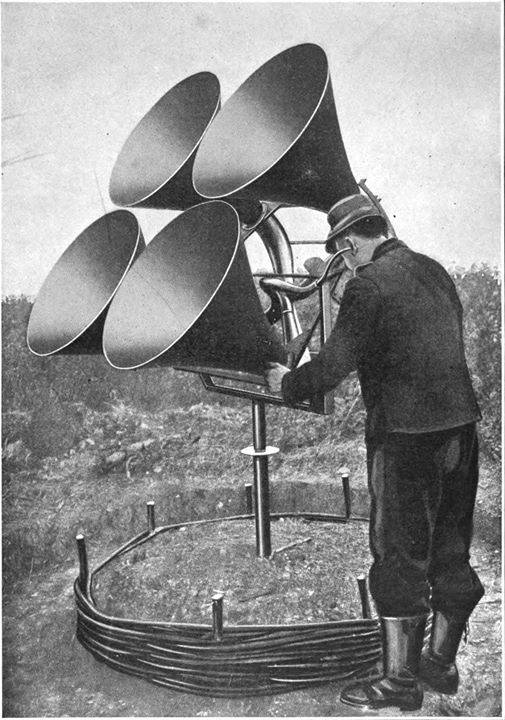
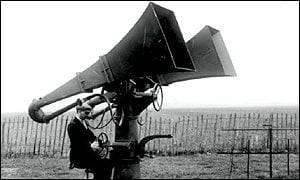
During WWI and early part of WWII they used cones to listen for income airplanes 10 miles away before radar was invented.
Is there a formula to calculate how much louder sound gets using a certain size cone?
I don't think a cone is a true amplifier but it does make sound louder.
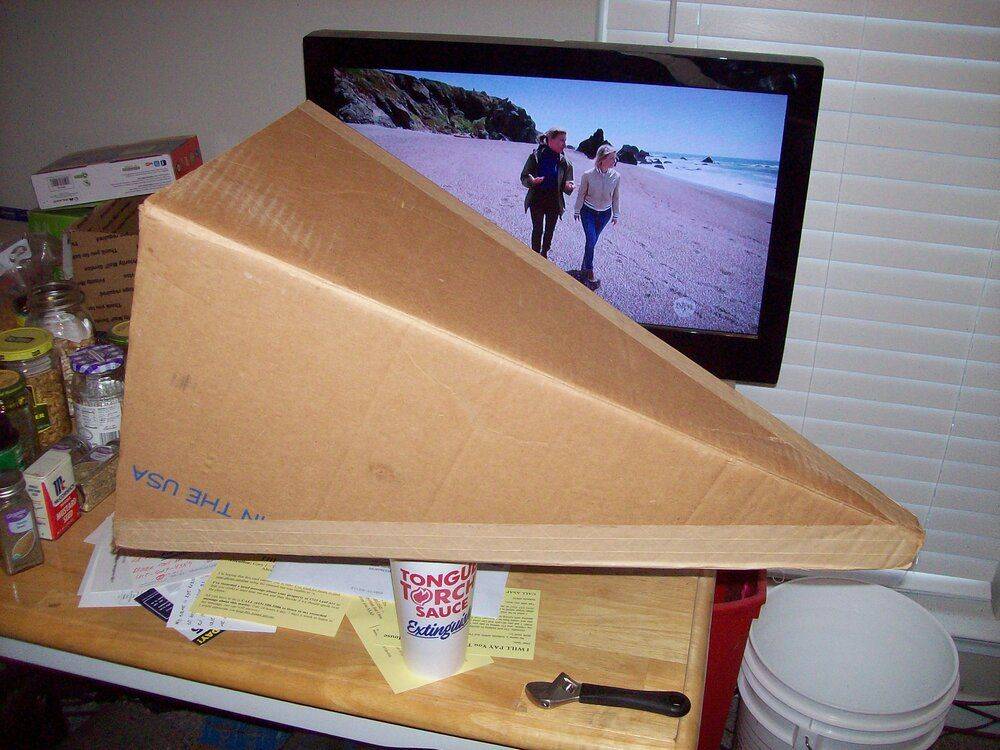
I built a cardboard cone it measures 13" square on the big end and 1" square on the small end. Cone is 24" long. When I use cone to listen to TV I can turn volume down so low no one can hear it but me with the cone 15 ft away.
I can hear birds in the trees that I can not hear any other way.
I can year people talking across the street very easy.
I can hear things very far away that can not be heard without the cone.
13x13 = 169 sq in at the big end. 1x1 = 1 sq in at small end. I'm not sure if that is called a sound increase of 169 times or not?
During WWI and early part of WWII they used cones to listen for income airplanes 10 miles away before radar was invented.
Is there a formula to calculate how much louder sound gets using a certain size cone?
I don't think a cone is a true amplifier but it does make sound louder.