How to Log Continuous Peak-to-Peak Voltage Changes on an Oscilloscope?

  • Thread starter Thread starter rwooduk
  • Start date Start date
  • Tags Tags
    Data
Click For Summary
SUMMARY

This discussion focuses on logging continuous peak-to-peak voltage changes using an oscilloscope connected to a hydrophone. The user initially faced challenges with the oscilloscope's data logging feature, which saves files every 10 seconds instead of continuously. The solution involves utilizing the oscilloscope's "Infinite" monitoring mode to continuously save triggered waveforms to a USB memory device. However, the user still seeks a method to log average peak-to-peak values over time without triggering.

PREREQUISITES
  • Understanding of oscilloscope functionalities, particularly data logging features.
  • Familiarity with hydrophone operation and its application in measuring voltage changes.
  • Knowledge of waveform analysis and peak-to-peak voltage measurement techniques.
  • Experience with USB data storage and file management in laboratory settings.
NEXT STEPS
  • Research how to configure the oscilloscope's "Infinite" monitoring mode for continuous data logging.
  • Explore methods for calculating average peak-to-peak voltage from logged waveform data.
  • Investigate alternative data logging solutions or software that may integrate with oscilloscopes.
  • Learn about real-time data visualization techniques for monitoring voltage changes during experiments.
USEFUL FOR

Researchers, experimental physicists, and engineers involved in acoustic measurements and data logging using oscilloscopes, particularly those working with hydrophones and waveform analysis.

rwooduk
Messages
757
Reaction score
59
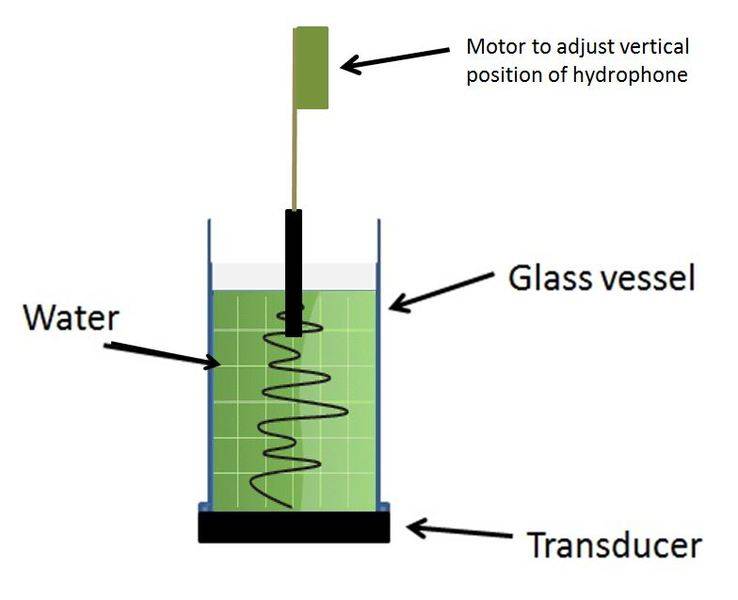
I am trying to measure and record the change in peak to peak voltage (measured by a hydrophone) for the following experimental set-up:
fXOwCUU.jpg


As you can see the waveform in the vessel changes with vertical location, therefore I have a hydrophone connected to a motor that can adjust its position. The problem I am having is how to log the data!

My oscilloscope has logging ability (when you plug in a USB) but I'm slightly confused:

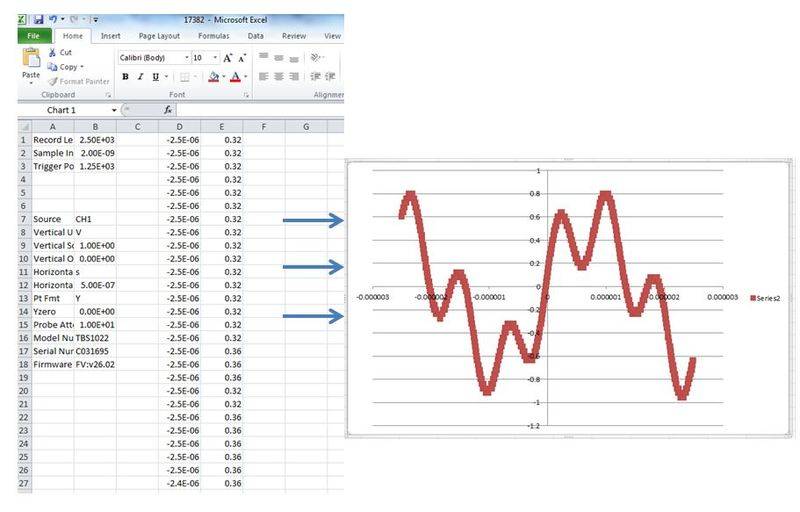
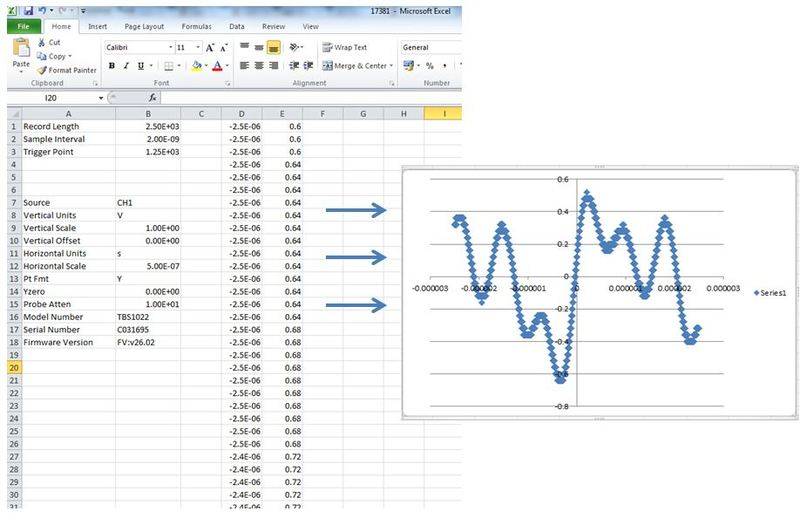
1. Initial testing shows that the oscilloscope doesn't log into one file continuously it saves a file every 10 seconds or so, there seems to be no way of controlling this? It seems to capture ONLY the waveform in that period:

Example: File 1
75d8bHJ.jpg


Example: File 2 (~10 seconds later)

fKz6tsE.jpg


2. Ideally I want to log peak to peak voltage as the measuring device changes position, is this possible?

In short, I need one file from the oscilloscope that shows how the peak to peak voltage changes when the motor is set to a set velocity (~1mm/s) and the hydrophone position changes. Has anyone done anything like this before? Any advice would be appreciated.
 
Engineering news on Phys.org
Ahh, it's ok i think i have it...

The USB host port on the front panel enables you to save your instrument settings, screenshots, and waveform data in a flash. The built-in Data Logging feature means you can set up your oscilloscope to save user-specified triggered waveforms to a USB memory device for up to 24 hours. You can also select the "Infinite" option for continuous waveform monitoring. With this mode you can save your triggered waveforms to an external USB memory device without a duration limitation until the memory device is full. The oscilloscope will then guide you to insert another USB memory device to continue saving waveforms.

So I need to set it to "infinite monitoring". Although this still won't give me average peak to peak values for each triggered waveform. In fact I don't want to trigger at all, I just want Vpk-pk versus time as the measuring devices position changes.

I'll keep trying, if there are any suggestions it would be great.
 
Most likely this can only be answered by an "old timer". I am making measurements on an uA709 op amp (metal can). I would like to calculate the frequency rolloff curves (I can measure them). I assume the compensation is via the miller effect. To do the calculations I would need to know the gain of the transistors and the effective resistance seen at the compensation terminals, not including the values I put there. Anyone know those values?

Similar threads

  • · Replies 78 ·
3
Replies
78
Views
6K
Replies
3
Views
3K
  • · Replies 5 ·
Replies
5
Views
3K
  • · Replies 3 ·
Replies
3
Views
2K
  • · Replies 6 ·
Replies
6
Views
4K
  • · Replies 33 ·
2
Replies
33
Views
13K
  • · Replies 14 ·
Replies
14
Views
2K
  • · Replies 1 ·
Replies
1
Views
2K
  • · Replies 3 ·
Replies
3
Views
2K
Replies
1
Views
3K