callagga
- 2
- 0
How would one model flight of simple parachute in 2D?
For example a formula(s) that would effectively allow you to map the parachute's position/velocity/glideAngle over time. I'm imaging dropping the parachute (consider in 2D only to make easier) and then it will be affected by forces Lift/Drag/Weight, and as these play out the parachute would over a number of seconds angle down, pick up forward speed, and then settle down into some steady state glide with a given speed and glide angle. So perhaps it would arrive at steady state kind of like a sine wave of reducing size as it settles down perhaps(?)
So I was hoping for a formula that gives something like:
position(x,y)/speed/glideAngle = function(time)
(Bonus extra would be effect of toggles/brakes that can be applied at various levels that affect glide angle & speed, but this might be quite complicate as it causes a time based pendulum effect to the parachute too...)
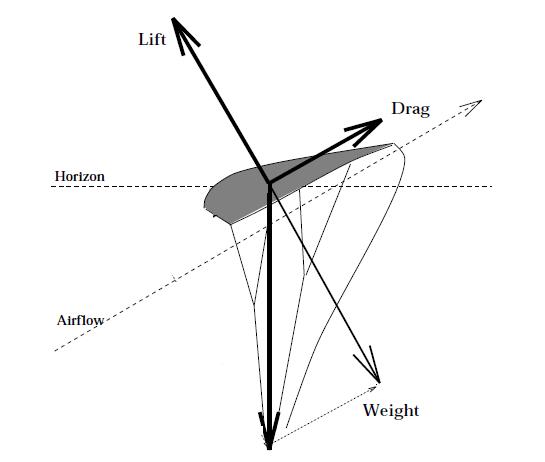
For example a formula(s) that would effectively allow you to map the parachute's position/velocity/glideAngle over time. I'm imaging dropping the parachute (consider in 2D only to make easier) and then it will be affected by forces Lift/Drag/Weight, and as these play out the parachute would over a number of seconds angle down, pick up forward speed, and then settle down into some steady state glide with a given speed and glide angle. So perhaps it would arrive at steady state kind of like a sine wave of reducing size as it settles down perhaps(?)
So I was hoping for a formula that gives something like:
position(x,y)/speed/glideAngle = function(time)
(Bonus extra would be effect of toggles/brakes that can be applied at various levels that affect glide angle & speed, but this might be quite complicate as it causes a time based pendulum effect to the parachute too...)