Discussion Overview
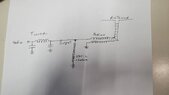
The discussion revolves around the effectiveness of inductance in lightning protection systems for high frequency wire dipole antennas. Participants explore various configurations, grounding techniques, and protective measures against lightning strikes, including the role of inductors and other components in mitigating damage.
Discussion Character
- Technical explanation
- Debate/contested
- Experimental/applied
Main Points Raised
- Some participants propose that a 100µH inductor can provide a discharge path for static buildup while remaining invisible to RF signals, questioning its effect on attracting lightning strikes.
- Others argue that a direct lightning strike will arc across the inductor, suggesting the need for external points to steer the arc away from sensitive components.
- A participant emphasizes the importance of using heavy conductors and low resistance earth connections for effective lightning protection, suggesting that open wire feeders could be directly earthed.
- Concerns are raised about the effectiveness of various protective devices, such as gas discharge tubes and neon lamps, in the event of a direct strike.
- Some participants mention that earthing does not increase the likelihood of a lightning strike but helps mitigate damage if a strike occurs.
- There are discussions about the design of lightning conductors, including the preference for flat bars over round conductors to reduce inductance and avoid sharp bends that could redirect lightning strikes.
- A participant shares personal experiences with expensive lightning protection systems that failed to prevent damage during strikes, highlighting the unpredictability of lightning protection effectiveness.
Areas of Agreement / Disagreement
Participants express a range of views on the effectiveness of different lightning protection strategies, with no clear consensus on the best approach. There are competing models regarding the role of inductors, grounding techniques, and the design of protective systems.
Contextual Notes
Some limitations include the dependence on specific configurations and materials, as well as unresolved questions about the effectiveness of various protective measures in different scenarios.