Info on Bessel functions & their use as basis functions.

Click For Summary
SUMMARY

The discussion centers on the application of Bessel functions as basis functions for solving equations related to cylindrical geometries with specific boundary conditions. The user seeks resources to understand how to utilize Bessel functions, particularly focusing on ensuring that the value of the Bessel function J is zero at the cylinder's ends. Key references include the Wikipedia articles on Bessel functions and cylindrical harmonics, as well as G. N. Watson's "A Treatise on the Theory of Bessel Functions," which is available on the Internet Archive.

PREREQUISITES
  • Understanding of Bessel functions and their properties
  • Familiarity with cylindrical coordinates and geometries
  • Basic knowledge of boundary value problems in differential equations
  • Access to mathematical literature and resources
NEXT STEPS
  • Study the properties and applications of Bessel functions in cylindrical coordinates
  • Read G. N. Watson's "A Treatise on the Theory of Bessel Functions"
  • Explore the concept of cylindrical harmonics and their relevance to boundary conditions
  • Investigate numerical methods for solving boundary value problems involving Bessel functions
USEFUL FOR

Researchers, mathematicians, and students working on problems involving cylindrical geometries and boundary value equations, particularly those interested in the application of Bessel functions in mathematical physics.

lievbirman
Messages
4
Reaction score
0
Hello all,As an exercise my research mentor assigned me to solve the following set of equations for the constants a, b, and c at the bottom. The function f(r) should be a basis function for a cylindrical geometry with boundary conditions such that the value of J is 0 at the ends of the cylinder.

I'm having trouble finding textbooks with the information I must know to solve these equations. If anyone can point me in the right direction I would be very grateful. From what I understand thus far, the functions should be some variant of Bessel functions, and this method is that of basis functions.
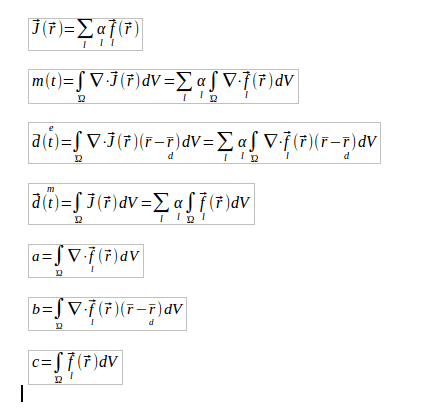
equatins.png
 

Attachments

  • Screenshot from 2014-09-28 09:12:15.png
    Screenshot from 2014-09-28 09:12:15.png
    23.7 KB · Views: 614
Physics news on Phys.org

Similar threads

  • · Replies 2 ·
Replies
2
Views
3K
  • · Replies 13 ·
Replies
13
Views
3K
  • · Replies 7 ·
Replies
7
Views
2K
  • Poll Poll
  • · Replies 1 ·
Replies
1
Views
6K
  • · Replies 5 ·
Replies
5
Views
4K
Replies
1
Views
11K
  • · Replies 2 ·
Replies
2
Views
2K
  • · Replies 6 ·
Replies
6
Views
2K
  • · Replies 6 ·
Replies
6
Views
3K
  • · Replies 2 ·
Replies
2
Views
3K