yefj
- 103
- 2
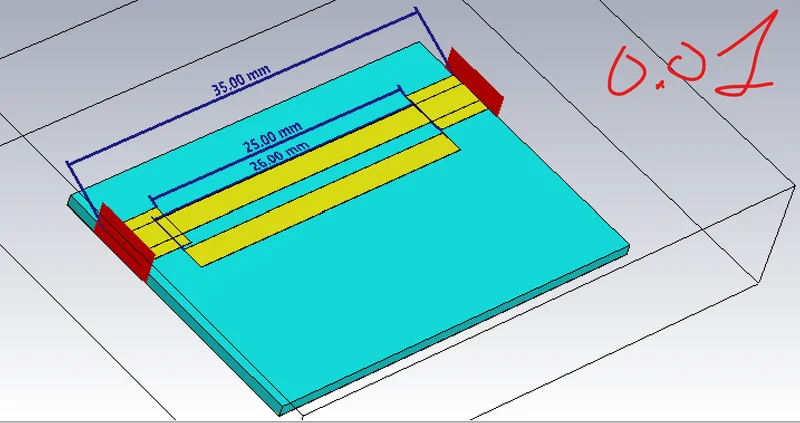
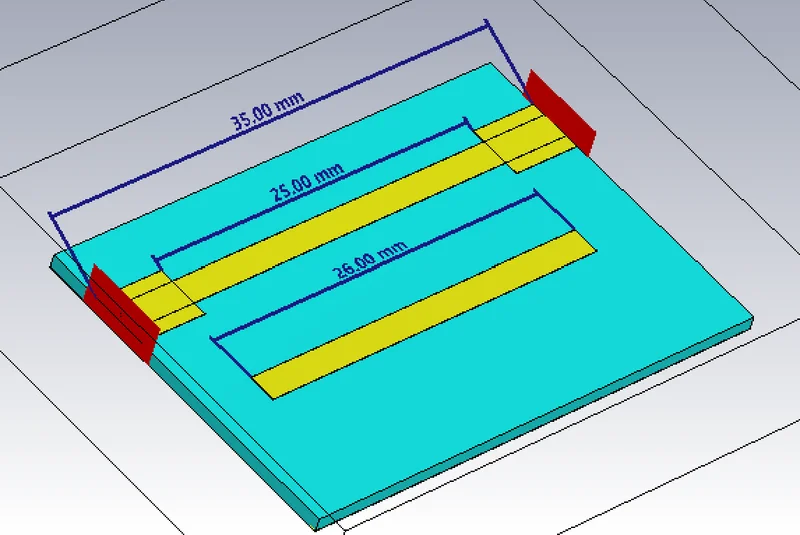
Hello , I have a line geting closer to the line connected to the ports.
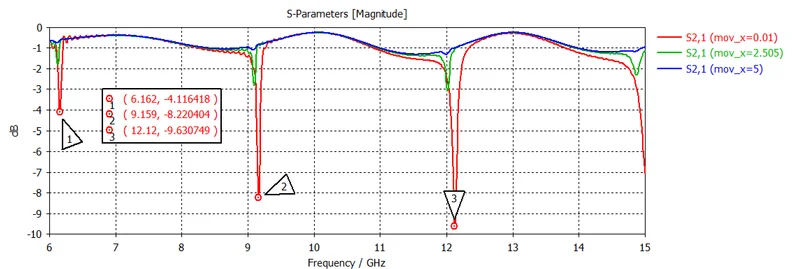
as the distancebetween them gets closer the S21 notches get deeper and deeper.
The difference between two peaks is 3GHz.
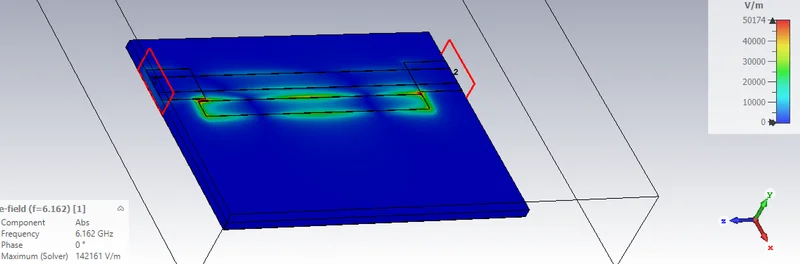
each notch represent a resonance on the floating line.
at 6Ghz we have two wavelength
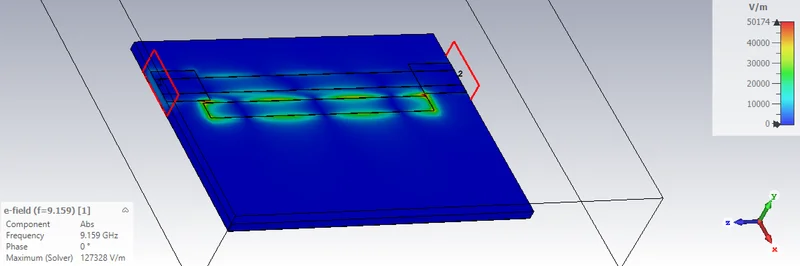
at 9GHz three wavelength
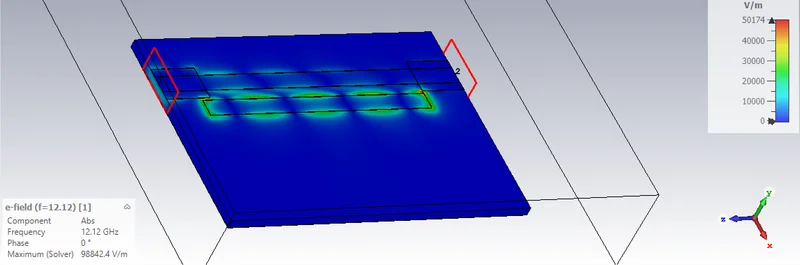
at 12GHz we see four wavelength resonances.
given only this data is there a physical way to know that the floating line is 26mm?
Thanks.
as the distancebetween them gets closer the S21 notches get deeper and deeper.
The difference between two peaks is 3GHz.
each notch represent a resonance on the floating line.
at 6Ghz we have two wavelength
at 9GHz three wavelength
at 12GHz we see four wavelength resonances.
given only this data is there a physical way to know that the floating line is 26mm?
Thanks.